February 2016

Hurrians mythology

A Bronze Age Myth of Hurrians

 After the dragon Illuyanka wins an encounter with the storm god at Kiskilussa (Anatolia). The storm god’s reaction to this defeat is to call for a feast (of wine and beer), almost certainly representing the Hattian-Hittite Purulli festival in honor of the prosperity and fertility of the land and its people.  Inara decides to use the feast to lure and defeat Illuyanka, who was her father’s Nemesis.  But the Illuyanka remains a constant threat that Inara has to Overcome. To defeat the Dragon she needs a human to trick the dragon and assist her. She takes the help of Hupasiya, who agrees to help in return for sexual favors. The goddess agrees, and after sleeping with Hupasiya she hides, her lover then approaches the serpent hole and entices the dragon to come out to join the feast she has prepared. The dragon falls for the trick and proceeds to become so drunk that Hupasiya is able to burst out of his hiding place to tie him up. Then the storm god himself comes and kills the dragon and creation is preserved. The story of Inara and Hupasiya Continues. Inara built a house on a cliff and gave it to Hupasiyas. She left one day with instructions that he was not to look out the window, as he might see his family. But he looked and the sight of his family made him beg to be allowed to return home. there is speculation that Inara killed Hupasiyas for disobeying her, or for hubris, or that he was allowed to return to his family. The mother goddess Hannahannah (Grandmother Hurrian Mother Goddess) then promises Inara land and a man during a consultation by Inara. Inara then disappears. Her father looks for her, joined by Hannahannah with a bee.

Hatti

This Myth is Similar to two Greek Myths


1) The Climax of the story is similar to the Greek myth as Odysseus had begged Calypso, to be allowed to go back home

In Greek mythology, Calypso was a nymph who lived on the mythical island of Ogygia. When Odysseus landed on Ogygia, Calypso fell in love with him and decided to keep him as her immortal husband. With her captivating singing, she managed to detain the Greek hero for several years. However, the time came when Odysseus’ longing for Penelope, his wife, grew so strong that he could bear it no more. Wanting to tell Calypso, Odysseus instead told goddess Athena of his misery. Athena, being the protector of Odysseus, asked Zeus to demand the release of the hero. So it happened. Calypso, angry at first, complained about how gods did not want goddesses to have affairs with mortals; however, she eventually backed out. Giving Odysseus wine, bread, and a raft, she bade him farewell.

 2) The Greek myth of  Demeter and her daughter Persephone.

 Demeter was the goddess of corn, grain, and the harvest. She was the daughter of Cronus and Rhea. Demeter was intimately associated with the seasons. Her daughter Persephone was abducted by Hades to be his wife in the underworld. In her anger at her daughter’s loss, Demeter laid a curse on the world that caused plants to wither and die, and the land to become desolate. Zeus, alarmed by the barren earth, sought Persephone’s return. However, because she had eaten while in the underworld, Hades had a claim on her. Therefore, it was decreed that Persephone would spend four months each year in the underworld. During these months Demeter would grieve for her daughter’s absence, withdrawing her gifts from the world, creating winter. Her return brought the spring.


Prahalad and Kuan yin

Kuan Yin and Bhakta Prahlada, Same stories but different Screenplay

The Chinese goddess Kuan- Yin’s story is very similar to the Hindu Story of Bhakta Prahlada. How parents of both tortured them to get what they parents want. They were helped by the Gods and rescued every time. They were assisted by supernatural powers. The similarities between the two stories are really interesting.

 Story of Kuan-Yin

 It happened that Kuan Yin came to live in her father’s house, with two older sisters. Sensing their father’s disgust with them, one of the sisters married a taciturn warrior, and the other, a merchant. But Kuan Yin had no interest in marriage. Instead, she asked to live in the temple of the White Bird. Her father was incensed and demanded that the women of the temple treat her with great cruelty so that Kuan Yin would abandon her foolish ideas and get married. Afraid, the women abused her and tormented her, forcing her to do the heaviest labor of the temple and eat the least appetizing leftover food. But Kuan Yin was unshakable: she would not marry. Instead, she waited until the other women slept.

 
Then she was joined by the serpent, who helped her carry water, and the tiger, who gathered firewood. Birds fluttered, collecting vegetables from the temple gardens, and the fire spirit danced, preparing the food. Other animals came to her, helping complete her round of chores. Hearing this, Kuan Yin’s father grew enraged and set the temple on fire, a warning to all women who would dare defy him. But Kuan Yin put her hands over the fire and extinguished it, and her goddess’s hands neither charred nor blistered. Besides his fury, her father ordered a servant to chop off his daughter’s head. But the servant’s sword could not slice her neck; instead, it broke into two parts.
 
Goaded by fear of his master’s wrath, the servant then took Kuan Yin’s throat in his hands and strangled her until her life was gone.  Lifeless, she was taken to the Land of the Dead on the back of a tiger, and there she overcame her fear of the icy, inert fingers of death. She began to sing, and the pale, moaning shades gathered near her, relieved of their eternal sorrow by her lovely voice. Seeing this, the effects of his torture vanishing and the spirits of the afflicted lifting even in death, the king of the house of doom flew into a rage and banished Kuan Yin. Kuan Yin returned to the earth, where she found an abode on an island in the north-eastern sea, a place of solitude and peace where She could chant for both the living and the dead and bring to those who prayed for her song, comfort in the continuing cycle of troubles that afflict all beings in the cycle of time.


The Story of Prahlada

 Prahlada was born to Kayadu and Hiranyakashipu, an evil Demon King who had been granted a boon that he could not be killed by anything born from a living womb, neither be killed by a man nor an animal, neither during the day nor at night, neither indoors nor outdoors, neither on land nor in the air nor in water and of no man-made weapon! Prahlada while in his mother’s womb got to hear Narada’s chants. He was taught by Narada in early childhood. As a result, he was devoted to Vishnu. His father didn’t like his spiritual inclination. He tried to warn Prahlada. Despite several warnings from his father Hiranyakashipu, Prahlada continued to worship Vishnu instead. His father then decided to commit filicide and poison Prahlada, but he survived.

 He then trampled the boy with elephants, but the boy still lived. Then he put Prahlada in a room with venomous snakes, and they made a bed for him with their bodies. Holika, the sister of Hiranyakashipu, was blessed in that she could not be hurt by fire. Hiranyakashipu puts Prahlada on the lap of Holika as she sits on a pyre. Prahlada prays to Vishnu to keep him safe.
Holika then burns to death as Prahlada is left unscathed. After tolerating abuse from Hiranyakashipu, Prahlada is eventually saved by Nrsimha, Lord Vishnu in the form of a half man half lion comes to the rescue, places the king on his thighs, and kills him with his sharp nails at the entrance to his home at dusk, thus nullifying all of Hiranyakashipu’s boon of virtual immortality.
 
SIMILARITIES
 
  • Kuan-yin’s Father wants her to get married while Prahlada’s father wants him to leave the worship of Vishnu.
  • Kuan-Yin’s father makes grievous torturous attempts to make her change her mind so does the demon Hiranyakashipu to change Prahlada’s mind.
  • Kuan-Yin gets help from animals, and gods to help her with the chores, etc,  Prahlada gets help from god Vishnu, he is saved every time he is tried to kill.
  • Kuan-Yin’s father tries to burn her in the temple, so does Hiranyakashipu tries to burn Prahlada with the help of his sister Holika and both Kuan-Yin and Prahlada are not burned by fire.
  • Kuan-Yin comes back to life even after she was killed, and lord Nrsimha comes to the rescue of Prahlada
  • Kuan-Yin and Prahlada both display how faith and determination help you to win every challenge in life.
  • Both stories show how evil will always fail and goodwill Prevail.
Rabbit and hare diffrence

Rabbit-The Little Furry Trickster

We all know the famous Aesop fables story of Hare and the Tortoise, How Hare tries to trick Tortoise but the tortoise beats him in his own game. The little furry animals, Rabbit and Hare played a very important role in a lot of mythological incidents for cultures where agriculture was developed and they were a farming community or forest inhabitants. Like Native Americans who farmed corn, Japanese’s farmed rice, African Tribes who were forest inhabitants, etc.  Rabbits and Hares are both related to each other but they differ in several ways. The ears and hind legs of Rabbits are much shorter than those of Hares. At birth, Rabbits are hairless and blind, while Hares are furred and their eyes are open. Rabbits also were used as a gift to express love, since they are cute little animals. There is a lot more to the Rabbits and Hares.

 Rabbit The Hero of Japanese Mythology
            In the tale of Kojiki, the Rabbit is the hero who cleverly fought crocodiles.  In the story, he tricks a group of crocodiles into helping him across to the mainland from Oki. The Rabbit lost his fur in the process but was helped by Okuninushi, a young man who used pollen to restore his white hair. The grateful Rabbit then helped Okuninushi win the hand of a princess.
            In one popular Japanese story Rabbit fights a Badger to help a farmer. The badger ruins the old farmer’s field, digging holes and gnawing on the vegetables and rice until the poor man has nothing to show for his hard work. After laying a series of traps, the farmer finally catches the badger and binds his feet to hang it upside down from the roof. The farmer warns his wife not to release the animal and that he would make a badger soup of the badger. While the husband is in the fields, the badger pleads old woman that he will help her with the housework and not run away. The old woman kindly lets him loose, but as the badger is set loose he badger kills her, cuts her up, and makes a soup of her. Then he assumes the old woman’s form. When the farmer returns, his “wife” greets him at the door, offering him some badger soup. Just as he sits down to eat, the badger turns back into his real form to boast about killing the farmer’s wife. He then escapes to the hills. The horrified farmer cries long and bitterly, catching the attention of a kind Rabbit. Trying to comfort the farmer, the Rabbit encourages him to tell the terrible tale, then figures out a way to punish the badger. By setting the badger’s bundle of dry grass on fire, then applying a pepper ointment to his wounds, and finally by drowning him in a clay boat.

The Trickster in Native American Mythology

            In Native American mythology, Hare is also a Hero performing marvelous deeds. Michabo (the Great Hare) was the principal deity, creator, and cultural hero of Algonquian-speaking tribes. The Hare has considered the grandson of Grandmother Earth to be the hero in Ho-Chunk mythology in which he performs many marvelous deeds.
            The Rabbit commonly figures as a trickster in Native American tales, such as the Ojibway Missapos, who changed his form in order to trick people and animals, For the Cherokee, Rabbit (Tsistu) was a trickster and deceiver who was often beaten at his own game by his intended victims.  Among the Algonquian-speaking people of the Northeast, Mahtigwess the Rabbit was considered a powerful trickster with magical powers. Another Algonquian tradition held that Wabose, the third brother of the cultural hero Manabozho, was changed into a Rabbit.

The Trickster is also The Great Giver

            In cultures across the North American continent, corn played a major role in mythology. Many tales describe how corn came into being and how people learned to cultivate it. Usually personified as a woman, corn was frequently given to humans by a woman or women, such as the Corn Maidens, the Corn Mothers, Kanenhagenat, or Moon Woman. Not all stories say that the giver of corn was a woman. A dwarf named Fas-ta-chee, whose hair and body was made of corn, gave corn to the Seminoles and taught them how to cultivate and grind it. The cultural hero Ioskeha brought corn to the Huron. Tavwots, a Rabbit, stole corn and gave it to the Ute (people speaking Ute language).
            In another adventure of the Rabbit Tavwot, he is on a journey to fight the Sun. Angry because his back became sunburned while he was taking a nap, Tavwots set off for the Sun’s home. On the way, He discovered and stole corn and tricked both the Bear and the tarantula. He shattered the Sun into many pieces, which started a fire that covered the entire world. Unable to escape, Tavwots was burned so badly that only his head was left. His eyes burst open and tears poured out, causing a great flood that put out the fire. In a Paiute legend, Tavwots was the father of the Cinauau, two creator brothers.
            In a Netsilik Inuit tale about the origin of light, A Hare whose words had magical powers won a verbal duel with Fox who preferred darkness. The Hare was awarded daylight, but in order to please both animals, night always followed.

Possessor of the Elixir (Drink of Immortality) in Chinese Mythology.

            The rabbit is a common animal in the Yangtze valley and northern China and was often used in myth and folklore as a symbol of longevity. One legend about the Moon says a Hare was employed there by the gods to mix the right combination of drugs to create the elixir of life. (Ancient Chinese believed that they could see a Rabbit on the Moon, formed by the craters and shadows.)  A Taoist legend claimed that a Hare spent his time on the Moon mixing the Elixir of Eternal Life.

Messenger of Death in African Mythology

            In a myth about the origin of death, when someone died, Abradi told the people that the person would come to life again the next day if they just set the body aside. So it was—anyone who died came back to life the next morning. Once, however, when a man died, a Rabbit reached the people before Abradi did. Rabbits did not get along with people, and this Rabbit wanted to cause mischief. It told the people to bury the dead man or else Abradi would destroy them. Frightened, the people buried the man. When Abradi found out what they had done, he decreed that from then on death would be permanent.
            In a myth of the Luyi of Zambia. The Supreme God, Nyambe, sent a chameleon to tell humans that they would have eternal life. However, a Hare arrived first with the message that once dead, humans would remain dead.
            A Hare was also the cause of death in a tale told by the Khoikhoi of South Africa. The Moon sent the Hare to humans with the message that as the Moon died and was reborn, humans would also be reborn after they died. The Hare became confused and inserted the word, not in the message. It told humans that as the Moon died and was reborn; they would die and not be reborn. When the Hare admitted what it had done, the angry Moonstruck it in the face, splitting its lip. That is why Hares have a split upper lip.

The Hare was also a trickster in some African Mythologies,  

            Kadimba was the trickster Hare of the southern Bantu-speaking peoples of Angola, Botswana, and Namibia. Like other tricksters, Kadimba was lazy, clever, mischievous, and greedy. In one tale, a man named Dikithi repeatedly stole cattle and ate all the meat himself, so the other people had no food. Kadimba placed fireflies on Dikithi’s clothes. When Dikithi went to steal cattle, he thought that the fireflies were Kadimba’s eyes watching him. Thwarted in his attempted theft night after night, Dikithi finally went away.
            In another story, Kadimba tricked to get his field plowed with no effort. Kadimba the Hare’s field needed to be cleared before he could plant a crop. That was a lot of work for the Hare. He soon came up with a way to get his field cleared without having to do it himself. Hare stretched a long rope across his field and waited in the bushes. Soon an elephant came along. Hare bet the elephant that he could beat him in a tug-of-war. The elephant laughed at the idea but picked up the rope with his trunk. Hare then hid across his field and hid behind bushes on the other side. Soon a hippopotamus came by. Hare challenged the hippo to a tug of war. The hippo thought the idea was ridiculous, but he picked up the rope with his teeth. Hare then hopped into the bushes and gave the rope a tug. When the elephant and the hippo felt the tug, each of them began pulling hard. They pulled the rope back and forth all day and into the night. Finally, they gave up, each one wondering how the small Hare could have beaten him. Hare was delighted with the results. Each time the elephant and hippo had dragged the rope back and forth, it had plowed another row in Hare’s field.

 The monsters in Arabic mythology

            Al-Miraj is a mythical beast from Arabic poetry said to live on a mysterious island called Jezirat al-Tennyn within the confines of the Indian Ocean. Al-Mi’raj is a large, harmless-looking yellow Rabbit with a single, 2-foot-long, black, spiraling horn protruding from its forehead, much like that of a unicorn.  Al-Miraj is actually a ferociously territorial predator known to be able to kill animals and people many times their own size with a few stabs of its horn. The people of the island were so terrified of Al-Mi’raj eating them and their livestock that they would turn to witches to help them ward away as soon as the rumor of a Miraj met their ears.
The looks can surely be deceiving. one little animal such as a rabbit or hare, These Vegan animals feeding on grass, carrot, corn, etc, can be also dangerous at times, tricky, and also at the same time a great one. This is really an enlightening insight into the role of this animal in Mythology.  


Lord Vishnu

Destruction of the world by fire

We find the story of destruction by flood and the advent of Matsya Avatar. but there happened one more destruction that was due to a shower of meteorites, maybe the same shower that wiped out the dinosaurs as stated by some theories, that heavy shower of meteorites was the cause of massive destruction at the time of dinosaurs. The extinction of dinosaurs is still a theory. But in Bhrama Vivarta Purana destruction from meteorites is mentioned.

Destruction story from Bhrama Vivarta Puran

Many years ago, great destruction took place. The earth was shrouded in darkness and nothing could be seen. There was neither sun nor moon. Lightning and thunder crushed mountains and trees. There were showers of meteors. Lakes and rivers dried up. The entire earth burnt with fire and the flames of the fire reached down to the underworld. All living beings perished in this fire, including the gods and the demons.
There was a sage named Markandeya. While all this was going on, Markandeya was busy meditating. Such was the power of Markandeya’s Tapasya that the fire dared not touch him. But it is also true that Markandeya was scared of the fire that raged all around him. He suffered from hunger and thirst and forgot all about his Tapasya. His lips and throat dried up from fear. Markandeya discovered that there was a banyan tree that was untouched by all these ravages. He retired to the shade of the banyan tree and started to pray to Vishnu. Clouds gathered in the sky. They were thick and dark clouds and they spread all over the earth. It started to rain and it poured and poured. Water was everywhere and the earth was flooded. The water put out the fire.
Following this story is a story of the flood, where Vishnu protects Markandeya inside his body. Markandeya spends a thousand years inside Vishnu’s body.

Destruction story from Agni Purana

In Agni Puran also destruction through fire is mentioned in a slightly different way it says destruction comes at the end of four thousand Yugas on earth. There is a drought for a hundred years. Vishnu with the rays of the sun dries up all the waters on earth. Seven different suns.

Appear in the sky and they burn up the three worlds of heaven, the earth, and the underworld. The earth becomes as flat as the back of a turtle. The breath of Shesha serves to burn up the three worlds. After the three worlds have been burnt up, dark clouds full of thunder and lightning appear in the sky. For a hundred years it continues to rain. The rain puts out the fires that have been raging. Vishnu’s breath is created tremendous winds that drive away from the clouds. But there is water everywhere. And Vishnu sleeps on these waters. For an entire Kalpa, he sleeps.
It is very unique that most of the destruction myths around the world are flood myths including Indian mythology. But in midst of the Puranas, there are two Puranas that shows destruction by fire and climatic conditions followed by rains and flood.
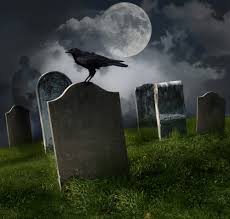
graveyard signifying death

How Death Became Permanent???

 
Imagine you are living a very happy life and fulfilling all your desires, earned enough money, the family is grown to three generations, etc. suddenly one day you have to leave every comfort or happiness even your loved ones forever and you would see them never again nor will they be able to see you again. How would you feel??? I am sure pretty sad and you would never want such a thing to happen. There was a time when every living entity lived eternally until one fine day came death. Death is the world’s greatest unsolved Mystery. Every living creature has to die and leave his body. The story of death across all cultures is pretty universal and the belief is also similar it’s just that after death belief differs. How did Death come into place? What is its origin? Every culture, civilization, and literature would give its own take on the creation of death. There are so many stories that explain the origin of death.

Hindu Mythology

 Yama is the god of Death according to Hindu mythology, he is the one who segregates souls to heaven or hell depending on the deed a particular individual has done, he is also called the god of justice as he does fair justice to departed souls. According to a story Yama was considered to have been the first mortal who died and espied the way to the celestial abodes, thus in virtue of precedence, he became the ruler of the departed and thus death originated. Also according to Vedic texts whatever is created has to be destroyed and after destruction, it has to be recreated. This idea, itself reveals the idea of death.

Biblical

There was no death at the time when God created the first man and the first woman, but because of the fall of Adam and Eve eating the forbidden fruit due to the temptation of Satan in the garden of Eden. The curse of death was put on the living entities. Thus Death became Permanent.

Native American Mythology

In the story of Cinauaua, the creator brothers determined the conditions of how Ute people would live. The younger brother wanted food for the people to be abundant and for the dead to come back to life the morning after they died. The older brother argued that if food were readily available, people would become lazy. He won the argument, so people had to work hard to feed themselves. He also disagreed with his brother about death and decreed that death would be permanent. To show that this was a mistake, the younger brother killed his brother’s son and pointed out that the grief his brother felt resulted from his decision about the permanence of death.
There is another account of the creation story in Native American Mythology. According to an Inuit story, the first Earth came into being when it fell from the sky, complete with people. The world was dark, there was only dirt to eat, and the people did not know how to die. As a result, the Earth became so crowded that it started to collapse. Then a great flood swept away all but a few people. These survivors realized that life could not go on as before. In exchange for accepting death, they were given sunlight. The creator was forced to recreate earth releasing all the water and making the earth a habitable place.

Greek mythology

In Greek mythology, the son of AEOLUS; Sisyphus outwitted Thanatos  (Death). Zeus had sent Thanatos to seize Sisyphus. Sisyphus asked Thanatos to demonstrate how the manacles that he carried worked. During the demonstration, Sisyphus managed to lock up Thanatos. Zeus had to send ARES from OLYMPUS to release Death upon the Earth again, for no one was dying.  

African Mythology

African Mythology has a number of stories of how death originated. most of them are concerned with spirits and animals such as coyotes, toads, chameleons, etc. animals’ involvement with death I will include in a separate post, I will list a few which are related to gods and goddesses of African tribes.

Abbasi Myth of Nigeria

Abbassi created the world and man and woman, however, he did not want humans to live on earth, but with Abbasi’s wife Atai convincing him he sent them to earth and humans started to hunt, till soil and work and forgot Abbasi, so to keep humans in place Atai sent death to the world. so that they could never be equal to Abbasi.

Naijok Myth of Sudan

A quarrel between a husband and wife led Ajok to make death permanent. The couple’s child had died, and the mother begged Ajok to bring the child back to life. When he did, the woman’s husband became angry. He scolded his wife and killed the child. Ajok declared that he would never again bring anyone back to life; making death to be permanent.

 A Myth from the Republic of Congo

The Supreme God had told humans that they could eat the fruit of any tree but the Tahu. As long as humans obeyed this rule, God took them to live in the sky with him when they grew old. One day a pregnant woman craved Tahu fruit and had her husband pick some for her. The Moon saw this and told the Creator. Creator was so angry with humans because of their disobedience that he sent death as a punishment

A Myth from Banyoro of Uganda

Once only animals died permanent deaths. Ruhanga, the Supreme God, resurrected people after death. All that he needed was that the living to express joy when someone was brought back to life. One woman refused to dress up and go to greet the newly risen because she was unhappy over her dog’s death. When Ruhanga, the supreme god heard this, He decided that if people did not care what happened to the dead, they might as well stay dead, and he never resurrected humans again.
So now you can see how death came into existence. There are lot many stories that I will be sharing in my future posts.


Mahavisnu and Krishna

Krishna in Atharva Veda

While Studying Mythology I came across “academically ” that Krishna is a Puranic God. But when I read the Gopalatapini Upanishad from the Atharva Veda, I can now state that claim is false. As this whole Upanishad describes Krishna as the supreme personality of the Godhead. I am just quoting the related verses to give reference and prove that Krishna is the Supreme Personality of Godhead academically without quoting from the Puranas, I am just giving the reference from Gopalatapini Upanishad, as my first blog post. I quote the following from the Gopalatapini Upanishad chapter 1.
1. Om Namah. I offer my respectful obeisance to Sri Krishna, whose form is eternal and full of knowledge and bliss, who is the rescuer from
distress, who is understood by Vedanta, who is the supreme spiritual master, and who is the witness in everyone’s heart.
2. Om. Some sages said to the demigod Brahma: “Who is the Supreme Personality of Godhead? Whom does death fear? By knowing whom
does everything else become known?  Who created this world? 
3. Brahma replied to them: “Krishna is the Supreme Personality of Godhead. Death fears Govinda. By understanding Gopijanavallabha
everything becomes known. By pronouncing the word “svaha” the Personality of Godhead created the world.
4. They then said: “Who is Krishna? Who is Govinda? Who is Gopijanavallabha? What is Svaha?”
5. To them, Brahma said: “Krishna means He who delivers from sin, Govinda means He who is famous on the earth, in the Vedas, and
among the Surabhi Cows, Gopijanavallabha means He who enchants the Gopis, and Svaha means the potency of the Supreme. All these
names refer to the Supreme Personality of the Godhead.
6. One who meditates on this Supreme Personality of Godhead, glorifies Him, and worships Him, becomes liberated. He becomes
liberated.
7. They said: What is His form? What is His glorification? How does one worship Him? Please describe this to us
8-9. Brahma said: He appears like a cowherd boy. His complexion is like a monsoon cloud. He stays under a desire tree.
The following verses describe Him.
10. Meditating with all his heart on Lord Krishna, whose eyes are handsome lotus flowers, whose complexion is a monsoon cloud, whose garments are lightning, who has two arms, who is rich in transcendental knowledge, who wears a garland of forest flowers, who is the supreme controller, who is surrounded by Gopas, Gopis, and Surabhi cows, who rests under a sura-druma tree, who is decorated with splendid ornaments, who stands in the middle of a red lotus flower, and who is served by breezes that have touched the Yamuna’s waves, a person becomes free from repeated birth and death. 
20. Lord Krishna is the worshipable, all-pervading supreme controller. Although He is one, He manifests in many forms. They who are intelligent worship Him as He stands on His altar. They, and not others attain eternal happiness.
21. The Brahmanas, who worship, as He stands on His altar, the one greatest among the eternal and greatest among conscious persons,
the one who fulfills the desires of the many, they, and not others, attain perfection.
22. To them who always diligently worship Lord Visnu’s transcendental form, the Lord, in His original form as a cowherd boy, shows His lotus
feet.
23. It was Krishna who initially instructed Brahma in Vedic knowledge and disseminated Vedic knowledge in the past. They
who desire liberation surrender to Him, the Supreme Personality of Godhead, who grants transcendental knowledge to His devotees.
27-28. Brahma said: I continually glorified the Lord and meditated upon Him for millions of years, and at last, I was able to understand the
transcendental form of the Lord as Sri Krishna, in the dress of a cowherd boy. With devotion in my heart, I bowed down before Him. He
gave me the eighteen-syllable mantra to be used for the activity of creation, and then He disappeared.
29. When I desired to create the universe He again appeared before me, showing me in these syllables the universe that was to be.
31. By worshiping Him, Shiva became free from illusion, and by chanting this mantra in a solitary place, he attained the Lord.
38. With eloquent prayers, I and the Maruts please Lord Govinda, whose form is eternal and full of knowledge and bliss, who stays under a
desire tree in Vrndavana, and who is this five-word mantra. 
54. Therefore, Krishna is the Supreme Personality of Godhead. One should meditate upon Him, glorify Him, serve Him and worship Him.
Also, Brahma in Bhrama Samhita glorifies  Sri Krishna as Ishwara Parama Krishna, sat chit Annada Vigraha. Krishna is the supreme controller and his form is of knowledge and bliss.  Krishna in numerous verses of the Bhagavad Gita mentions himself as the ultimate God. Bhagavad Gita chapter 10.8 Krishnasays aham sarvasya prabhavo, mattah sarvam pravartate, iti matva bhajante mam,budha bhava-samanvitah. (I am the source of all spiritual and material worlds. Everything emanates from Me. The wise who know this perfectly engage in My devotional service and worship Me with all their hearts.) Many texts such as Vedas, Narayan Suktam, Vishnu Sukta, Rudra Hridya Upanishad, etc. the list can go on, mentions Krishna to be the Supreme God.