July 2016

Goddess

Goddess from the Epics you wouldn’t want to meet.

 
There are many Goddesses and quite can be violent in around world Mythology and Cultures. But I came across really brutal and violent Goddesses from the two great Epics the Canaanite Epic Ba’al and the Finish Epic Kalevala. These goddesses are such that you would definitely not like to meet them. Epics generally show a Hero’s journey but these two epics mention brutality by Goddesses
 Goddess Anat

From The Epic of Ba’al (Ugaritic Mythology)
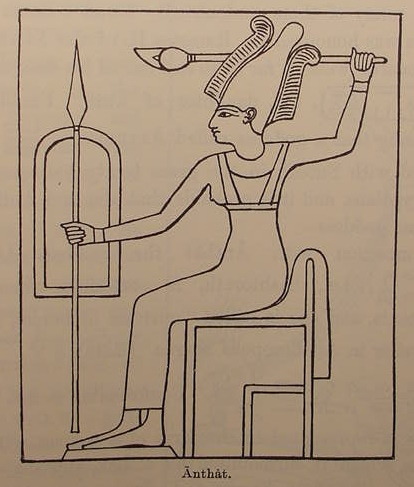

From The Epic of Ba'al Ugaritic MythologyAnat was one of the chief deities of the Canaanites, people of Syria and Palestine in the ancient Near East. A goddess of love, fertility, and war, she was the sister and wife of the god Baa. In the  Ugaritic mythology, Anat appears as a fierce, wild, and furious warrior in a battle, wading knee-deep in blood, striking off heads, cutting off hands, binding the heads to her torso and the hands in her sash, driving out the old men and townsfolk with her arrows, her heart filled with joy.

‘Anat is a violent war goddess, a virgin who is the sister and, according to a much-disputed theory, the lover of the great god Ba‘al Hadad. Ba‘al is usually called the son of Dagan and sometimes the son of El, who addresses ‘Anat as “daughter”. ‘

In the 14th century bc Ugartic text The Epic of Ba’al, She defends Her brother the storm-God Ba’al. But Mot triumphs against Ba’al and sends Him to the land of the dead; Anat, with help from the sun Goddess Shapash, Who has access to the Underworld, brings Him back to life. Anat then takes revenge on Mot, cutting Him up into tiny pieces, winnowing Him like grain, grinding Him up, and then sowing Him in the fields. Before Anat goes into battle She anoints Herself with henna and ambergris. She dresses in saffron and purple-dyed clothing. She then proceeds to slaughter the enemies of Ba’al, across west and east, hanging severed heads from Her back, and affixing hands to Her belt. Laughing and rejoicing, She wades to Her knees in the blood of soldiers, “to Her thighs in the gore of quick warriors.” When the slaughter is finished, She then washes in the rainwater of Her brother Ba’al and again adorns Herself with ambergris.


Goddess  Loviatar, From the Finish Epic Kalevala


Goddess  Loviatar From the Finish Epic KalevalaThe goddess of death, disease, and desolation of Finnish mythology. She is the blind daughter of Tuonetar and Tuoni, Goddess and God of the Underworld.  She is mentioned in the 45th rune of the Finish Epic Kalevala. The epic describes her as the most wretched daughter with the blackest of hearts bent on unleashing the most wicked and terrible illnesses upon the mortal lands. She is known for being blind, ugly, and old, a virgin.

Loviatar is credited as the mother of the most horrifying evils in the world. Each of her nine sons is the most appalling disease. The epic Kalevala provides a description of Loviatar’s impregnation and the birth of the nine terrible children.  Loviatar is made pregnant by the east wind. She is greatly distressed and burdened by their weight.  She travels “by the mountain springs and fountains, by the crystal waters flowing, by the sacred stream and whirlpool, by the cataract and fire stream”, all the while blind and in great pain over her labor.  When she went into labor, Loviatar went to Louhi, the Goddess of sorcery, who helped her to give birth to nine sons. The first eight of these sons she named Pistos (consumption), Ähky (colic), Luuvalo (gout), Riisi (rickets), Paise (ulcer), Rupi (scab), Syöjä (cancer), and Rutto (plague). The ninth, who personified envy, was not named. Thus due to the birth of such nine dreadful children, Loviatar is the most violent of the goddess.

Goddess Lakshmi

Why Lakshmi never visits Brāhmaṇas ?

 
Brāhmaṇas are first in Vranashram, born out of Purusha’s mouth “Braahmanno-Asya Mukham-  Aasiid” (Purusha Suktam RV.10.90) the head of the society responsible to impart knowledge and take care of the places of worship. Advisors to the rulers during ancient times remain always poor with monetary riches but poses a wealth of knowledge. Monetary wealth is caused when Goddess Lakshmi the Goddess of wealth visits one’s house, along with her she brings riches, but Goddess Lakshmi refuses to grant riches to Brāhmaṇas, wonder why?  


Brāhmaṇa’s occupation is teachers and people who carry out deity worship and perform rituals, generally live on donations they get, they are not supposed to accumulate wealth. As stated in Manu Smriti (Laws of Manu)
          
To Brahmanas he assigned teaching and studying the Vedas, sacrificing for their own benefit and for others, giving and accepting of alms (Chap 1, verse 88).

 A learned Brahmana must carefully study them, and he must duly instruct his pupils in them, but nobody else shall do it. (Chap 1, verse 103).


Bhramanas According to Vedic Culture. A Brāhmaṇa is supposed to devote his whole life to understanding Brahman. Brahma jānātīti Brāhmaṇa: one who knows Brahman is called a Brāhmaṇa. charity is offered to the Brāhmaṇas because they are always engaged in higher spiritual service and have no time to earn their livelihood. As the householders are engaged in family affairs and have forgotten their actual purpose in life. As it is said in the Vedas, one should awake and achieve what is due to him in this human form of life.  There are also a few legends associated with the Brāhmaṇa being poor. the legends illustrate why the goddess of wealth Lakshmi never sets foot in the house of Brahmana and thus Brahmanas remain poor.

Sage Bhrigu’s Fault.

          Once Sage Bhrigu was given a task to test the divine trinity Brahma, Vishnu, and Shiva as to who should be the presiding deity for sacrifices. Upon being entrusted with the task Maharishi Sage Bhrigu decided to test Lord Brahma first. He went on to see Lord Brahma in Brahmaloka. Where Lord Brahma did not welcome Sage Bhrigu   Maharishi, to the inhospitality of Lord Brahma, Sage Bhrigu  Cursed Lord Brahma that he won’t be a worshipable deity. After which Sage Bhrigu went on to visit Lord Shiva at Kailash Parvata. On reaching Kailash Parvat,  Nandi stopped him from going inside because, at that time, Shiva and Parvati were in intimacy. Sage Bhrigu curses Lord Shiva to be only worshipped in Linga form.  
 
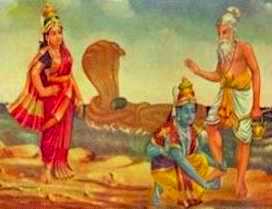
Vishnu touching Sage Brighu's FeetThen in order to test Lord Vishnu, Maharishi reached Vaikuntha Dhama. He entered Vaikuntha without Lord Vishnu’s permission and saw that the Lord was resting at that time. Maharishi asked him to wake up, but Lord was in deep sleep. On seeing no reaction from Lord, Sage Bhrigu hit Lord Vishnu on his chest. Lord Vishnu got up after the strike and realized what had happened. On realizing that Maharishi had hit him with his foot, Lord asked him, “Maharishi, did the hit hurt your foot? Did your soft foot hurt hitting my hard chest”?


Seeing the humble etiquette of Lord Vishnu, Sage Bhrigu was pleased and declared him superior amongst the Trinity. But the place where Sage Bhrigu kicked on the chest was where Goddess Lakshmi resided, Lord Vishnu is also called “Srivasta” Srivatsa means “beloved of Sri”, goddess Lakshmi. It is a mark on the chest of Vishnu where his consort Sri Lakshmi resides.


Goddess Lakshmi felt that Sage Bhrigu has kicked her home and she could not tolerate the disrespect displayed by Sage Bhrigu towards Lord Vishnu and herself so she cursed him that henceforth she would never visit Brāhmaṇas and they will all live in absence of wealth. On hearing this curse from Goddess Lakshmi, Maharishi told her about the true nature of his visit. Goddess Lakshmi then told Sage Bhrigu, that her curse would still haunt  Brāhmaṇas but whenever any Brāhmaṇa would worship Lord Vishnu, he would be liberated from the curse.

Pluck Bilva leaf and Lakshmi will Leave

Lakshmi remained an avid devotee of Lord Shiva. Every day Lakshmi had a thousand Lotuses plucked by her handmaidens and which she used to worship

Bilva Patra Lord Shiva.  One day, counting the lotuses she offered, she found that there were two less than a thousand.  It was too late to pluck anymore for the evening had come and the lotuses had closed their petals for the night and flowers are not to be plucked after sunset. Lakshmi thought it inauspicious to offer less than a thousand. Suddenly she remembered that Vishnu had once described her breasts as blooming lotuses. She decided to offer them as the two missing flowers.

Lakshmi cut off one breast and placed it with the flowers on the altar.  Before she could cut off the other, Shiva, who was extremely moved by her devotion, appeared before her and asked her to stop.  He then turned her cut breast into round, sacred Bilva fruit and sent it to Earth with his blessings to flourish near his temples.  The reference to the connection of Lakshmi and Bilva can be found in Bilva Ashtakam and Sri Suktam.


Lakshmyaascha stana utpannam Mahaadeva sadaa priyam,
Bilva vriksham prayachchhaami eka bilvam Shivaarpanam.
Darshanam bilva vrikshasya sparshanam paapanaashanam,
Aghorapaapasamhaaram eka bilvam shivarpanam.


Born from the breasts of Goddess Lakshmi, the Bilva tree is ever dear to Mahadeva. So I ask this tree to offer a Bilva leaf to Lord Shiva. To have darshan of the Bilva tree, and to touch it, frees one from sin. The most terrible karma is destroyed when a Bilva leaf is offered to Lord Shiva.


Adhityavarne thamaso adhijaatho vanaspathisthva vrukshodha bilva,
Tasya phalaani tapasa nudhanthu mayaantharayascha bahya alakshmi.


Sri Bilva Shtakam (verse. 6–7)


Hey Goddess who shines like the sun, By your great penance, Was born the bilva tree, Which is the king of forests, And let its fruits full of knowledge, Remove ignorance inside, And bad things outside. (Sri Suktam)


One legend says that Lakshmi once told Lord Vishnu that she was upset about the fact that the Brāhmaṇas, kept tearing off leaves from Bilva tree which like her home, and used as an offering to Shiva. When they didn’t take care of her home, then why should she enter the homes of Brāhmaṇas?


Conclusion Brāhmaṇas are left Poor.