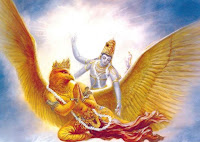
June 2016

Jagannath_Baladeva_Subhadra

Lord Jagannath is very unwell and under Medication.

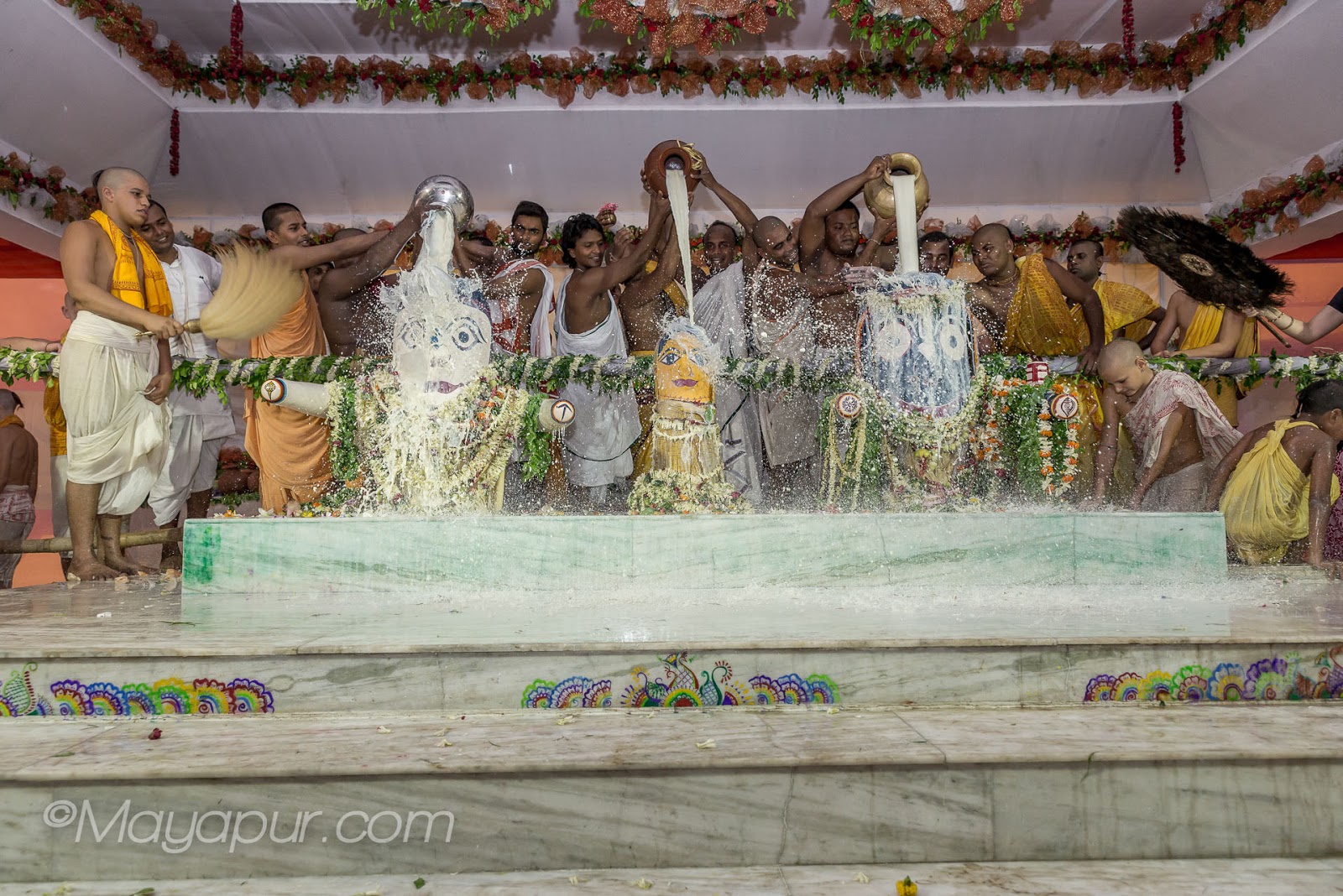
Jagannath the lord of the universe is unwell and is under medication. Sounds strange but this is true. Lord Jagannath is given a ritual bath on eve of the Snana Yatra which is celebrated on the Purnima (full moon day) of the Hindu month of Jyeshtha. It is an important festival for devotees and this festival embarks the beginning of the Ratha yatra. on this day deities of Jagannath, Baladeva, Subhadra, Sudarshan, and Madanmohan are brought out from the Jagannath Temple is brought out in a grand procession from the Garbhagriha (sanctum sanctorum) to the Snana Bedi (bathing platform) where they are given a ceremonial bath and are given Devotees come to view the deities. According to Skanda Purana when Raja Indradyumna installed the wooden Deities, he arranged this bathing ceremony. This day is considered to be the birthday of Lord Jagannatha.


Abhisheka or Bathing Jagannath Baladeva Subhadra
This bathing ceremony is believed to be a tribal ceremony and has a specialty. The Daitas and the people of Savaras tribe have the exclusive right to conduct the festival. The tribal called Saoras from southern Orissa performs a rite to bathe their Deities ceremonially on the last day of the month of Jyestha. For this, they collect water from remote jungles where it remains untouched even by the shadows of animals.
On the fourteenth day (Chaturdashi) , The Deities are taken out in procession, the whole process is called Pahandi or Pahandi-Vijaya. For the festival, the Snana Vedi (bathing platform) is well decorated with traditional paintings of trees, and gardens along with Flags and flower arches. The Deities are decorated with flowers. All kinds of perfumed items such as incense, oils, etc. are then offered.


Then the next day on Purnima day after Mangala Arati, the Suaras and Mahasuaras go in a ceremonial procession to fetch water from Golden Well in one hundred and thirty vessels of copper and gold. All of them cover their mouths with a piece of cloth so as not to contaminate it, even with their breath. Then all the vessels filled with water are preserved in the Bhoga Mandapa. The Palla-pandas then purify the water with turmeric, whole rice, Benachera, sandalwood, Aguru, flowers, perfumes, and medicinal herbs. The filled vessels are carried from the Bhoga Mandapa to the Snana Vedi by the Suaras in a long single-line procession. This water is called ‘Jaladhivasa’ water, and the ritual is called Jalabhiseka.


Due to the number of bathing liquids that are offered to cool the Lord’s transcendental body at the hottest time of the summer in India, Lord’s painted body becomes a bit washed out. This is the time when Lord Jagannath along with Baladev and Subadra are traditionally believed to fall ill and are kept in a sick room to recuperate in privacy under the care of the Raj Vaidya. this period is known as Anasara the Gods cannot be seen by devotees. During ‘Anavasara’, the Daitas offer to the Deity only fruits and water mixed with cheese, and dasa-mula medicines that is made from spices and herbs like pepper, cardamom, tulsi leaves, sandalwood, rose petals, water from the Ganges and rose water to help them cure His fever. In a devotional mood, the devotees accept that due to all the bathing the Lord becomes transcendentally tired, and therefore needs to take rest. Somewhat like human beings, They are considered to have ‘fallen ill’ and are treated by the Raja Vaidya or the Royal Physician with specific medicines (dasa-mulas) the deities are fed specially prepared ‘Kadha’ illness. This bitter kadha is offered as prasad to the devotees who visit the temple in the hope to keep the dreaded ailments at bay. This kadha has anti-fever, anti-malarial, pain-reliever, and digestive properties.

Along with the offering of kadha. Because the deities become a bit discolored due to so much bathing with water Seeing the wooden Deities in discolor, some devotees may not have the appropriate devotional attitude and may in fact feel sinful repugnance. so the Deities are kept away from public view for fifteen days and during all these days the daily rites of the temple remain suspended.  

The Deities are kept in a special “sick room” called the Ratana Vedi inside the Temple. This period is called ‘Anavasara-Kala‘, meaning improper time for worship. During these fifteen days, the Daitas (descendants of Visvavasu, the Savara) repaint and restore the Deities and Jagannatha’s fine decorations using only natural earthly mineral paints, not modern oil-based paints. The period of coloring and decorating the Deities is divided into seven short periods, each of two days duration, and a short period of one day set apart to give finishing touches. Thus the period covers the whole fortnight. On the 16th day the Deities in their newly appearing forms after renovation become ready for the public Darsana.


Hathi Vesa of Jagannath

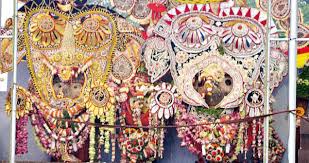
 Just after the Snan Yatra lord, Jagannath is dressed in a special costume called Haati Vesa. This is a very special Darshan. Lord Jagannatha and Lord Balarama then put on the elephant dress, Haati Vesha, and Subhadra wears a lotus flower vesa. The story behind this vesa is that a great scholar and staunch devotee of Lord Ganesha named Ganapati Bhatta, a devotee from Karnataka had come to Puri visit during Snana Yatra. He was rewarded and appreciated for his scholarship. The king asked the scholar to accompany him to see Lord Jagannatha, which he refused as he would only worship Ganesha, however after being persuaded so much he went to take darshan of lord Jagannath. There to surprise all, Lord Jagannatha appeared with an elephant-like form that resembled Ganesha. Since then, the ritual of dressing the deities in dresses like elephants (resembling Ganesha) is prevalent. Another reason being the deities are discolored so before they are painted back the deities are withheld for darshan.

Some other interpretations of this decoration is associated with Buddhism as well. Buddhists claim that the Vesa is the manifestation of Buddha’s incarnation of Lord Jagannath. Another legend goes that Lord Ganesh was invoked at the time of the construction of Shree Mandir in order to destroy all related obstacles. Some say that the idol of Shree Ganesh was brought by Gajapti Purusottam Dev after his victory over Kanchi War and the idol is worshiped in the temple as “Kanchi Ganesh“.


Why Eating Grains on Ekadashi is Most Sinful Act ?

Ekadashi the fasting occurring on the 11th lunar day is most auspicious for Vaishnavas. on this day Vaishnavas refrain from eating any sort of grains, and they are deeply engrossed in worship of the Supreme Personality of Godhead, Vishnu. we might have heard many stories of how and why Ekadashi began and why to refrain from grains but the detailed description and mention of this Vrta is in Padma Puran. in the section entitled Kriya-Sagara-Sara, 14th chapter of the Padma Purana, Uttara Kanda, during Conversation of Veda Vyasa and Jaimini, Veda Vyasa explains the Importance of Ekadashi.
Once Sage Jaimini desired to hear the benefits of fasting on Ekadashi and of its appearance from his Guru Veda Vyasa. Jaimini then asked O Gurudeva! When did Ekadashi take birth and from whom did she appear? What are the rules for fasting on the day of Ekadashi? Please describe the benefits of following this vow and when it should be followed. Who is the utmost worshipable presiding deity of Sri Ekadashi? What are the faults in not observing Ekadashi properly?
Veda Vyasa started to illustrate the story of how Ekadashi originated he said “At the beginning of creation, the Supreme Lord Vishnu created the moving and non-moving living entities within this world made of five gross material elements. Simultaneously, for the purpose of punishing evil human beings, He created a personality whose form was the embodiment of the worst kinds of sin (Paap-Purusha). The different limbs of this personality were constructed of various sinful activities.
His head was made of the sin of murdering a Brahmana, his two eyes were the form of drinking intoxicants, his mouth was made from the sin of stealing gold, and his ears were the form of the sin of having an illicit connection with the spiritual master’s wife, his nose was of the sin of killing one’s wife, his arms the form of the sin of killing a cow, his neck was made of the sin of stealing accumulated wealth, his chest of the sin of abortion, his lower chest of the sin of having sex with another’s wife, his stomach of the sin of killings one’s relatives, his navel of the sin of killing those who are dependent on him, his waist of the sin of egotistical self-appraisal, his thighs of the sin of offending the guru, his genitals of the sin of selling one’s daughter, his buttocks of the sin of telling confidential matters, his feet of the sin of killing one’s father, and his hair was the form of all sorts of less severe sinful activities. In this way, a horrible personality embodying all sinful activities and vices was created. His bodily color is black, and his eyes are yellow. He inflicts extreme misery upon sinful persons.
        This is really Ironic that according to Purusha Suktam of rig Veda Lord’s created the Brahmanas, Kshatriyas, Vaishya, and Sudras through his Mouth, Arms, Belly, and Feet. From the Supreme creator’s mind, the moon was born, from his eyes, the sun was born. and From his mouth, Indra and Agni were born his breath became the wind. The Purusha’s navel space manifested, from his head, the sky and the earth was created through his feet, his ears the directions and thus the creation was created. This very mention can be also found in Srimad Bhagavatam. But according to this particular mention of the Ekadashi story in Padma Puran, we find that through the same body parts of the Lord the Sins were also created. Thus the sins are also manifestations of the supreme.

Let us look at the story in Padma Puran further.

When this personality Paap- Purusha or sin was created Lord Vishnu felt very sad and he felt really guilty, that he had created happiness and misery both. so he felt that He needs someone to control this Paap-Purusha Lord Vishnu then created Yamaraja and the different hellish planetary systems. Those living entities who are very sinful will be sent after death to Yamaraja, who will punish them according to their sins, and send them to an appropriate hellish region to suffer.
          
After these adjustments were made, once went to the house of Yamaraja. where he heard very loud crying sounds from the southern direction. He became surprised by this and inquired of Yamaraja, ‘From where is this loud crying coming?’
          
Yamaraja in reply said,’ The different living entities of the earthly planetary systems have fallen to the hellish regions. They are suffering extremely for their misdeeds. The horrible crying is because of suffering from the infliction of their past bad actions.’
           
After hearing this Supreme Lord Vishnu went to the hellish region to the south. When Lord Vishnu saw the conditions in the Hellish Planets his heart became filled with compassion. Lord Vishnu thought to Himself, ‘I have created all this progeny, and it is because of Me that they are suffering.
So to elevate the living entities from their miseries and bring them back to his abode Vaikuntha merciful Lord suddenly manifested from His own form the deity Ekadashi. Afterward, the different sinful living entities began to follow the vow of Ekadashi and were then elevated quickly to the abode of Vaikuntha. therefore Ekadashi and the Supreme Lord Vishnu are non-different. Sri Ekadashi is the utmost pious activity and is situated at the head of all vows.
           
Following the ascension of Sri Ekadashi, Paap-Purusha was very intimidated. He then approached Lord Vishnu with doubts in his heart and began offering many prayers, whereupon Lord Vishnu became very pleased and said, ‘I have become very pleased by your nice offerings. What boon is it that you want?’
       
The Paap-Purusha replied, I am Your created progeny, and it is through me that you wanted distress given to the living entities who are very sinful. But now, by the influence of Sri Ekadashi, I am destroyed. O Keshava, After I die, all the living entities who are your part and parcel will be liberated, and thus there will be no one to carry out your eternal pastimes on earthly planets. if there is no adharma (injustice, sin)  then you would not need to descend to the earthly planets. O Keshava! If you want these eternal pastimes to carry on, then You please save me from the fear of Ekadashi. No type of pious activity can bind me apart from Ekadashi as it is Your own manifested form. Out of fear of Sri Ekadashi I have fled and taken shelter of men; animals; insects; hills; trees; moving and non-moving living entities; rivers; oceans; forests; heavenly, earthly, and hellish planetary systems; demigods; and the Gandharvas. I cannot find a place where I can be free from the fear of Sri Ekadashi. O, my Master! I am a product of Your creation, so therefore very mercifully direct me to a place where I can reside fearlessly.
         Hearing the Paap- Purusha’s Cry Lord Vishnu, began to speak with laughter  ‘O Paap-Purusha, rise up! Don’t lament. I’ll tell you where you can stay on the lunar day of Ekadashi. On the day of Ekadashi, which is the benefactor of the three planetary systems, you can take shelter from food grains. And you will be safe from my form as Ekadashi. After giving direction to the Paap-Purusha, the Supreme Lord Vishnu disappeared and the Paap-Purusha returned to the performance of his own activities.
     Therefore, those persons who are serious about the ultimate benefit of the soul will never eat grains on Ekadashi. According to the instructions of Lord Vishnu, every kind of sinful activity that can be found in the material world takes its residence in this place of grains. Whoever follows Ekadashi is freed from all sins and never enters into the hellish regions.
Nirjala Ekadashi

Pandava Nirjala Ekadashi

Today 16th June 2016 is Pandav Nirjala Ekadashi, and Prarayan or Fast-breaking time is the next day 17th June from 04:50 to 09:22 am.


Nirjala Ekadashi falls on the 11th lunar day of the waxing fortnight of the Hindu month of May/June. Ekadasi fasting is very dear to Lord Vishnu or Lord Krsna. This is a very important fasting day for Vaishnavas. According to the Markandeya Purana and the Vishnu Purana, the day of Ekadashi is itself a form of Vishnu. The vrata observed on this day is said to wash away all sin.  The importance of observing fast on Ekadashi is given in Shri Hari Bhakti Vilas.  it is said :
Ekadashi  vratam nama
sarva kama phala pradam
kartabyam sarvada viprair
Vishnu prinana karanam’
” Just by observing a fast on Ekadasi day, all your desires will come true, and one who follows the fast becomes very dear to Lord Vishnu”
Therefore, one will have to observe the vow of Ekadashi to satisfy the lord.  Happiness and prosperity will automatically follow.  As stated in Brihat Naradiya Purana “if everyone including the Brahmins, Kshatriyas, Vaisyas, Sudras, and the women observe Ekadashi then they will certainly attain liberation”.  As per the teachings of the Vedic Literature ‘paap-purusha’ (sin) resides in grains on Ekadashi and so it should be avoided in any form. I will post the Story of how Ekadasi Originated according to Padma Puran separately.

Origin of Nirjala Ekadasi

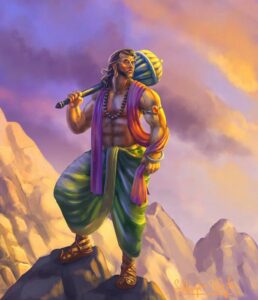
BhimaThe description of Nirjala Ekadashi occurs in Brahma Vaivarta Purana as a conversation between Vyasa and Bhima. One of the Pandava Brothers.
Once Bhima asked the great sage Vyasa that my brothers fast on Ekadasi day. They also ask me to fast as well, which I always tell them though. I know that fasting on Ekadashi is an instruction from the scriptures. But I cannot bear my hunger and so  I am unable to fast.  I can give in charity as per my capacity, and I can worship Lord Kesava with proper rules and regulations, but I cannot fast.  So please instruct me on how can I obtain the result of Ekadashi without having to fast.
Bhima also confessed that It was really impossible for him to observe fast on 24 Ekadashis every year as instructed by the Lord.  He could not even tolerate hunger for a movement. But then he said I can try to fast for a day in a year. Vyasa replied that the Ekadashi which occurs during the waxing moon in the month of May/June during the sun present in either Taurus or Gemini Rasi is called Nirjala Ekadashi.  One should observe total fast even from drinking water in this Ekadashi.  On this day one should perform Acamana for purification by drinking that amount of water in which a single mustard seed or a drop of gold can be immersed.  One should place the said amount of water in his palm which he should form to resemble a cow’s ear.  If one drinks more or less water than this then it will amount to the drinking of wine.
One must not eat anything at all on this Ekadashi otherwise his vow will be broken.  One should not drink even water from the movement of sunrise from the day of Ekadashi until the sunrise on the day of Dvadasi.  In this way, if one strictly observes this Ekadashi without drinking water then he can attain the results of observing all the Ekadashis of the year.
In the early morning on the day of Dvadasi, one should take a bath and give gold and water in charity to the brahmins.  Thereafter the follower should gladly eat with the brahmins.
By following this Ekadashi one can achieve the result of following all the Ekadashi s throughout the year.  Lord Vishnu once told me that if a person gives up all varieties of religion as stated in Bhagavad Gita 18.66 ” sarva-dharman parityajya, mam ekam saranam vraja, aham tvam sarva-papebhyo, moksayisyami ma sucah: Abandon all varieties of religion and just surrender unto Me. I shall deliver you from all sinful reactions. Do not fear. and follows this Nirjala Ekadashi which is very dear to me and is certainly relieved from all sinful reactions.
By observing this Ekadashi one achieves the benefits of visiting all the holy places.  At the time of death, such a person is not approached by the fierce-looking Yamadutas. Instead, he is approached by the divine-looking Vishnuduta to be transferred to the abode of Vishnu.  If one gives water and cows in charity after observing this Ekadashi then he is freed from all his sinful activities.
 
When the other Pandavas heard about the glories of this Ekadashi they resolved to observe it. since Bhima began observing this Nirjala Ekadashi from that day onward this Ekadashi became famous as Pandava Nirjala or Bhimseni Ekadashi.
Lord Shiva

Pradosha Vrta- Lord Shiva in his Best Mood.

Pradosham is the twilight period just before sunset and after sunset on the Trayodashi Tithi, the 13th Lunar day falling in Krishna and Shukla Pakshas, and this Vrata is very dear to Shiva. Pujas and prayers are performed during this period. Many people during this period spend time in a Shiva temple or listening to the glory of Shiva. People Worship Siva throughout the night, bath the Siva Linga with Pancamrta (namely milk, curds, ghee, sugar, and honey), homa, Japa of Lord Shiva’s names, and prayers for forgiveness are the other items involved in its observance. The person can then, at the end of Vrta, do Parana (break the fast by having Prasada). One may take a vow to observe this Vrta for 24 or 14 or 12 years. At the end of this period, the person has to perform the Udyapana, a concluding rite indicating the completion of the vow.


There is an interesting story mentioned in The Skanda Purana where this Vrta is prescribed to a Bhramin lady.


Once a Brahmin lady came to Sandilya Muni with two boys, her son, Suchivrata, and an orphan prince, Dharmagupta, whose father was killed in battle and the kingdom was taken over by enemies. Acting upon the advice of Sandilya Muni, the woman and the boys performed the Vrata with great devotion. After four months, that is, in the eighth Pradosha, Suchivrata obtained a pot of nectar and drank the divine Amruta. Prince Dharmagupta won the hand of a celestial princess and, as ordered by Lord Siva, with the help of the celestial king himself, his enemies were slain and his kingdom restored to him. Then Dharmagupta attained the Lord’s supreme abode.
A very important point to be remembered in this connection is that during this auspicious period all the hosts of celestial beings and gods come down from the heavens and attend the worship in their subtle forms. This adds immensely to the sanctity of the worship.
The mere sight of the Deity in a temple during this period will destroy all sins, and bestow bountiful blessings and Grace upon the fortunate beholder. Even a single bel leaf offered to the Lord at this unique, auspicious moment equals a hundred Mahapujas. The importance of offering Bilva to Shiva is stated in Bilva Ashtakam:
“Tridalam Trigunakaaram Trinethram Cha Triyayusham,
Trijanma Papa Samharam Eka Bilwam Shivarpanam”
I offer one leaf of Bilwa to Lord Shiva,
Which has three leaves,
causes three qualities,
that is like the three eyes of Shiva,
Which is like the triad of weapons,
And which destroys the sins of three births.

Origin of the Vrta

The Vrta is said to be originated during the Samudra Manthan, as mentioned in Shiva Purana, it all began with the churning of the milk ocean by the Gods and the Demons on a holy Dwadasi day. While they were churning the Ocean with Vasuki being the Rope. Lord Vishnu held Mount Meru which was used as a churner in his Kurma Avatar, the tortoise incarnation. The first item that came up was Hala Hal, the most deadly poison, that was capable of destroying the whole universe. The poison sent dreadful shivers amongst every entity in the universe.


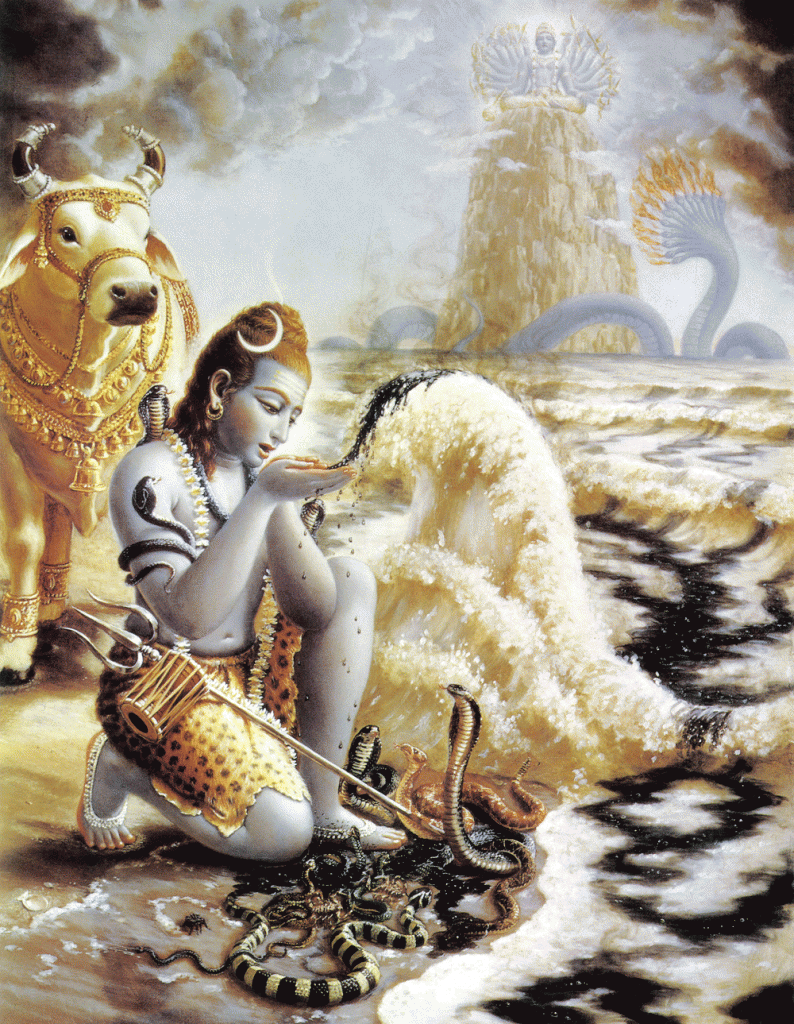
Lord Shiva Drinking Poision Every God and Demon then started to pray to Shiva for Help, Lord Shiva came to the rescue and ordered Nandi to get the poison, and lord Shiva drank all of it. Hearing this goddess Parvati, came to save the universe. As all of the creation lies inside Lord Shiva, if the poison would reach Shiva’s belly then, the whole creation would be destroyed. Goddess Parvati grabbed Lord Shiva’s throat and made the poison stay there. Thus turning Lord Shiva’s throat bluish, giving him the name Nilkantha, or the one with a blue throat. Hala-Hala started taking its toll. The poison put lord Shiva asleep, till Trayodasi day when Lord Shiva started to Show signs of normalcy. Nandi was covered with false ego and felt that in spite of inhaling the fumes of Hala-Hal and a few drops falling in his mouth nothing happened to him.
 

He started to feel superior to Lord Shiva, seeing Nandi dance off in Ego lord Shiva, took a leap, and started to dance in between the horns of Nandi. Every time Nandi attempted to throw Shiva off, Shiva took a leap gracefully into the air. Thus Nandi and all Gods experienced the merciful and benevolent form of Lord Shiva. Therefore it is believed that Lord Shiva is most benevolent on Pradosha or Trayodashi day.

Five types of Pradosh


1. Nitya Pradosh– The evening time on all days, between just 72 minutes before sunset and the time when the stars rise or become visible in the sky.


2.  Paksha Pradosh– evening time of Shukla Paksha Chaturthi every month.


3. Maasa Pradosh– Sandhya Krishna Paksha Trayodashi every month.


4. Maha Pradosh– Sandhya time of Krishna Paksha Trayodashi which falls on a Saturday.


5. Pralaya Pradosh– The time when the entire universe gets annihilated or merged with Lord Shiva.


This is the most favorable moment for direct contact with God. We can reduce our bodily activities to a minimum when we fast and pray on that day. We can have the vision of the Lord who resides in our hearts.


Ashta Mukha Ganda Bherunda Narasimha

Ashta Mukha Ganda Bherunda- The most special and unknown form of Lord Narasimha


ugram viram maha-vishnum
jvalantam sarvato mukham
nrisimham bhishanam bhadram
mrityur mrityum namamy aham
“I bow down to Lord Narasimha who is ferocious and heroic like Lord Vishnu.
He is burning from every side. He is terrific, auspicious and
the death of death personified.”
“ॐ नमो भगवते अष्ट मुख गनड बेरुड़ा महोग्रोलको ज्वल ज्वाला सुदर्शन वाराह श्री लक्ष्मी न्रुसिम्हाया नमः “
“Om Namo Bhavathey Ashta Mukha Ganda berunda Mahogrolko Jwala Jwaala sudarshana vaaraha sree lakshmi Narasimhaya namaha”
We all know the great battle of Lord Narasimha the fourth incarnation of Lord Vishnu and the great demon Hiranyakashyipu. This incarnation appeared to save his devotee, Prahalad. There is more to the story, Lord Narsimha took a very special form of Ganda Bherunda and Asta Mukha Ganda Bherunda.
After Narasimha had slain the demon Hiranyakashipu, through the taste of blood, Narsimha did not let go of his dreadful form. No one could control his anger, Brahma and other Devatas were afraid of his rage. Brahma, accompanied by other Devatas, approached Siva and described the Narasimha Avatar. Siva took it lightly and said this is a tiny issue. He can sort it out with ease in no time; he instructed Ganesha to subdue Narasimha; when Ganesha approached Nrsimha, Narasimha severely warned and drove him away; Nandi, Kala Bhairava, Veerabhadra were sent to subdue Nrsimha. They were severely attacked by Nrsimha.


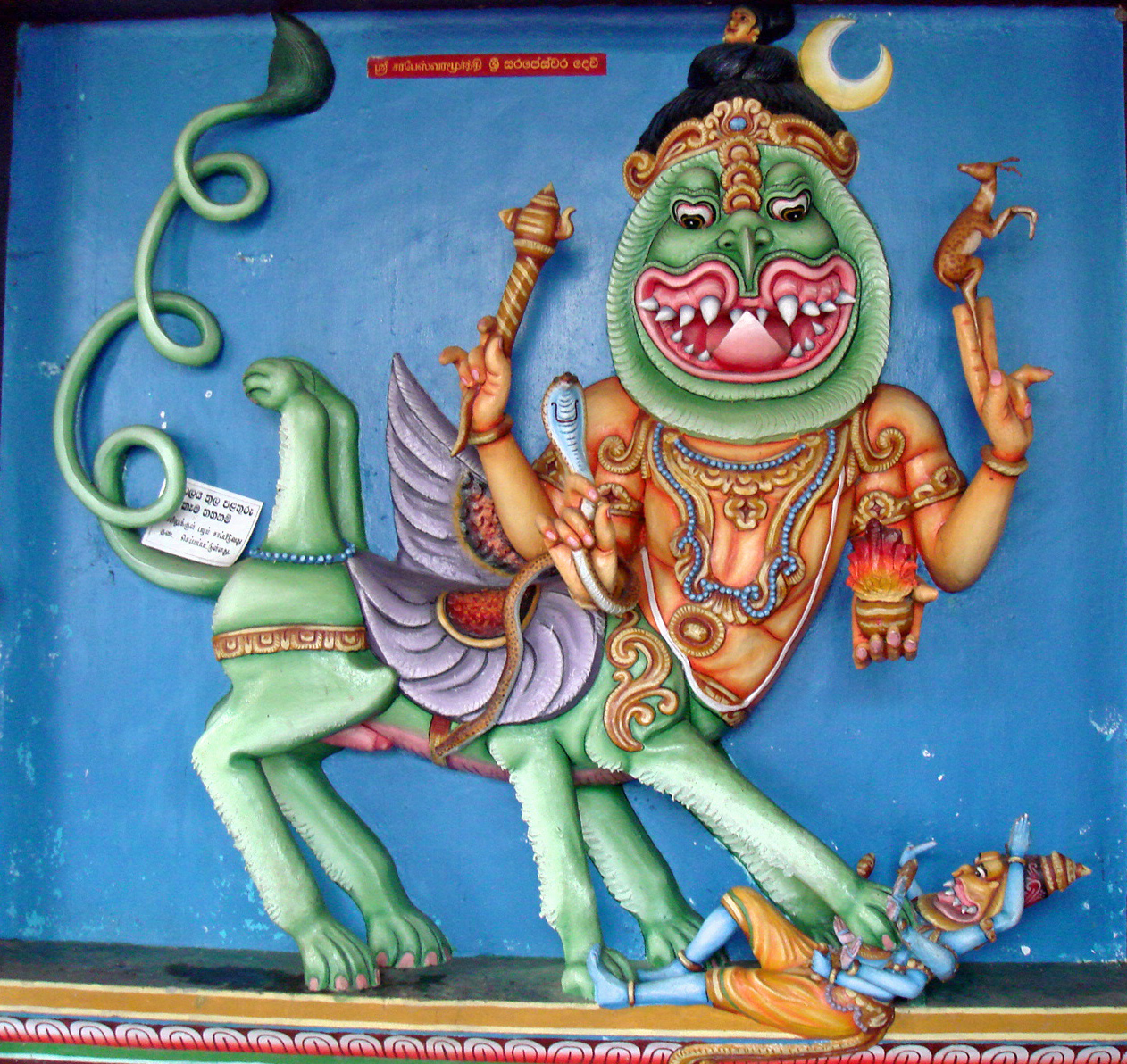
Then Shiva had to take the form of Sharabeswara a part-lion and part-bird, a form with 5 heads, 16 arms, 8 legs, Kali and Durga as his wings to cool Narasimha. In the effort, Lord Shiva lost his cool, and Lord Narasimha had to take the form of Gandaberunda, having two heads, fearful rows of teeth, black in complexion, and wide blazing wings. Gandaberunda fought with Shiva-Sharabha for eighteen days and finally held it between his two beaks and killed Sharabha,

Narasimha’s blazing fury reached its peak, and he took the form of Ashtamukha Gandabherunda Narasimha – The 8 faces are: 1] Twin-headed Ganda Bherunda facing East, 2] Adi Jvala Narasimha facing South East, 3] Maha Vyaghra facing South, 4] Hayagriva facing South West, 5] Adi Varaha facing West, 6] Aghora Vaanarendra facing North West, 7] Maha Garuda facing North and 8] Bhalluka facing North East.


Let us try to briefly look at each of the faces of Ashtamukha Ganda Bherunda Narasimha

1] The twin-headed Ganda Bherunda – A powerful two-headed bird with, fearful rows of teeth, black in complexion, and with wide blazing wings that killed the mighty Sharaba.

2] Adi Jwala Narasimha – A lion-like face with powerful claws, He is known primarily as the ‘Great Protector’ who specifically defends and protects his devotees in times of need.


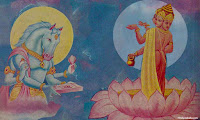
4] Hayagriva – Hayagriva is an avatar of Vishnu. He is worshiped as the God of knowledge and wisdom. Having a human body and a horse’s head, brilliant white in color. He wears white garments and is seated on a white lotus. Symbolically, the story represents the triumph of pure knowledge, guided by the hand of God, over the demonic forces of passion and darkness.

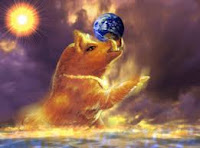
5] Adi Varaha –  Varaha is the avatar of Vishnu in the form of a boar. Varaha is listed as third in the Dashavatara, the ten principal avatars of Vishnu. When the demon Hiranyaksha stole the earth (personified as the goddess Bhudevi) and hid her in the primordial waters, Vishnu appeared as Varaha to rescue her. Varaha slew the demon and retrieved the Earth from the ocean, lifting it on his tusks, and restoring Bhudevi to her place in the universe.

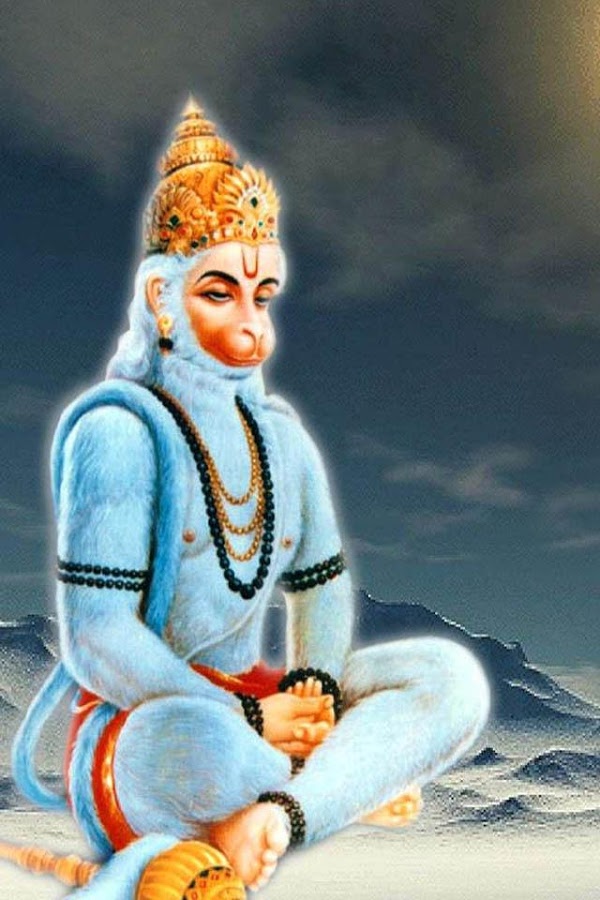
6] Aghora Vaanarendra – This is the monkey face of the Lord, some people refer this face to be of Hanuman. while interpreting I will also consider this face to be Hanuman’s. Hanuman is Lord Shiva’s Rudra avatar and A ardent devotee of Lord Rama ( Incarnation of Vishnu), Hanuman is said to be the mightiest and most powerful warrior. Also, he is referred to as one of the immortals.

7] Maha Garuda– or the great Eagle, is the mount or vahana of the Lord Vishnu. Garuda is depicted as having the golden body of a strong man

with a white face, red wings, and an eagle’s beak and with a crown on his head or it is also portrayed as a giant eagle. This ancient deity was said to be massive, large enough to block out the sun.


The 3rd face Maha Vyagra and the 8th face Bhalluka (the bear face) are unidentifiable, as not much is mentioned about this special avatar of Ashta Mukha Ganda Narasimha. This form of lord also has the 9th face according to some sources. This 9th Hidden ninth face of the Lord sometimes referred to as Badabanala Mukha, refers to Adi Narayana and is visible to a realized ardent devotee of the lord.

This special form of the lord has all the combined power of all anthropomorphic incarnations of Lord Vishnu such as Varaha, Narasimha, Ganda Bherunda, and Narasimha.  Considering the 9th hidden face along with incarnations that serve Lord Vishnu in some manner, ( His ardent devotees) such as Hanuman ( devotee of Rama) and Garuda (The mount of Lord Vishnu), if I take the 8th face, that is the bear face to be Jambavan of Ramayana then he is also an ardent devotee of Lord Rama, and he is the mightiest and most learned bear. However, the third face of Vygra is unidentifiable. Considering all other forms, the form of Ashta Mukha Ganda Bherunda Nrsimha is really special. This form possesses every aspect of the universe, just like the universal form displayed in the battle of Kurukshetra to Arjuna. this special form of Nrsimha is really unexplored and also does not have many textual mentions.