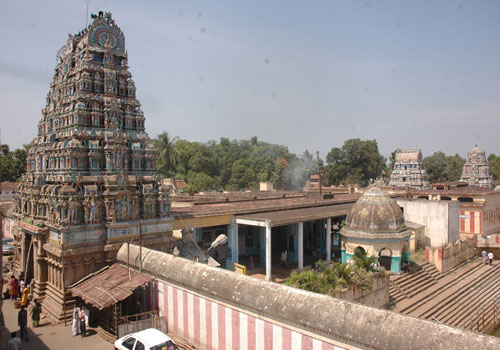
Tasty Food without Salt
Food without salt is certainly incomplete. Salt plays a crucial role in enhancing taste, texture and also balances the food. Even if there is less salt we find the food incomplete. But there is a temple in south India that gives Prasadam without salt. The temple of Uppaliappan in Kumbakonam prepares food without salt and this Prasadam is relished among devotees. When you taste the prasadam that this temple offers you will not miss eating salt. The prasadam is as delicious as one could imagine. The beauty of the food here is that if you are eating food outside the temple you will not enjoy the food without salt. But the food that is specially cooked in the temple is simply perfect even without salt.
This 8th Century medieval Chola temple is surrounded with legends about its presiding deity – Uppliappan. An incarnation of Lord Vishnu as Venkateshwara who is believed to have eaten food without any salt. Uppiliappan is the elder brother of the presiding deity of Tirupathi Venkateshwara Temple. It is however surprising to see a form of Vishnu having food without salt, as Vishnu is known to love Chappan Bhoga and delicious food, while here he is eating food without salt. All the preparations of this temple have no salt due to a legend from Bhramanda Puran.
 Bhoomi Devi expressed Her grievance to Lord Vishnu that She had not the privilege of being in the chest of Lord though she too had all the dignity features of Mahalakshmi. Thus she demanded that this is her right too. Lord replied that She would have that position as Tulasi, daughter of a Maharshi Markandeya. Once Sage Markandeya was practicing penance and wanting Mahalakshmi as his daughter. He heard a baby girl crying possessing all attributes of Mahalakshmi.
Rishi Markandeya took care of the child and raised the child to a marriageable age. When She attained the marriageable age, Lord Vishnu in the guise of an old man called on the sage seeking his daughter in marriage. Markandeya Rishi simply turned down His request saying that his daughter was too young for Him. he also said that his daughter did not know cooking and could not add the correct quantity of salt to the preparations. Adamant Lord said that he would accept the food even without salt.
Sage understood that the visitor was no other than Lord Vishnu and he was happy to give his beloved daughter to Him. As Perumal accepted food without salt (Uppu in Tamil), He is praised as Uppili Appan. Thus Bhoomi Devi as Tulasi came to stay on the chest of Lord in the form of Tulsi garlands offered by devotees in all Perumal temples.
The neiveitheyam (food offering) – mainly consists of Tayir Sadam or Curd rice. Where curd is mixed with rice and then tempered with mustard seeds, chana dal, and curry leaves. This preparation is made without any salt. The next most loved Parasadam is Sundal, This is similar to chickpea salad. The grated coconut, turmeric is added to boiled chickpeas. Then a tempering of urad dal, mustard seeds, chana dal, dry red chili, and curry leaves is added. All next loved prasadam is Vada, the traditional temple Vadas are made with urad dal, tempered with mustard seeds, chana dal, and urad dal, the mixture is made to the dough and then deep fried.
