December 2022

Bay Leaf the Herb of Victory and Manifestation

In Indian cuisines bay leaf or tej patta plays a very important role whether it is biryani or Curry. The bay leaf has to be there as part of the tempering. Bay leaf gives a certain sweet and pleasant taste to culinary preparation. In western cuisine, it is used to flavor meat, seafood stews, and soups. This bay leaf belongs to the bay laurel family.  Bay laurel has a special connection with the Greek God Apollo. The aromatic leaves also play a big role in spiritual cleansing and rituals.

The Legends of Bay Laurel

Daphne whose name means Bay Laurel in Greek was a beautiful nymph who only desired to be unmarried and happy. In some stories, Daphne’s home was situated below Delphi. The city of Delphi was a sacred site of the Primordial earth goddess Gaia and the great serpent Pytho guarded this place. Once Apollo arrived at Delphi with a desire to build himself a place of worship. Arriving at the city Apollo killed Pytho to reclaim Delphi.

Apollo was drunk on his victory over Pytho; when Eros approached Apollo. He started mocking the small cupid, Eros. Apollo even told him to leave large weapons like the bow and arrow to greater gods like himself.

Eros responded to Apollo’s mocking by firing a golden arrow of desire into Apollo’s chest and a leaden arrow of repulsion into Daphne’s. The moment Apollo saw Daphne, he immediately wanted her. But the more Apollo desired Daphane the more she repulsed his advances. Devoting herself to a chaste life she was wholly uninterested. But Apollo was relentless. He followed and chased her along the river banks, praising her beauty and growing in his lust.

The more she snubbed him, the more he wanted her. Exhausted and terrified, she finally called out in desperation to her father to protect her. In one story, her father, the River Peneus, hearing his daughter’s plea, transformed her into a Bay Laurel tree, so she could forever remain chaste and rest peacefully beside the river of her birth. In another version, Gaia heard her call and opened the earth to swallow her, placing a Bay Laurel tree in her stead.

Apollo, saddened by the loss of Daphne declared the Bay Laurel his emblem and sacred tree. He cut a branch from her body and wove himself a wreath of her branches and returned to Delphi, crowned in self-proclaimed victory. He built his own temple made entirely of Bay Laurel and established the Pythian Games, a yearly festival and physical competition in honor of Pytho, whom he’d slain.

Because of this, the Bay Laurel became a symbol of ritual cleansing and victory. In many Greeks and Roman paintings, coins, depict the laurel headdress as a crown of triumph. During the Pythian Games, especially, the victors were adorned with woven laurel crowns. Even today the “Nobel Laureate” and “baccalaureate” are awards of distinction.

Bayleaf in rituals and ceremonies

Dried bay leaves are used in ceremonies for clarity or prophecy. They are tied into a bundle and burnt for smudging and cleansing of Aura, house or objects for ritual. Bay leaf is often an alternative to Sage. The smoke of bay leaf rids of all negative energies. It is a powerful protector of homes by placing a leaf on the door. The bay leaf tree must be planted in the last period of our life to guarantee a dignified and painless death. A formula to summon quick money is to place yourself under the rain with a bay leaf branch and imagine that every drop that falls to us is money that falls on our heads.

Divination

It is one of the most used leaves for the use of daphnomancy or Divination with fire, which consists of throwing a leaf on fire and visualizing the messages of the leaf through its drawings and its crackling.

Bay leaf Manifestation

Bay leaf is one of the plants that have a spiritual power to make your words and intentions real. It can be used for many things such as protection, manifestation, cleansing, prosperity, and many more. It is also related to the element of fire which is why bay leaves are burned when manifesting. By doing this, your manifestations are quick to be released into the universe and into your life.

Steps for manifestation.

Write It

No matter what you want or desire to have in your life, you can manifest it using a bay leaf. Regardless of Love, money, health, or anything you desire Bay Leaf will help it fulfill. Just be clear about your desire and write it on the leaf.

Channel It

Start focusing on the emotions and feelings that you are currently feeling. Focus your attention on the energy that you have, and start channeling it onto the bay leaf.

Visualize to Have It

After channeling your energy onto the bay leaf, visualize that you have already received your manifestations. No matter what it is, you have to visualize the very thing you’re manifesting.

Burn It.

The power of the bay leaf only becomes effective when you start to ignite it using fire.

A Beauty Pageant that nearly destroyed the World

It is said that god sculpted women in leisure. They are certainly blessed with outward beauty that is hard to miss. The fight for the most desiring and beautiful women has been rooted in the core of civilization for ages. Women are judged on basis of physical beauty in form of beauty pageants such as Miss India and then at the world stage as Miss World. The grandest stage of all Beauty Pageants. The first beauty contest was held in 1880 in America. Believe it or not, Thomas Edison was one of the first judges. Since this time the trail of beauty pageants has grown exponentially. Young women ranging from 18 to 25 compete to be crowned as the most beautiful woman on earth each year. With time and evolvement, they have expanded to include married women and older and otherwise single women. Divisions include Mrs. and Miss. Judges assess multiple topics, one being a stage performance. Always captivating the audience with various styles of visual art. The older division competition, however, does not include stage talent.

The beauty pageants are always alluring and exciting to watch. However, one such beauty pageant nearly destroyed the world.

In ancient Greece Paris, a mortal was asked to judge the most beautiful woman. The judgment of Paris led to one of the largest wars in History, the Trojan war.

The story began when Zeus decided to organize the wedding of Peleus and Thetis which all the gods had been invited to attend except for Eris, the goddess of discord. When Eris learned of this she was enraged. She decided to avenge her insult and spoil the wedding banquet.  Enraged Eris threw a golden apple amongst the assembled goddesses. The apple had words engraved “To the most beautiful woman”. Seeing the golden apple Aphrodite, Hera and Athena laid their claim to be the most beautiful. After a quarrel, the goddess needed an impartial judge. Zeus was in no mood to side in between his wife Hear and daughters Athena and Aphrodite. He had known of a Mortal named Paris who was a very fair judge. In a contest regarding the beauty and quality of bulls, the young shepherd admitted that the god Ares’ entry was far better than his own without hesitation.

Hence, Zeus proposed that they consult with the mortal to determine which goddess was the fairest. The three goddesses, accompanied by Hermes, made their way to Mount Ida, where they bathed in a river before meeting with Paris. As Paris began to judge the three beautiful goddesses, they each tried to win his favor by offering him bribes. Hera offered to give Paris incredible power by making him the king of Asia and Europe, Athena proposed to give him wisdom, and Aphrodite offered him the most beautiful woman in the world.

Faced with such tempting bribes, Paris eventually chose Aphrodite and awarded her with the golden apple. In doing so, he inspired both Hera’s and Athena’s wrath. Keeping her end of the bargain, Aphrodite told Paris that the most beautiful woman in the world, Helen, was now his. There was only one problem, however. Helen was already married to Menelaus, king of Sparta. In order to retrieve his “prize,” Paris traveled to Sparta. Depending on sources Paris either kidnapped or seduced the Spartan queen and whisked her back with him to Troy.

After discovering that his wife had been taken by the Trojans, Menelaus assembled his troops and attacked the city of Troy to retrieve his wife. Leading to a decade-long Trojan war.  During the war, Menelaus nearly killed Paris in single combat, but the Trojan youth, a favorite of Aphrodite, was rescued at the last minute by the goddess.

Why is Ganesha offered Durva ?

Ganesha is offered Durva grass, a special grass with 3 or five blades. An offering of this grass is of great importance and worship of Ganesha without durva is incomplete. In the Ganesha Atharvashirsha of Ganesha Upanishad It is said that

यो दूर्वाङ्कुरैर्यजति वैश्रवणोपमो भवति  यो लाजैर्यजति यशोवान् भवति मेधावान् भवति  यो मोदकसहस्रेण यजति वाञ्छितफलमवाप्नोति  यस्साज्यसमिद्भिर्यजति सर्वं लभते सर्वं लभते ॥१६॥

He who worships (Ganapati) with tender Durva Grass will become Prosperous like Kubera (16.1:). He who worships (Ganapati) with Parched Rice will become Glorious (i.e. will have Name and Fame) [16.2:].  He will (also) become Medhavan (filled with Medha or retentive capacity of the mind) [16.3:]. He who worships (Ganapati) with thousand Modakas, he will obtain his Desired Fruits [16.4:] He who worships (Ganapati) with Twigs dipped in Ghee, he obtains Everything, he obtains Everything [16.5:].

This grass is said to be glorified in the Vedas and Puranas equally. According to Bhavishaya Purana durva is said to appear to form the hands and thigh of Vishnu when he held the Mandar mountain as a kurma avatar, during Samudra Manthan, The Vanaman Purana has a similar narrative but instead of kurma its Vasuki’s tail, the snake that was used to churn the ocean that led to the creation of durva.

As per the legend in Ganesha Purana, Upasana Khanda, there was a demon called Analasur, who petrified the three worlds, devatas went to lord shiva for assistance, and shiva asked them to seek help from Ganesha. The devatas asked Ganesha for help, Ganesha attacked Analasur and fought a ferocious battle, and ended up swallowing the demon.

This built up a lot of heat inside Ganesha and caused him great distress. To calm the heat king of gods Indra gave him the moon to wear, He was known as Bhalachandra. Lord Vishnu gave his lotus flower, but nothing seemed to work. Finally, some rishis offered durva grass along with Vedic mantras. Durva grass immediately relieved Ganesha of the unbearable heat. This pleased Ganesha and since then durva became a mandatory offering to Ganesha.

Why Vishnu loves Tulasi plant ?

tulanaa naasti athaiva tulasi – that which is incomparable (in its qualities) is the tulasi. Tulasi is very dear to lord Vishnu and Krishna. In Srimad-Bhagavatam 3.15.19 it is said that the special position of the Tulasi plant: “Although there are numerous flowering plants full of transcendental fragrance in the spiritual realm, they are aware that Tulasi is given special preference by the Lord, who garlands Himself with Tulasi leaves.” 

Tulasi or Holy basil, also known as Vrinda is a sacred plant and an earthly manifestation of the goddess Lakshmi, the consort of Lord Vishnu. The offering of its leaves is mandatory in the worship of Vishnu and Krishna, without which Vishnu or Krishna do not accept any offerings. Many hindus have a Tulasi plant growing in front or near their home. Aarti and watering of the plant is performed everyday by devotees. A person who waters and cares for the Tulasi daily is believed to gain moksha (salvation) and the divine grace of Vishnu, even if he does not worship it. Traditionally, the daily worship and care of the plant is the responsibility of the women of the household. Though daily worship is prescribed, Tuesdays and Fridays are considered especially sacred for Tulasi worship. Rituals involve watering the plant, cleaning the area near the plant with water and cow dung (considered sacred), and making offerings of food, flowers, incense, Ganges water etc.

The Devi Bhagavata Purana mentions a  story of King Vrishadhvaja—a devotee of Shiva who banned worship of all other deities except for his patron god Shiva, This angered the sun god who cursed the king that he would be abandoned by Lakshmi. Seeing his devotee get cursed by sun god, shiva pursued him. In fear sun god ran for shelter of lord vishnu. Who told the them that earth years had already passed and Vrishadhvaja and also his heir-son were dead and his grandchildren—Dharmadhvaja and Kushadhvaja—were now worshiping Lakshmi to please her. Pleased by the devotion Lakshmi rewarded their efforts by being born as their daughters Tulasi meaning “matchless to Dharmadhvaja and Vedavati. In time, Tulasi gave up all her royal comfort and went to Badrinath to perform penance to please Brahma and ask for a boon so that she could get Vishnu as her husband. Brahma was pleased with her penance but told her that she would have to marry the demon Shankhachuda before she could marry Vishnu. On the other hand Sankhchuda, a mighty demon underwent terrific penance to please Brahma to gain the boon of invincibility. Brahama being pleased gave him the Vishnu kavacha, the armor of Vishnu, and told him that no one could kill him as long as he is wearing the armor.

Shankhachuda and Tulasi were soon married. Shankhachuda practiced the laws of dharma religiously but was also prone to commit sins because of his nature. He attacked the three worlds and became the sole ruler. Seeing the universe in trouble shiva challenged Shankhachuda to war. Vishnu appeared in his true form and urged Tulasi to abandon her earthly body and return to his celestial abode. In her anger and grief, she cursed Vishnu to be turned into stone. Vishnu turned into a stone and reside on the riverbank Gandaki River. People and devotees will call it a chunk of shaaligrama. Tulasi’s mortal remains decayed and became the Gandaki River, while her hair transformed into the sacred Tulasi plant.

Another legend replaces Shankhachuda with Jalandhara and the name Tulasi with Vrinda. It concentrates on the tale of Vishnu destroying Vrinda’s chastity to lead to the death of Jalandhara by Shiva. In this legend, Tulasi is distinct from Lakshmi. The legend ends with Vrinda cursing Vishnu to become a stone, turning him into the Shaligram stone (which are found only in the Kali Gandaki River of Nepal) and Vishnu transforming Vrinda into the Tulasi plant. In a variant, Vrinda immolated herself in her husband’s funeral pyre but Vishnu ensured that she got incarnated in the form of Tulasi plant on the earth. In both versions, she gain the status of a goddess named Tulasi, while her earthly form is the Tulasi plant.

A Vaishnava legend relates Tulasi to the Samudra Manthana, the churning of the cosmic ocean by the gods and asuras (demons). At the end of the churning, Dhanvantari rose from the ocean with Amrita (the elixir of immortality). Vishnu procured it for the gods, when the demons tried to steal it. Vishnu shed happy tears, the first of which fell in Amrita and formed Tulasi.

Every part of the Tulasi plant is revered and considered sacred. Even the soil around the plant is holy. The Padma Purana mentions if a person is cremated with Tulasi twigs in his funeral pyre gains moksha and a place in Vishnu’s abode Vaikuntha. If a Tulasi stick is used to burn a lamp for Vishnu, it is like offering the gods lakhs of lamps. If one makes a paste of naturally dried Tulasi wood and smears it over his body and worships Vishnu, it is worth several ordinary pujas and lakhs of Godan (donation of cows). Water mixed with the Tulasi leaves is given to the dying to raise their departing souls to heaven.

Just as Tulasi respect is rewarding, her contempt attracts the wrath of Vishnu. Precautions are taken to avoid this. It is taboo to urinate, excrete or throw wastewater near the plant. Uprooting and cutting branches of the plant is prohibited. When the plant withers, the dry plant is immersed in a water body with due religious rites as is the custom for broken divine images, which are unworthy for worship. Though Tulasi leaves are necessary for Hindu worship, there are strict rules for it. A prayer of forgiveness may also be offered to Tulasi before the act.

Secret offering Lamp or Aarti to God.

Why do we offer Aarti or Lamp to God?

Offering Aarti or offering Lap to God is a means of offering fire element. Fire is one of the primary elements of creation, along with water, earth, air, and ether. Fire is the Purest of all, it also purifies everything around it. Fire burns the negative energy and drives away the darkness to give light. Light is a symbol of knowledge and enlightenment.  In the rig Veda, the first sukta starts with glorifying Agni. The sukta says that it is Agni that carries the offering to god, “Yajnyasya Devam-Rtvijam”. This is also the reason why yagnya is significant for the offering.  The offering of aarti is like a smaller version of Yagya, where we use the fire as a medium to carry our offerings to the god. Symbolically it is the fire element in the stomach that digests the food to give nutrition and energy to the body. Also the soul in the human body is also like a flame of fire, The Narayan suktam says that within the heart is the great flaming fire pervading in all directions, referring to the soul. tasya madhye mahanagnirviśvārcirviśvatomukhaḥ. The offering of lap and aarti is often reflected as a reflection of the soul within.

Why do we ring the bell while doing Aarti?

The ringing of the bell while doing aarti is a way to drive the attention, of the devotees and also a way to drive away any other distracting sounds that may be present. The sound vibration of the bell also is believed to cleanse the place of any negative energy. The sound also makes the devotees think of the lord at all times.

Why do we blow conch before the beginning and after the Aarti?

The conch when blown emanates a  primordial sound of Om, the Naad brahman, the sound of creation. As per a legend in Vishnu Purana, it is said that Vedas originated from the blowing of conch. There was a demon named  Shankhaasura who defeated the devats and stole the Vedas, he drowned the Vedas in the ocean, Lord Vishnu incarnated as Matsya, the fish incarnation and killed the demon, lord also blew the conch-shaped bone of his ear and head to release the Vedas. The conch came to be known as shanka after the demon shankasura.  Thus sounds of the conch represent the knowledge of the Vedas.  The sound of the conch also marks the sound of victory and destroys all negativity around the place. It was also believed that during the ancient times the villages were small settlements and each village had a dedicated temple to it, the priest when blew the conch the sound notified the people to stop whatever they were doing and remember the lord .

Origin of Coconut

Coconut is a symbol of fertility and an emblem of Goddess Lakshmi – the goddess of good fortune and prosperity. The resemblance of coconuts to human heads fascinated the ancients and they replaced humans in sacrifice by breaking coconuts instead. With its head-like shape and two eyes and coarse hair on top, it resembled the human head. In the Hindu religion, coconuts were into the sea for propitiating God Varuna, the god of waters.

Catching a falling man

The story of Trishanku is told in the Bala Kanda portion of the Valmiki Ramayana.

Noble King Trishanku was so in love with himself that he wanted to ascend to heaven in his physical body, hence he requested the family priest Vasiṣṭha to perform the yagna for him. However, Vasiṣṭha explained that it is against the laws of nature for anyone to enter heaven in their physical form. Then Trishanku approached Vasiṣṭha’s sons, but they too refused his request as to do otherwise would be a great insult to their father. Angered, Trishanku insulted the sons of Vasiṣṭha, who in turn cursed Trishanku to become a stinking Chāṇḍāla, an untouchable. The next morning Trishanku woke up: his silk had changed to rags and his body had become wretched and unrecognizable. As nobody recognized him as the former beautiful king, he was exiled from his kingdom.

Roaming for a long time, he eventually happened upon the sage Vishwamitra who recognized the disfigured king and asked him what had happened. Trishanku recounted his request to Vishwamitra and his sons, and how the Vasiṣṭha’s sons had cursed him. Vishwamitra took pity on Trishanku and said that he will perform the rites to send him to heaven. Vishwamitra performed the sacrifices; however, the gods did not approve that Trishanku should enter heaven in his physical form and did not accept the offerings. Then Vishwamitra used his own abilities to cause Trishanku to ascend toward heaven. However, Indra, the king of the heavenly gods, would not permit this and caused Trishanku to hall head first back to Earth. Trishanku called to Vishwamitra for help. Vishwamitra used his powers to keep Trishanku from falling all the way back to earth, but Indra would also not allow Trishanku from ascending any further.

The heavenly gods explained to Vishwamitra that no physical body is allowed to ascend to heaven and especially not a cursed one like Trishanku. Vishwamitra came to understand this, but he could not withdraw the promise he had made to Trishanku. Vishwamitra’s powers kept pushing Trishanku toward heaven while Indra’s powers kept Trishanku from ascending any further. Eventually, Vishwamitra and Indra compromised that Trishanku would remain there in “Trishanku’s heaven”, stuck between heaven and earth. This then is the origin of the Hindi idioms, “Trishanku’s heaven” and “hanging like Trishanku”. Trishanku became the Southern Cross constellation.

The story is sometimes interpreted as a warning of the futility of going against the laws of nature and the dangers of hubris.

Folk story from Kerela

The Round coconut often represents a human head, and the round markings often called eyes represent two eyes and one mouth. There is an interesting folk story from Kerala, that explains the origin of the coconut tree came to be, and how the coconut got its face.

In one of the coastal villages lived a young fisherman who was unable to catch any fish. He used to spend hours trying but missed every catch. The young man became poorer day by day, he also had nothing to eat. He became a laughingstock of the village. This filled the fisherman with remorse and he decided to do something about it.

So, he went to a famous magician who taught him how to remove his head from his body. Soon the young man started going to the beach late in the evenings when all the other fishermen had returned to their homes with their daily catch. Then he would hide behind some rocks, take his head off his body, and dive into the water. The fish, amazed at the sight of a headless man floating in the sea, would swarm around him curiously. Some of them would enter the man’s body through his neck. The man would then swim ashore, take the fish out, and replace his head. Then he would proudly go back to his village and flaunt his catch.

After a few days, the villagers began to wonder how the young man was able to catch so many fish every day without using fishing nets or rods.

One day, a curious little boy followed him to the beach and watched as he pulled off his head and dived into the water. The little boy quickly ran forward, picked up the man’s head, and threw it into a bush. When the man came out of the water, he could not find his head.

He searched for it frantically, but could not find it. Then, because his magic was running out, he threw himself back into the sea and became a fish.

The curious little boy brought all the villagers to the beach to show them the man’s amazing head. But when they got to the bush where he had thrown the man’s head, they found that it had already grown into a tall and slender palm with nuts on it.

Each nut had the man’s face on it. And, that is how the coconut tree was created.

Why do we break coconut before starting anything auspicious?

In ancient times animal sacrifices were pretty common, many animals were slaughtered in the name of offerings, Adi Shankaracharya stepped in, and to save the animals, he suggested using coconut as a form of sacrifice. The coconut has hair like humans, three holes that denote two eyes and a mouth, also a hard shell, that represents a human skull. The lifespan of a coconut tree is on average 70 years but in general 120 years. As per astrology, the life span of a human is 120 years which is why Vimsodhari Dasa i.e Mahadasa of all 9 planets will take 120 years to get complete. Thus coconut tree gets equivalent to that of a human.

Also, a coconut is a complete fruit, where all the parts of a  coconut; its husk, shell, water, and flesh are utilized for various purposes. A coconut tree may consume any type of water from sweet ground water to salty sea water but the fruit it bears always gives only sweet water. This is equivalent to that of the life of an ascetic or a mother because only they give good things to their followers and children. For this reason, pregnant ladies are not allowed to break open a coconut as it is equivalent to killing a life form, and moreover, the vibrations from breaking a coconut could harm the fetus in the womb.

Thus the coconut was a perfect alternative and equivalent to a human head, thus breaking the coconut became an act of scarifies. In the early days, sacrifice was a must before starting anything auspicious, and coconut breaking became that scarifies.  In the later years, the hard shell of the coconut became symbolic of the ego and breaking the hard shell marked breaking the ego and achieving a state of purity. Coconut’s three eyes were believed to be the supreme trinity, Brahma, Vishnu, Shiva, and also the three lokas, three Gunas, etc. some also thought that the three eyes are symbolic of the three eyes of shiva.  Thus multipurpose fruit is part of Indian culture and also worship.

How does God eat ? Understanding Prasadam

Why offer food to God?

Food is the building block for human life. If there was no food there would be no life. Food acts as a life-driving force in human life. On the other hand, God is the ultimate creator, he has created living entities and provided food for all. God has made such arrangements that even before a living entity appears on this planet his food is already in place. The mother’s breast starts to lactate only when there is a baby inside her womb, it stops once the baby comes to a self-sustainable age. There are trees and crops that one can eat, someone might have planted the seeds, but it is a god that planted the seeds before creating man (bible genies). We work so hard in our e everyday lives so that we could feed ourselves and family, similarly animals hunt only to feed themselves and their families. 

We are indebted to God for giving us food and life. So we need to thank god, but is there a price that can account for food and life? There cannot be, it is not as simple as we go to a restaurant and ordering what we like, and paying it off later. What if god did not manufacture the ingredients that the restaurant used to make your order? We cannot repay God for his mercy. But we can be grateful, we can love him as our supreme father.

What we do to express love in our day-to-day life, as an extreme expression of love we prioritize the one we love, we put the person we love before everything we do. If we are eating then we offer the person we love first. This is the logic behind offering food to god first. We love the supreme father, so we first offer him and then eat. The food offered to him becomes the prasadam. It has full potency and is nondifferent from the lord himself. Since food is the ultimate life-driving force we offer food to god.

How Does god eat?

God is a divine person and he need not eat the way we do, using hands and mouth. His mere glance is way of accepting the offering. God, is not satisfied with grains and fruits as food, he is satisfied only when the offering is made with pure love, devotion, and surrender, (patram pushpam) If the offering is without love and devotion however lavish it be its not of any importance to the lord. It’s the bhav or feelings that matter, not the delicacies.

What to offer god?

Can we offer him anything we eat? The answer is simple, yes if the food is cooked in good consciousness and with purity. In Indian belief, food is characterized by three Gunas, Satvik , Rajasik, and Tamasic.  The Ancient texts say that the essence of the world and all that is in it is composed of these three modes of material nature. The Satvic or mode of goodness, the Rajasic or mode of passion, and the Tamsic mode of ignorance. Everything including our lifestyle, thoughts, and actions, the clothes we wear, or even the foods we eat are categorized into these modes of material nature. Bhagavad Gita has a whole chapter explaining these modes and how they control us.

Every man has one of the modes predominant and but we should try to be more inclined towards sattvik or the mode of goodness that will give spiritual bliss. But also as a matter of fact we are governed by a combination of gunas instead of one alone. Tamsika is the dark-natured one, a man with such a nature is characterized by shortness and corpulence, despondency, stupidity, and impiety. He is prone to stupefaction, the perversity of intellect, and lethargy in action. In, short a highly disagreeable being.

Such a man takes food that is putrid and stale, worse the food is cold and flat, that which is made of the leavenings of others.

The Rajasika man has feelings of much pain and misery. He has a roving spirit as well as an overweening confidence in his own excellence. Tall, muscular, passionate, and he is full of physical energy. Also because of his nature, he is prone to vanity, pride, lust, anger, and hilarity.

Rajasika food is bitter and sour; it is saline, pungent, and stringent as well. The satvika man is characterized by medium height, a fine and slender body, a judicious regimen of diet, longevity, and a strong faith in god. A good retentive memory and performing good deeds regardless of consequences, He is prone to forbearance, truthfulness, intellect, understanding, and courage.  I was amazed to learn this. I further understood that consciousness is directly connected to good food. It is also said in the scriptures that we put our consciousness into the food we cook. The consciousness of the cook affects the one eating it. If someone cooks in anger then the one eating it will get anxious after eating it. If someone cooks with happiness then the one eating will feel satisfied.

Happiness is produced from within, and is unrelated to and not derivable from external matters. Just as our body requires physical exercise to keep it healthy, so also does happiness. And what can be a better source of happiness than food?

Quoting Bhagavad Gita again, anything that is offered with love and devotion is accepted by the lord. But keeping the concept and consciousness of the gunas in mind we do not offer foods that fall under the tamasic and satvik categories. The foods such as nonvegetarian,  extra spicy, onion, and garlic.

Prasadam is the personification of the lord because it is made with good consciousness and is accepted by the lord,  it contains high amounts of spiritual energy,  that purifies us and also detoxifies the soul. Eating prasadam destroys past karmas.


A temple that can change your destiny – Brahma Temple of the South

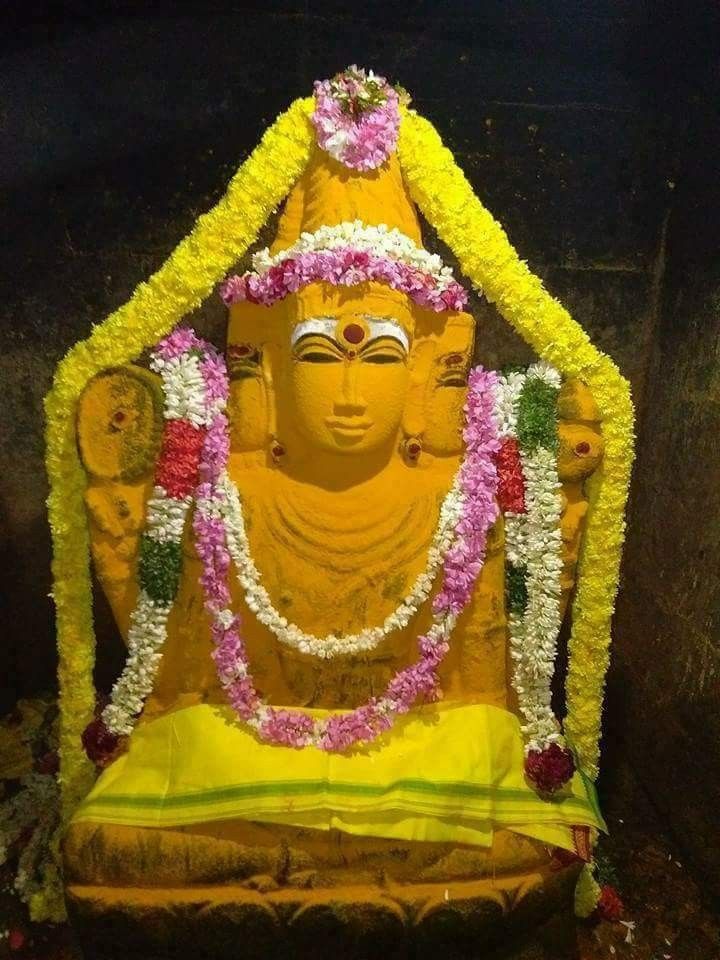
Lord Shiva is called Brahmapureeswara because he changed the fate of Brahma. The legend of this temple is connected to the story of Savitri, where Shiva cuts off the fifth head of Brahma. After losing the fifth head Brahma started out on a pilgrimage to Lord Shiva Temples. During the course of his pilgrimage he visited Tirupattur and installed 12 Shiva Lingams to worship Shiva. Pleased by Brahma’s devotion and on Devi Parvati’s request gave him Darshan. Lord Shiva blessed Brahma that He would have a separate shrine at this temple.  Since Brahma himself had His destiny rewritten here; He should rewrite the destiny of His devotees visiting this temple as instructed by shiva.

Since the fate of Lord Brahma, the Creator, Himself was changed by Lord Shiva at Tirupattur, one can expect a turning point in life by praying at this temple.

 Brahma’s worship here should be done with 36 lamps (representing 27 stars and 9 planets) offering 108 tamarind rice balls. The devotee should walk 9 rounds. All the 12 Lingas worshipped by Brahma are in the temple giving the devotee the benefit of worshipping the Jyotirlingas in a single place.

The 12 Shrines of Shiva

There are 12 Shiv Lingams in the Temple complex, which includes the garden adjacent to the temple. These Shiva Lingams were installed and worshipped by Brahma. Most of these Shiv Lingams are housed in separate shrines, which are situated around the Brahma Theertham. Brahma Teertham is the pond from which Brahma took water for performing puja to Shiva. These 12 shrines of Shiva which comprise the Bramhapureeswar Temple complex are :

  • Brahmapureeswar Presiding Deity
  • Pazhamalai Nathar
  • Pathala Eswarar
  • Thayumanavar
  • Manduga Nathar
  • Ekambareswar
  • Arunachaleswar
  • Kailasa Natha
  • Jambukeshwar
  • Kalathi Natha
  • Sabthagereswar
  • Sudharaneswar

Fallen Lotus- Pushkar Brahma Temple

Pushkar is often referred as the only Brahma temple in the world. According to the Hindu scripture Padma Purana, Brahma saw the demon Vajranabha trying to kill his children and harass people. He immediately slew the demon with his lotus flower. In this process, the lotus petals fell at this place. Since a flower fell from Brahma’s hand the place was named Pushkar, etymologically ‘Push’ means flower, and ‘kar’ means hand. Brahma decided to perform a grand Yagya here and he called all great sages, gods. However Brahma’s wife Savitri was not ready yet and was getting late for the yagaya. The time of Yagya was flying and thus gods urged Indra to get another wife for Brahma. It was not possible to complete the yagya without a partner. Indra proceeded to procure a wife for Brahama. While searching Indra spotted a young beautiful milkmaid, carrying a jar of butter. He seized her and brought her to the assembly. She was sanctified by passing her through the body of a cow.

Vishnu, Shiva, and the priests certified her purity as she had passed through a cow, it was her second birth and she was named Gayatri. Brahma then married Gayatri and completed the yajna with his new consort sitting beside him, holding the pot of amrita (elixir of life) on her head and giving ahuti. But when Savitri finally arrived at the venue accompanied by Lakshmi and Indrani. Seeing some other girl with Brahma at her rightful place Savitri was fueled in anger. She accused Brahma of deserting her. She then proceeded to curse Brahma so that he would never be worshipped. She also cursed Indra to be chained by his enemies.

Since Vishnu and Shiva had given Gayatri as a bride to Brahma, Savitri did not spare them too. She cursed Vishnu to be born human and experience separation from his wife. Savitri also cursed Shiva to be deprived of his manhood. She cursed Agni to devour all clean and unclean offerings. To all the priests she cursed that they would perform yagya only because of self-interest to obtain gifts and remain satisfied with the food of others and be dissatisfied with their own houses. Savitri then left the assembly hall, Laksmi, and Indrani accompanied for a short distance and returned to the yajna assembly as dutiful consorts.

Seeing this Savirti was enraged again, she cursed Laksmi that she would never remain stationary, and she cursed Indrani When Indra incurs the guilt of killing brahman by slaying Tvastri’s son. Nashusha shall acquire the kingdom and shall desire Indrani. All the gods then pleased Gayatri to protect them from the curse. Gayatri then modified the curses. She promised all kinds of blessings including the final absorption of all worshippers of Brahma. Though Indra was to be bound, his son should release him. Vishnu would lose his wife, but he would regain her. Rudra is deprived of his manhood, he would be represented neither as a male nor a female and universally worshipped as Linga. Though men made gifts to the priests, it would be because they revered the gods and finally, none of the goddesses would suffer cause or regret for not having children of their own.

Why is Brahma Not worshipped ?

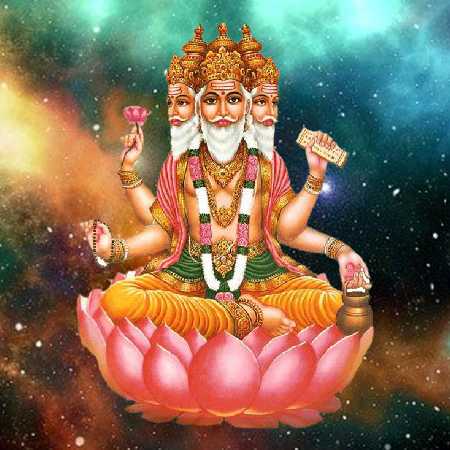
It is been a few centuries since science has been pondering over the big question of how everything was created. How did life, the complex human body, the planets, and the universe was created? Even though science has quite a few theories it still doesn’t have a concrete answer. However, the Puranas mention in simple words that everything was created by Brahma. Our great-grandfather first in the ancestral hierarchy Created all animate and inanimate in this universe. He is seated on a lotus, with four faces and four hands holding a ladle, manuscripts, a rosary, and a pot.

In Srimad Bhagavatam, it is said that a lotus emerged from the navel of Lord Vishnu, who was lying on his Shehnaag. The lotus then opened up and Brahma was born. Unaware of his identity and his cause of birth, he went downwards in the stalk of the lotus. As he went downwards he heard the words ‘Ta pa’, and understood that he has to do penance. He did penance for 1000 years and Lord Vishnu appeared to him and made him aware of his duties and identity. Brahma then began the creation process. In the Shiva, Puran’s Brahma is born from the Shiva Shakti, the Ardhanarishwara form of Shiva. Brahma was always a very important deity and a presiding deity of the Yagayas, he was always the giver of boons, and a creator of sacred Vedas.
Then why is it so that he lost the glory and is not worshipped anymore? There are only very few temples dedicated to him. The Puranas give three different narratives explaining the real reason why he is not worshipped, anymore.

The Shiva Puran mentions two narratives that stripped Brahma of being a worshipable deity. The first narrative begins with Brahma and Vishnu arguing about knowing the beginning and end of the Creation. They start a race, where Brahma out of Pride and ego says that I would not bow down so I would go to see the beginning, whereas humble Vishnu agrees to see the end. Vishnu takes the boar incarnation and proceeds downwards, whereas Brahma seated on his swan moves toward the sky. They both struggle for thousands of years tired and worn out. Vishnu humbly gives up and accepts defeat. Then suddenly Brahma finds a ketki flower falling from the Sky. He Asks the flower to be his witness and Brahma falsely claims that he has seen the beginning. This Angers Lord Shiva and he appears as a pillar of fire, knocking Brahma unconscious. Shiva then cursed Brahma so that no one would worship him, as a liar is not worthy of worship. Shiva also cursed the Ketki flower so that no one would use the flower in worship.

Another narrative in Shiva Puran talks of Brahma’s Lust. Brahma originally possessed one Head. From a part of his own body, He created a woman Shatarupa. Seeing the beautiful lustrous body of Shatrupa Brahma became infatuated. Since Shatrupa was created by Brahma she was like the daughter of Brahma. It is not right for a father to lust for his daughter. Being embarrassed by Brahma’s gaze she tried to escape his eyes. she ran through the universe, and where ever she went Brahma chased her. She took many animal forms, and with every animal form she took, Brahma took the male counterpart form.

Brahma initially had one head but because he wanted to gaze at Shatrupa with lust he sprouted a head in every direction. He did not stop here but he sprouted a fifth head. This angered indecent behavior on the part of Brahma angered Lord Shiva. In order to control Brahma, Shiva with his nails cut off the fifth head of Brahma. Also, Shiva felt that it was wrong for Brahma to become obsessed with his daughter Shatrupa. He cursed Brahma that there be no proper worship on earth for the “unholy” Brahma.

According to another legend from Padma Puran, Brahma is not worshiped because of a curse by the great sage Bhrigu. Once a great yajna was being organized on Earth and all the sages were discussing who should be made the presiding deity among the trinity, Shiva, Vishnu, and Brahma. Brighu was chosen to test the trinity. Brighu first went to Brahmaloka where Brahma was busy playing veena with Saraswati. Being preoccupied and did not notice Brighu’s presence. Feeling insulted, Brighu cursed Brahma, “You are so proud of your power of creation, you did not notice my arrival. For this, you shall have no temples on earth.” Thus, there are very few temples of Brahma on earth. Next, Brighu went to see Shiva in Kailash, but Shiva was busy in romance with Parvati and did not notice Brighu’s arrival. Brighu, again feeling offended, cursed Shiva to be worshiped only as a lingam on earth. This is the reason why Lord Shiva is primarily represented and worshiped as a lingam on this planet.

Then Brighu went to see Lord Vishnu, who was asleep and did not recognize Brighu’s presence. Brighu was so angered that he went forward and kicked Vishnu’s chest. Lord Vishnu apologized if he had hurt Brighu’s foot and began praising Brighu. Brighu immediately felt pleased and could understand that Vishnu was actually the most qualified to receive the offerings from the sacrifice.