November 2017

4 Lip – Smacking Accidents

When we see leftover food, half-empty fridge, and terribly lazy to cook. You just want to dump everything on a pan and manage to cook whatever turns out. The dish turns out to be delicious and failure often. It’s alright if you screw up the recipe, just embrace it and try again. Don’t forget Some of the greatest discoveries are made by accident and it’s no exception when it comes to food. To cook a great dish you need right recipes, right ingredient, right method but this is not as important as taste. Sometimes a little mistake, accident, a mishap can give amazing and lip-smacking results. As it is said, “best things happen unexpectedly”.  Here are some chronological examples of the accidental discovery of some mouth-watering, delicious recipes, starting right from ancient to the modern age.
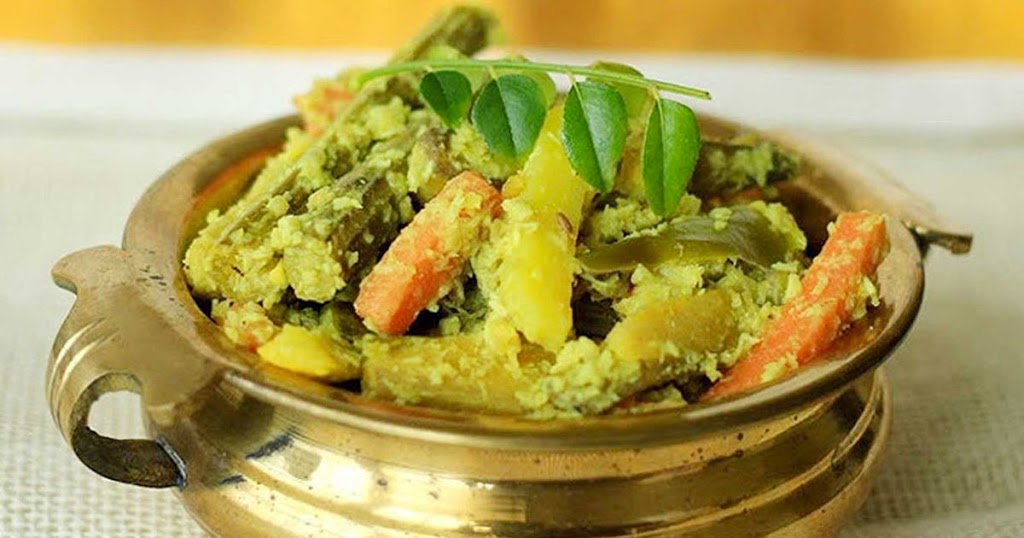
 
Aviyal- A Mix Vegetable of Mahabharata era.
A day to day south Indian preparation made with mix vegetables, curd, coconut, and spices. This dish is special for Onam, the festival of Kerala. This dish is special because of the way it was created. This dish has roots right in the Mahabharata as per Kerala narratives.
As per one of the popular narratives, Duryodhana once poisoned Bhīma and threw him into the river. When Bhīma didn’t return for a long time everybody thought that Bhīma was dead. Shradha a mourning feast is organized on the 13th day as per customs, Pandavas also organized Shradha Feast for Bhīma. A lot of food was being prepared for the feast and Bhīma returned alive. Seeing Bhīma alive Pandavas canceled the mourning feast. seeing the food go waste Bhīma was unhappy. Bhīma then mixed all the vegetables and created Aviyal. Another narrative says that when Bhīma was a cook at King Virata’s kingdom during their Agyaat-Vaas, One day when the king received unexpected guest sage Durvasa, who is known to give freely curse people due to his short temper. Bhīma was asked to prepare a feast for Sage Durvasa, But in the kitchen, the ingredients available were not enough for one single dish, so Bhīma mixed all the vegetables he had and made a curry, thus Avial was created which was well appreciated by Sage Durvasa.
Biryani- Meat and Rice Dish of Pre Mougal Era
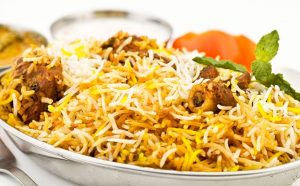
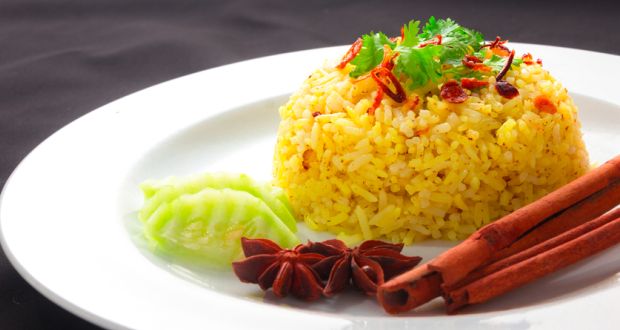
One of the most popular dishes of rice dish. This dish is eaten widely throughout the country and has its own variant every place it is cooked, this dish is made in many forms, Chicken Biryani, Mutton Biryani, Egg Biryani, seafood Biryani, Veg Biryani, and the list can go on. The origin of this dish can be traced to the pre mogul era, the era when Persian invaders were colonizing and invading other territories. The word Biryani originates from the Persian word ‘birian’ which means fried before cooking. The Persian invaders started with a small army and started to increases their strength by acquiring colonies. During the invasion voyages, it was very difficult to get a proper meal and give the army complete nourishment, In order to give proper protein and complete nourishment. The Persian army figured out a one-pot dish wherein meat, rice, spices were all cooked together as a solution to the quick, easy and nutritious dish. This resulted in the invention of Biryani. This innovation spread throughout the Persian colonies and became the dish it is today.
Sambar- A type of Dal (Lentil Soup) of Maratha Era
A name inseparable from South Indian food, you cannot imagine Idli, Dosa, Vada, Rice, etc without Sambar. a hot, tangy and spicy blend of lentils and mixed vegetables giving both appetizing aroma and taste. Sambar a synonym with Idli originated in much later, during the Maratha period. This dish was a last moment ‘everything into pan’ move in the 17th century. As per popular reads, this dish originated in the kitchen of Thanjavur Maratha Ruler Shahaji, he had a special liking for a dish called ‘Amti’. One day great Maratha Ruler Shivaji Maharaj’s son Sambhaji was visiting his cousin Shahaji. Shahaji wanted to serve Amti to his cousin, however, key ingredient ‘kokum’ ran out of supply, Shahuji himself experimented the dish with Toor dal, vegetables, spices, and the tamarind pulp and served his cousin, Sambhaji. The other narrative says that once Sambhaji himself cooked dal with Tamarind Pulp and whatever he had found in the kitchen when his chef was away. Sambhaji loved this dal so much that he gave his name to this dish, and this dal became sambar.
Pav Bhaji:- A Mumbai’s Delicacy of British Era
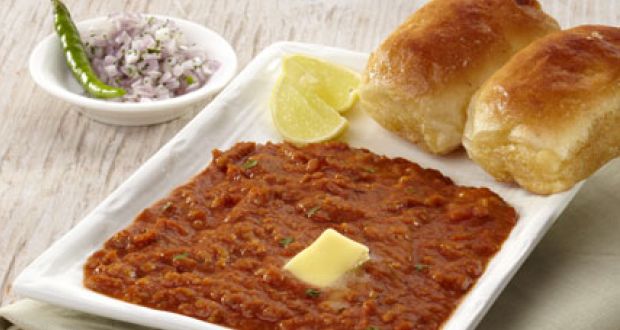
Pav Bhaji a lip-smacking, hot spicy, buttery tomato and mashed vegetable preparation that is eaten with Pav on the streets and beaches of Mumbai. Although this dish is made differently in states across the country, The roots still remain in Mumbai. As per popular reads, there are two causes for the origination of this dish.
During the late British colonial era in Mumbai, When the mill industry was functional emerged this dish from leftovers. The mill workers undergoing a tremendous amount of physical labor received a very short Lunch break, which was not enough for a complete meal. Also during those times, the cotton market was in great demand. Traders would receive the cotton price through a telegram in the night. The traders needed to be awake till late nights and finding food in nights remained a challenge. Looking at these two challenges one local vendor selling regular lunch, experimented with leftover ingredients of other dishes available on with him, He mixed potatoes, onion, tomatoes, vegetables, spices, and curries on a Tawa to create ‘Bhaji’ what we see today, As his Rotis and rice would be over after his daily sales he started to serve this ‘Bhaji’ with Pav.  This tasty, flavorful dish became an instant hit. Pav Bhaji became a midnight dish and a dish of mill workers and gained the popularity that we can see till date. 

Chocolate and The Goddess

 Chocolate is one of the most popular and loved the flavor in the world. Used in all forms in many delicacies such as desserts, brownies, cakes, eaten as bars, flavoring agents, beverage and many more. Chocolate is one of the largest selling flavors. “Kuch Meetha Hojaye” as Cadbury’s Tagline says, Chocolate today has replaced traditional sweet used in festivals, given as gifts and become part of the day to day lives.

Chocolate is long known to have a reputation of an aphrodisiac since the beginning of civilization. Chocolate is known to contain phenylethylamine (PEA), which stimulates the same hormone your body releases during sex. It also sparks dopamine production in the brain, giving a satisfying and pleasurable feeling when eaten. That’s probably why the internet generates numerous references to the aphrodisiac power of chocolate or ‘women’s preference for chocolate over sex’.

The aphrodisiac use and popularity of chocolate go to the oldest civilization in the Mesoamerican region. Mayans were known to consume liquor made of chocolate known as ‘xocolatl’ since early as 1750 BCE. Cocoa beans were so dear to the Mayans that they used this as a currency at one point of time. The association of a goddess to this particular food explains the role chocolate played in the civilization.

‘Ixcacao’ a Mayan goddess of chocolate was one of the ancient fertility goddesses. The word ‘coco’ originated from her name ‘cacao’ she was also revered as the goddess of abundance and protections. It was believed that it is because of this goddess that Mayan’s would never suffer from hunger. Ixcacao also played a very important role in teaching agriculture, protecting the harvest and also the creation of mankind.

The Legend of Chocolate Goddess

The story begins with Grandmother Goddess Ixmucane being worried about upbringing her grandchildren, as her sons were already killed while on the adventure to the netherworld. Ixmucane was the last soothsayer she knew that once when she gets old, her grandsons would be in despair. One day while she was thinking about her grandsons she saw a pregnant woman standing before her.

The young woman approached the old goddess and told her that she was carrying her son’s children who had been killed. She was the daughter of the king of the netherworld who was cast out. She requested grandmother goddess to allow her to live with her and give a home to her progeny.

Hearing this Ixmucane was startled. The young woman further said that she was Ixquic or ‘Blood Moon’. She witnessed her son Hunahpu getting decapitated by the soldiers under the calabash bush. His bloody head continued to talk to Ixquic after he died. Hunahpu had spat upon her hand and it was this that caused Ixquic to conceive the twins. Ixcumane not believing the story set forth a test to the young woman. Ixcumane told the young woman to go to the field with a large net and not come back until the net was filled with food. The Ixquic went to the forest with the net and found only one cob of corn growing. She was helpless and in despair started to pray.

Ixcenil, Goddess of Seed, hear me

Ixtoq, Goddess of Rain, help me

Ixcacao, Goddess of Chocolate, see my tears

and come to my aid”

Hearing her prayers the goddesses came to her rescue. Ixcenil the god of the seed gave her seeds, Ixcacao the goddess of chocolate taught her to plant and harvest crops also protected the plants until they were ripe. Goddess of rain Ixtoq helped nurture the crops. With assistance by the goddesses, Ixquic returned home with the net filled with food, and the grandmother goddess was extremely joyed and she welcomed her to the family.

The young woman in winter solstice gave birth to sacred twins the oldest son was named Hunaphu after his father and was believed to sacrifice his life for mankind and became sun god.  The younger brother Xbalanque resembled the moon and was transformed into a woman, during the emergence of patriarchal times and became the moon goddess.

In the Ancient Mayan times both gods and humans were required to sacrifice their lives so

that the world can be protected. It was believed that Gods when created the world they failed four times and then when that decided to sacrifice their lives that could create the sun. They believed that if the sun stopped moving through the sky then the world would be destroyed and the only way to keep the sun moving was through quenching its thirst with the blood of humans or gods. This was carried out each year on top of the Temple. The young ones would die in the name of the ritual. Seeing this Goddess of Chocolate Ixcacao felt very disturbed and compassionate and decided to do something about it. She partnered with Huitaca the goddess of love and pleasure so that this ritual could be stopped. Ixcacao and Huitaca came up with a plan to stop the cruelty.

The Goddess of Chocolate taught the kings how to make the chocolate liquor from chocolate. As chocolate being an aphrodisiac food gives a similar feeling of falling in love. This was probably the first use of chocolate as an aphrodisiac food. The kings became dependent on this liquor and its Aphrodisiac energy to rule and win wars. The kingdoms fell and were taken over by enemies.

The land became a place for war and there was great distress among people. People were malnourished, starving and the land was almost dying out. It was then Huangpu as predicted sacrificed himself once again to the sun for the so that after him people would never need to sacrifice their lives to the sun again. Then Ixcacao, the goddess of chocolate came again to the rescue as a fertility goddess and also the protector of the harvest.

The chocolate played a very important role during Mayan times and was one of the rich foods of those times. Therefore it was directly associated with the food of the gods. As the society was matriarchal, the goddess of fertility and protector of the harvest was made the goddess of chocolate. Also when the society turned towards patriarchal they forced the goddess of chocolate to marry Ek Chuah, their god of commerce, this led to chocolate becoming a prized commodity and a currency for trade. Further, this food became the food of wealthy and powerful and poor people were banished from eating chocolate.

Seeing the scenario of society change chocolate became the cause of the downfall of the monarchy. Common citizens needed a reform which then led to conquering by the Aztecs.  Looking at the priced commodity of coco Aztecs adopted the goddess into their own. It was when one of the Mayan lastly sacrificed himself to stop human sacrifices further the society became stable. This indicates that either all Mayan’s got converted and surrendered to Aztecs or they were killed by new conquerors.

Whatever be the history we have delicious chocolate and various cuisines associated with it, thanks to the Mayan’s to have discovered this.

The Birth of Sandwich: – A Creation Story

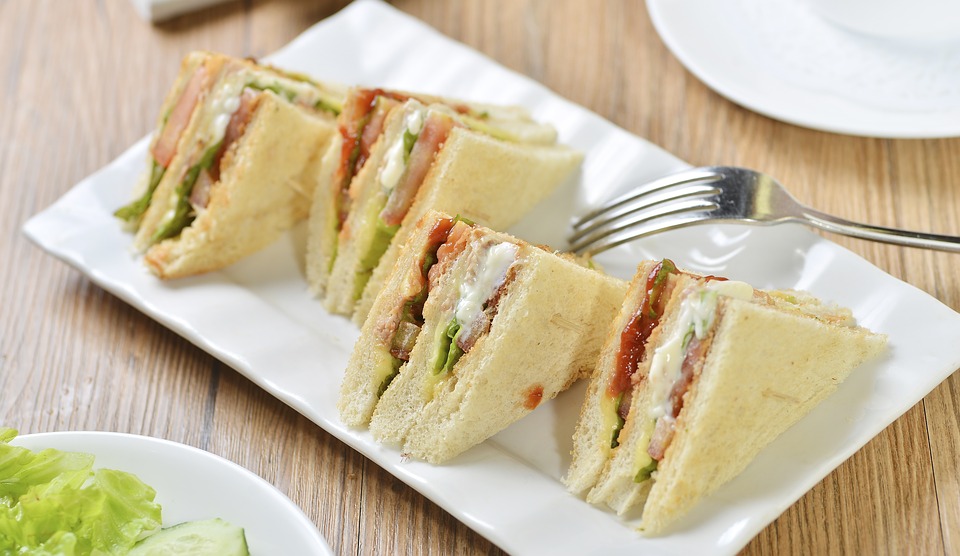
Life is so busy and everyone has time management issues. People are so busy that they do not have even the time to eat. When you are engrossed or busy working, what would one prefer to order? Certainly a ‘Sandwich’, it is quick and easy and fast. A sandwich is one of the most popular gourmets of all times. The sandwich is also a staple food of America. 
 
The definition of a sandwich is sliced bread with meat or filling in between. This sandwich has evolved to be rolls, wraps, burgers, tacos, hot dog, and many more. People are so depended on a sandwich that has become part of life.
 
Ever wondered how this dish emerged? Here are the legends behind it.
4th Earl of Sandwich

The mystery behind the name:

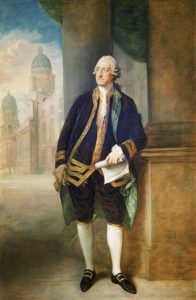
The story goes in 1762, 4th Earl John Montagu, once during a 24-hour gambling streak was so engrossed in his card game that he instructed his cook to prepare food that he could eat with one hand without disturbing his game.   The cook served meat in between slices of bread. This then became Earl’s favorite and also took on to be known by the Earls name “Sandwich”. Earl’s birthday on November 3rd is celebrated as National Sandwich day in Britain.

The First Sandwich:

The first sandwich was Hillel’s Sandwich. This was invented by 1st-century Jewish religious leader Hillel also known as “Hillel the Elder”. He was born in Babylon 110 BCE. During Passover When the Jews are supposed to eat unleavened bread with bitter herbs as per God’s Instructions. (Numbers 9:11, Bible). Hillel wrapped Paschal lamb (lamb sacrificed at Passover), the matzo and the bitter herbs to eat them as one, in fulfillment of the instruction. People in his remembrance in the temple do eat such a sandwich in remembrance to what Hillel did.
A plate eaten
In the medieval cuisine during Middle Ages food at gatherings and parties were served on Trencher. Trenchers are tough loaves of bread cut into half and used as plates. It was believed that after the food has eaten the bread was either fed to the dog or given to the poor in alms. The trenchers, fortunately, absorbed sauces and gravy from the food that was served on top making it consumable by poor. There was also saying that “A man has to be really hungry to eat his own trencher”. Here we can see the concept of an open sandwich or maybe a pizza.


Go Grab a Sandwich Now!!!!!

7 facts about Khichdi

On 4th of November, A great feat was achieved on; India made Guinness world record by preparing 918 Kg of Khichdi at a three day World Food India 2017 Event.
 
When you talk about Khichdi, the first thing that comes to mind is that someone is unwell, “Bimaro Wala Khana”. There is much more to Khichdi than just food for the unwell.
 
Khichdi is easily digestible and full of nutrition. This dish in many variations is made and loved spanning from east to west and north to south in our country.  Khichdi also became unofficially national dish of India.
 
Here are 7 unknown facts about the most talked dish.
 
1. The oldest dish: Khichdi is one of the oldest known Indian dish, as we can find traces of Khichdi as Krusaranna in Kamika Agama, around the 2nd-century text. Also, the dish is mentioned in 13 Th century Moroccan traveler, Ibn Battuta’s diary as khishri made with rice and mung beans. And then again in 15th-century writings of a Russian adventurer, Afanasiy Nikitin, talks about Khichdi.
2.    A Favorite of Mughals: we all have heard the story of Birbal and his Khichdi, certainly this dish was a favorite in Emperor Akbar and his son Jahangir. In the 16th-century text Ain-i-Akbari or otherwise known as Constitution of Akbar written by his vizier, Abu’l-Fazl ibn Mubarak. The recipe says that Khichdi (Khichdi) was made from mung dal, rice, salt, and ghee.
 
3.    From the Agamas: Kamika Agama a second-century text in its chapter 6 verse 30 – 59 talks about various dishes and methods of preparation and offering to gods. Krusaranna is said to be evolved to today’s Khichdi, Krusaranna was prepared with sesame seeds, mung beans, salt, and black pepper and a certain quantity of rice. There are two more variations mentioned in the chapter. Cooked rice mixed with mung beans is called Mudganna and cooked rice, pepper, turmeric powder, cumin, and mustard seeds are used to prepare a dish known as Haridranna. These are three possible variations of Khichdi as mentioned in the agama.
 
4.    Makar Sankranti connection: – Makar Sankranti is a day of celebration for many. Sun enters Makara Rashi or Capricorn. Marking the end of winter solstice and beginning of summer. This festival is celebrated in many ways. In some regions of India, people make a certain kind of Khichdi with Udad dal. If we analyze the Khichdi the connection, the lord of Capricorn is Saturn, and the sun entering Saturn’s its sworn enemy’s sign can be troublesome. For most Sankranti period marks beginning of harvest. According to Lal Kitab, Saturn is pleased with urad dal, therefore out of many remedies for Saturn’s malefic effects some say that one should either donate urad dal or food made with urad dal in charity. Therefore we can see eating of Udad Dal Khichdi can be a part of pleasing Saturn so that the harvest goes well, and there are no obstacles in a harvest.
 
5.    A  Monks favorite:  Monks rely on alms, they go door to door and seek alms and manage with whatever they get. It is during medieval times monks used to travel and camp places. They used to go door to door and seek alms; mostly they would manage with some amount of Rice and Dal. Sometimes if lucky they would get some vegetables or spices. With whatever they would get in alms they would add everything to a pot and cook.  This also marked the beginning of Khichdi. This Khichdi was a sole meal for any monk, be it Buddhist, Hindu Sadhu, Jain monks, Sufi saints, etc. Monks played a significant role in spreading Khichdi across the country, today every part of country Khichdi is cooked in their own style.
 
6.    Detox Diet– Khichdi as per Ayurveda is used for detoxifying and cleansing of the body. Khichdi is said to be a dish that balances all three doshas – cough, pita, vaat. In Ayurveda, it is believed that health starts in the digestive system. The function of the whole system is dependent on the proper digestion, assimilation, and elimination of food; if this system is not proper then one may be vulnerable to disease. The digestive energy is called Agni, this fire must be strong and so beyond just cleansing the body, here Khichdi will rekindle Agni in the body and help in balancing the entire system.
 
7.    Unity in diversity– Is a dish that whole India cooks; it is also popular in Nepal and Pakistan. The dish is made in many variants in coastal Maharashtra it is made with prawns.  In Bengal, the dish is considered a rich gourmet delicacy and is loved in the monsoons.  It is a staple for holy ceremonies and as an offering to Gods. In Bihar, It is customary to eat Khichdi every Saturday, and also at dinner during Makar Sankranti. In Gujarat and especially Kutch region Khichari is the traditional diet and a daily meal. in rural Haryana, kichri is made from bajra and mung dal. Odisha has many varieties of Khichdi; out of many Adahengu Khechidi is a popular dish in the Puri Jagannath Temple. Karnataka and Tamil Nadu have their own variants, Bisi Bele bath, and Pongal respectively. Khichdi also has an important place in Hyderabadi cuisine; Khichdi here is called “Khichdi, Kheema, and Khatta”.