March 2018

Mysteries of Lord Hanuman’s Worship

On the auspicious occasion of Hanuman Jayanti, the Appearance day of Lord Hanuman. Hanuman is a favorite of many and is a popular god worshiped across the Indian sub-continent. Hanuman is known to be the servant and staunch devotee of Lord Rama. He is one of the ten Chiranjeevi’s or immortals according to the Indian texts. He is worshiped through many different means. Let us unveil some mysteries pertaining to offerings made to Lord Hanuman.
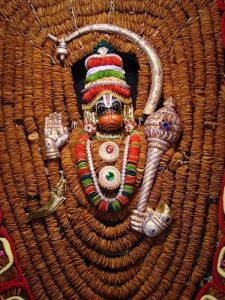
1) Vada Mala offerings

In south India Hanuman or Anjaneya adorns a garland made with multiple Vadas. The Vadas are made with Urad Dal and sewn to form a Garland. The story of Vada Mala goes to the time when Hanuman was young. Hanuman when he was a young boy he once spotted the sun in the sky, thinking it to be a fruit in the sky he flew to engulf it. Since he was a son of Vayu Dev (Wind God) he could fly at an unimaginable speed. As Hanuman was trying to engulf the Sun so was Rahu. Rahu was trying to create a solar eclipse. Rahu could not match the unconquerable speed of Hanuman. Rahu blessed Hanuman that whoever worships him would be freed from his malefic effects during Rahu Dasha and also placed in the horoscope. Rahu loves urad dal very much. This is why Hanuman is offered Vadas made from Urad dal. The garland symbolizes the snake-like body of Rahu.

2) Betel leaves garland

Ravan had Kidnaped Sita Devi and she was kept at Ashok Vatika, one of the Garden of Ravana’s palace in Lanka. Before Lord Rama approached Lanka he sent Hanuman as a messenger to locate Sita and tell her that Lord Rama is going to take her soon. Hanuman flew and came to Lanka. Hanuman spotted Sita Devi in the Ashok Vatika he told her that he was a messenger of Lord Rama and bowed down in front of her to take her blessings. Sita Devi hearing Lord Rama’s names and seeing hanuman she showered hanuman with betel leaves as she had nothing other than this. Since that day Hanuman is offered betel leaves. Also, betel leaves have great significance in Hindu worship as it is believed that betel leaves were found while Samudra Manthan.

3) Offering of Oil
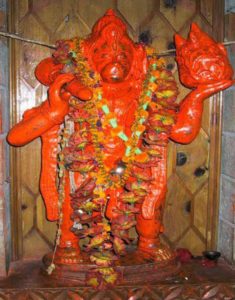
The story is uncertain but it is said that during the battle with Ravana or some of his army personnel Hanuman carried Rama and Lakshmana on his shoulders and took them airborne. Rama and Lakshmana were saved from the powerful attack from the enemy side. Rama and Lakshmana showered ferocious arrows from the air because of being airborne. Hanuman took all arrow hits and was injured badly. Rama feeling the compassion towards Hanuman himself applied oil or butter to Hanuman’s body, which led to the ritual of bathing or offering oil to Hanuman.

4) Offering Black Urad

After Hanuman saved Shani dev from the Clutches of Ravana he himself became the victim of Shani dev’s gaze. Shani dev then climbed on Hanuman’s shoulders, as Hanuman was getting influenced by Shani dev he grew in size and grew so huge that his Shani Dev was trapped between Hanuman’s shoulders and the ceiling of the room they were in. Unable to bear the pain Shani dev requested Hanuman to release him. Also, Shani Dev blessed Hanuman that whoever prays to Hanuman would be free from malefic effects of his gaze. Black Urad being Cereal of Shani is offered along with Oil to Hanuman.

5) Offering of Sindoor

Indian wives apply Sindoor in midst of their parting of the hair. This Sindoor denotes to give husband longevity. One day while Sita Devi was applying Sindoor in Ayodhya. Hanuman asked her why was she applying this saffron powder in the midst her hair. Sita Devi told Hanuman that this will give my husband lord Rama longevity. Hearing this Hanuman smeared his body fully with Sindoor. When Lord Rama saw Hanuman covered in Sindoor he asked him why was he doing so. Hanuman said that if Sita Mata would apply a pinch of Sindoor daily and that would give you longevity and prosperity if a pinch could give you so much then what would happen if I smear my whole body with Sindoor. Lord Rama blessed him and was highly pleased with Hanuman’s devotion. From this day it was said that offering Sindoor to Hanuman gives one longevity and prosperity.


Choose your way of worship and seek Hanuman’s Mercy on his Birthday.!!!!!
Ugadi Pachadi, Chakras and Emotions.


Yugadi or Ugadi in Andhra Pradesh and Karnataka is a festival marking the beginning of a new year. This festival falls on the on Chaitra Shukla Pratipada (between March and April). This festival also marks the beginning of the spring season and time of the first harvest. This harvest festival is celebrated with the cleansing of the house, making of Rangoli, buying new clothes, greeting family and preparing special food preparation. One such special preparation is Ugadi Pachadi.

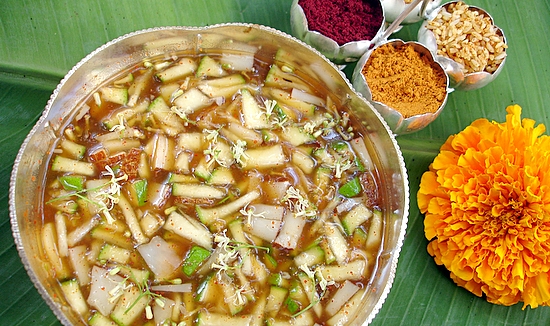
Ugadi Pachadi is a kind of Raita that has its own significance. Ugadi Pachadi is a special preparation prepared on Ugadi in Karnataka and Andhra Pradesh. This is very special preparation as it has a mixture of flavors and each representing a certain emotion. 
Ugadi Pachadi has 6 different tastes in it which represent different flavors of life. They are called Shadruchulu (six tastes). In the Ugadi Pachadi each ingredient brings out a flavor representing an emotion, this flavor and emotion also represent the chakras of the body.
If Ugadi Pachadi has a role in balancing the chakras is not certain, but the emotion that the ingredients exhibit is certainly synonymous to the chakras.
 Each ingredient denotes the six tastes of life:
  • SadnessThe bitter taste of the Ugadi Pachadi comes from the Neem flowers. The bitter tastes are the unhappy moments of life. Bitter moments are also a part of life and so it should not be forgotten. 
  • HappinessThe sweet taste comes from the Jaggery and ripe banana pieces representing the happy moments of life.
  • SurpriseThe tangy taste of the Ugadi Pachadi is from the unripe mango. Ugadi marks the beginning of the mango season. Hence unripe mango represents the surprise element of our life and that a person should always be prepared for it.
  • Anger – The spicy taste comes from the red chili/pepper powder. It represents the angry moments in life.
  • FearThe salt represents the taste of life. The salty moments are necessary to make our lives interesting.
  • Sour – The Sour taste of Tamarind represents the sour moments of life which along with other flavors make our lives worth living.
The six taste represent the six chakras which are responsible for the functioning of the body.
 
Muladhara or root chakra located at the base of the spine in the coccygeal region of the subtle body. This chakra is associated with major material problems and is associated with an element of earth. Personal possessions, financial needs, social needs all this bring about a fear of losing all that you have which then brings about sadness. This is an emotion of sadness is exhibited by the Neem flower in the Ugadi Pachadi.
Svadhishthana or sacral chakra believed to be located at the root of the sexual organ along the spine in the subtle body. This chakra is of the water element, representing satisfaction and all good things in life. With satisfaction and pleasing moments of life comes happiness. The Jaggery in the Ugadi Pachadi highlights this emotion of happiness.
 Manipura or the solar plexus chakra is located in the navel region along the subtle body’s spinal column. This chakra represents confidence, self-power, and identity. This chakra is governed by the fire element giving a certain spark to your life. The self – power, identity, and confidence invite a certain level of pride. This pride then ropes in anger if things don’t happen the way we want. The fiery anger is represented with the spicy taste of red chili/pepper powder in the Ugadi Pachadi
 Anahata or the heart chakra is located in or behind the heart. This chakra is governed by your heart, compassion, love, emotions, and feelings. This chakra is represented by the element of Air. With emotions comes anxiety, the fear of being hurt, betrayed or losing something. Thus the emotion of fear is governed by this chakra. The salt in Ugadi Pachadi represents the emotion of fear which is governed by this chakra.  
 Vishuddha or throat chakra is located at the base of the subtle body’s throat. This chakra governs the speech, throat, taste, and tongue. The tongue and speech is difficult to control. This uncontrolled speech results in sour moments. Thus the emotion of Sourness goes well with this chakra. In Ugadi Pachadi this emotion is exhibited by the flavor of tamarind.
 Ajna or third-eye chakra is the subtle center of energy, believed to be located between the eyebrows, located behind it along the subtle (non-physical) spinal column governed by the element of space. This chakra represents the mind and thoughts of a person, the intelligence of a person. The thoughts of an individual travel with a speed that is way greater than light, anything traveling with this speed certainly may bring many elements of surprise. Thus this chakra is denoted by the emotion of surprise exhibited with the tangy ingredient of unripe mangoes in the Ugadi Pachadi.
 Sahasrara or crown chakra is the topmost chakra in the subtle body, located in the crown of the head. This chakra symbolizes the ultimate bliss and is certainly an amalgamation of all the previous chakras. This Sahasrara chakra also means the ultimate completion of ‘purna’. The only way to activate this chakra is to surpass all the chakras. The combination of all the flavors and emotions lead to a certain completion as it has taken you through a journey of all aspects of human life. This Ugadi Pachadi not only has a delicious taste but also comes with many health benefits according to Ayurveda. Hence the in totality this dish is a package of everything resembling the Crown Chakra.
Ingredient
Emotion
Chakra
Neem Flower
Sadness
Muladhara or root chakra 
Jaggery
Happiness
Manipura or the solar plexus chakra
Unripe Mango
Surprise
Ajna or third-eye chakra 
red chili/pepper powder
Anger
Svadhishthana  or sacral chakra 
Salt
Fear
Anahata or the heart chakra 
Tamarind
sour
Vishuddha or throat chakra 
The Dish as a whole, Emotions, taste, health benefits, flavors.
Sahasrara or crown chakra 

Salmon- The Fish of Knowledge.

Salmon is one of the favorite fishes of all times. Salmon flesh is generally orange to red, this fish plays a significant role in American and Japanese cuisine.  Salmon is also considered as sacred fish by the Celtic people. In various mythologies, salmon is believed to be the Fish of Knowledge.  One of the popular mentions is Celtic Poetry.

Boyhood Deeds of Fionn Legend

Long Ago in Ireland, there were kings ruling the land. The Kings had certain mighty hunters and warriors called Fianna of Erinn. These mighty hunters posed great land, wealth, and weapons and lived in outdoor in the woods where deer and wolf ranged. Fianna’s chased these wolves with their great dogs and hunted the animals. 

Fianna was ruled by one Chief Cumhal, under his rule, one clan named sons of Morna rose as rebels. The rebels fought Cumhal in the battle of Cnucha, today known as Castleknock near the city of the hurdle ford. Goll Son of Morna here slew Cumhal and took away the treasure bag of Fianna, this treasure bag was made from a crane’s skin, Having many great jewels, magical weapons. This bag was then handed over to Lia the chief of Luachar in Connacht.

Cumhal’s wife Murna bore two sons, the elder was named Tulcha and younger was Demna. The elder Son Tulcha fled in fear of Goll and took shelter with the king of Scotland. Demna, the younger son was born after Cumhal’s death, fearing that he would be killed too Murna gave him to Drudiness to be taken away and raise him.

Drudiness took him to the woods on Slieve Bloom Mountains and trained him in hunting and using weapons. Drudiness raise the boy Strong and mighty. The boy could outrun a hare in speed, kill a duck with his Slingshot. Drudiness taught him everything about him, his race, his right to be the chief of Fianna of Erinn.

One day while the boy roamed in the woods, he came across a mansion where the sons of the Chiefs of Ireland were playing. On seeing Demna the sons of chief invited him to play. Demna won easily, then the boys divided giving very few player in Demna’s side but he won each time defeating all the boys by himself. The anger and jealousy amongst boys grew and instead of being a sport started to hurl Demna with their clubs and weapons. Demna alone fought them and defeated them single-handedly. The boys ran to their fathers and narrated the incident. The boys said, “It was a tall shapely fair one, so the name “Finn” or the Fair one clung to him and he is known by that name this day.

Finn gathered many friends who loved him for his strength, valor, and kindness. Finn’s friends accompanied him everywhere Finn went. Goll the slayer of Cumhal and now the Chief of Fianna was hearing about the glories of Finn.

Drudiness when she heard that Goll’s men were looking for Finn, she asked Finn to go to Connacht. In Connacht Cumhal’s brother and other warriors who survived built hiding in the woods. Finn journeyed with some friends to this hiding to meet Crimmal.

While Finn was on his way to see Crimmal, He saw a woman who seeing Finn cried and told Finn that her only son Glonda was slain by Lord of Luchar.  Finn then took the woman and went to confront the Lord of Luchar. Luchar disrespected Finn and fought with Finn and his men. Finn and his men killed the Lord of Luchar and his men and recovered the bag with treasures.

Finn then came to see Crimmal and gave him the treasure bag. Finn told Crimmal that he was there to avenge his father’s death. Crimmal told Finn that Murna Finn’s mother wedded Gleor, Lord of Lamrigh, in the south and she is safe from the sons of Morna.

Finn was not qualified yet to rule Fianna until he had perfected in wisdom and learning. He went to Finegas to learn wisdom and poetry, who dwelt by the river Boyne near the Village of Slane. There was a reason why Finegas made this riverbed as his dwelling.

There was an old prophecy that a salmon of knowledge lived in the river Boyne, and one who eats it becomes the wisest of all. This salmon was called Finntan from the ancient times and was one of the immortals, even if he has been eaten, he would still live. Finegas had been trying to see the salmon from seven long years until Finn came to be Finegas disciple. Finn caught the salmon. Finegas gave the salmon to Finn to cook and told him not to eat even a bit of it. Finn when came with the fish his eyes became very wise. Finegas suspected that Finn had eaten the fish. Finn told Finegas that while cooking he had burned his thumb that he put in his mouth. Finegas then understood that the prophecy was made for Finn and he was the chosen one. Finegas asked Finn to eat the salmon and blessed him.

With Finegas, Finn learned the three things that make a poet, and they are Fire of Song, and Light of Knowledge, and the Art of Extempore Recitation.

Is salmon really fish of knowledge??


The human brain is majorly made of fatty acids. More than two-thirds of the brain is made of docosahexaenoic acid (DHA), an omega-3 fatty acid. DHA is like a bulletproof vest for brain cells, making up a majority of their cell membrane. The inability of this fatty acid can cause a multitude of disorders, such as Alzheimer’s disease, memory loss, and other neurological disorders. The omega-3 is also great for Heart and Bones.

Salmon is loaded with fatty acid and Omega-3. A 100-gram portion of salmon has 2.3 grams of long-chain omega-3 fatty acids, while the same portion of wild salmon contains 2.6 grams. It is found that salmon helps to reduce depressive symptoms, protect fetal brain health during pregnancy, decrease anxiety, slow age-related memory loss and lower the risk of dementia.

Therefore, Salmon clearly qualifies as a Fish of knowledge that both mythically and scientifically.


Garlic the Taboo Food

Garlic is one flavor, found in all cuisines around the world.  Apart from being an essential ingredient garlic has many mysteries surrounding it. Garlic in the European culture and popular films it is known to ward off vampires, werewolves, evil eye. As per some versions, Egyptians also used garlic as currency,  one could buy slaves with garlic. Whereas in India Garlic as a certain warding off reputation. It is considered Taboo, a negative ingredient for numerous reasons.  

 
Food of Love
The smell of garlic is actually unbearable. Garlic has one of the most repulsive breaths. Eating raw garlic can certainly make your partner turn on the other side of the bed. The other side of Garlic is that it can heat up intimacy. Garlic has a long history of being an aphrodisiac. Garlic is high in heat and also containing Allicin, a compound to increase blood flow to sexual organs. Due to being a strong aphrodisiac Hindu, Jains, and Buddhist prohibit the consumption of garlic and consider it as taboo. It is harmful to monks and celibates trying to practice renunciation or devotional service. The Hindu’s label it as Tamasic food, or food causing a diversion from the devotional service. There are some texts such as Padma Purana, Manu Samhita, Garuda Puran who strongly condemn and prohibit Consumption of garlic. Certain texts also name consumption of garlic as sin. 
Garlic eating is eating cow

Beef is a great taboo according to Hindu Believes. The cow is considered very sacred and worthy of worship. However, in the Vedic times, cows were often used in a sacrifice called “Gomedha Yagya”. One such Yagya led to the birth of the taboo Ingredient “garlic”. Once, in Satya Yuga, some Sages were performing Gomedha sacrifices. For which a cow would be offered into the sacrificial fire and then be resurrected through certain Vedic mantras. It was this times that wife of the Sage leading the Yagya was pregnant. She had a strong craving to eat the meat of a cow. It was a belief that if you curb the cravings during pregnancy then it will impact the child in the womb. The wife of Sage grabbed one piece of meat of the cow’s body that was offered in sacrifice and hid it. She was making plans to eat it soon. The Sage was finishing the sacrifice and a new cow was resurrected, he noticed that there was a little part missing from her left side. He went into meditation and realized that his wife had taken away a piece of meat during the sacrifice. Now his wife in fear threw the meat she had far away. Due to the effect of the mantras uttered by Sage to resurrect the cow, there was life in this piece of meat. Then the blood of this meat became red lentils, the bones became garlic and the meat became onions. Eating of Garlic became as sinful as eating the meat of a cow.

 Born of demon’s blood

 This is a story from Kamba Ramayana, Yuddha khanda. It is during the Samudra Manthan when Gods headed by Indra and demons headed by king Bali churned the ocean. The last Divine item to appear from the Ocean was Amrita or Nectar held by Dhanvantri. The gods and demons both chased Dhanvantri for nectar. To solve this problem Lord Vishnu took the form of Mohini- Murti and infatuated everybody. Mohini- Murti tricked the demons and started to feed the nectar to Gods. Rahu, the Senapati of Asuras disguised as Devta was awaiting his share of nectar. While he was getting his share of nectar Surya and Chandra caught him, Lord Vishnu then immediately with his Sudarshana chakra severed the head of Rahu. As Rahu drank some portions of Nectar he could not be killed, his head and body both remained alive as Rahu and Ketu. Some blood had dropped to the ground while Rahu’s head was severed. This blood then became red onion and garlic. Therefore, Onion and Garlic are considered demonic food.