
Diwali Food Traditions
Diwali is not the only festival of lights but also a festival of tradition, gratitude and most importantly food. Diwali marks cooking of delicious savory snacks and Mithai. This festival has many legends signifying celebration and happiness. Many important events occurred on Diwali day, Lord Ram returned to Ayodhya after killing king Ravan, Lord Krishna killed Narakasur, Samudra Manthan or churning of ocean happened on this day, Lakshmi goddess of wealth married Lord Vishnu on this day.
For Jains Mahavir attained nirvana, celebrate Bandi Chhor Divas in remembrance of the release of Guru Hargobind from the Gwalior Fort prison by the Mughal emperor, Jahangir, and the day he arrived at the Golden Temple in Amritsar. During the Diwali week everybody starts to prepare savory snacks and sweets, there is an exchange of gifts and sweets. The auspicious Diwali lamps are lit and the whole country is shining, with the Diwali decoration. But there are some traditions that do things differently; they have their own foods and customs to be eaten on the Diwali day.
Annakoot
Annakoot means Lot of Food, A mountain of food is made to please Govardhan Mountain, He is also called Giriraj or king of mountains. Annakut is celebrated on the fourth day of Diwali, that is the very next day after Amavasya, to offer gratitude to Krsna and Govardhan. This festival is celebrated mainly in Rajasthan and near about of Mathura. The origin of this festival dates back to Lord Krishna when he asked Vrajwasis to give up worshiping Indra and instead worship Govardhan as it is the mountain that provides food for the cows, and they were cowherds men so serving cows were really dear to them. Govardhan means one who nourishes the cows.
Later Lord Krsna lifted the Govardhan mountain to save people of Vraja from the wrath of Indra. From that day onwards worship of Govardhan began. Since Govardhan is a mountain and is humongous in size, it is perceived as it needs a lot of food. Therefore to satisfy the hunger of Giriraj mountains of food are made. Those in Vraja do parikrama of the sacred mountain and offer Bhoga to Giriraj. Those away from Vraja either worship a Shila or rock of the mountain or make a mountain of cow dung, having eyes and mouth and perform the rituals. Abhishek is performed of Govardhan, later mountains of food are made along with Chappan Bhog to seek Mercy of Giriraj.
The Bengal’s Shaak
When everybody is eating sweets, the people of Bengal eat Shaak during the second day of Diwali. The elders would say “Na khele bhoote dhorbe,”. If you do not eat it, ghosts will haunt you. According to Charak Samhita, it is believed that during the month of Kartik, that is the pre-winter month, the doors leading to Yamloka are open and the evil spirits move freely. to protect oneself from these evils, and in order to retain our strength and ward off the dangers, one must eat this Shaak. This unique Shaak is made of 14 different kinds of leafy vegetables.
This Shaak consists of red amaranth leaves, Kalmi (water spinach), spinach, Kochu (Colocasia), Notey (amaranth), Kumro (pumpkin), mulo (radish), Lau (bottle gourd), Paat (jute), Motorshuti (green peas), methi (fenugreek), Palta (pointed gourd leaves), Betho (Bathua), and Shorshe (mustard) Shaak. This Shaak also has no specific recipe, each household makes it differently. The vegetables are first washed and soaked before cooking. And then the soaked water is sprinkled in and around the house to ward off any evil spirit.
Goan Poha
Poha, seriously, who eats Poha on Diwali. Poha is a flattened rice Maharashtrian preparation mostly eaten as breakfast in Maharashtra and Goa. In Goa there are different dishes are prepared with the Poha during Diwali, and it is mandatory to eat Poha during the festival. According to popular Goan legend lord, Krishna loved eating poha, it was his favorite preparations. After lord, Krishna returned to Dwarka after killing Narakasur lord Krishna was offered his favorite Poha. poha is known as Fau, in Goa.
The five dishes with Poha are Bataat Fau, which is poha cooked with potatoes and a tempering of curry leaves, lentils, and mustard seeds; then there is the sweet and the spicy Kalayile Fau, prepared by mixing the poha (by hand) with a fiery spice blend, grated fresh coconut and a hint of jaggery. The Doodhatlye Fau is a simple, delicate dish of flattened rice in milk; the Rosathle Fau is poha prepared in cardamom-infused coconut milk, and the Dhayatle Fau is a simple sweet poha prepared with curd or buttermilk. The poha is usually served with dried pea curry, Vatana Usal.
Eating Sooran
Yam or Sooran is something which drives the kids away; Sooran might be one of the favorite vegetables of many people. But in Uttar Pradesh is and parts of north India eating Sooran on Diwali day gives the blessings of Goddess Lakshmi. Yam grows by corns and even after harvest the corns remain, symbolizing the abundances of the produce. Since goddess Lakshmi and Diwali symbolizes abundance in wealth, eating Sooran became the tradition. There is no specific recipe but Sooran has to be had in any form. Generally, Sooran is eaten stir fried with spices, or as Chokha with Pooris.
The Tamil Nadu’s Diwali Medicine
The foods eaten during festivals can be heavy to the belly, and you may need help to digest. Therefore in Tamil Nadu, a Marundu or medicine is prepared and is mandatory to be eaten empty stomach on Deepavali day. This can be had anytime but during Diwali this is mandatory. Various ingredients such as carom seeds, poppy seeds, dry ginger, dry grapes, honey, jaggery, nuts, ghee are used to prepare this medicine. This preparation prepares your digestive system for indulging in good festive food.
Kerala’s Ginger Jaggery preparation.
Dhanvantri the god of medicine was the last person to appear from churning the ocean, with The elixir of immortality, ‘Amrit’. It is believed that Samudra Manthan happened on the Diwali day and the following day after Diwali is celebrated as Birthday of Dhanvantri. This is a very popular tradition in Kerela. Their Diwali morning starts with a pre-bath Abhyanga, a herbal massage with turmeric, gram flour, and Oil. After this massage, they have a ritual bath and wear clean clothes. Then a concoction made of Jaggery and Ginger is offered to Lord Dhanvantri to seek his blessings. Dhanvantri is the god of health and medicine worshiping him with this preparation showers health and protection from diseases.
Sukhsuptika or Kashmiri Diwali
Deepavali or Sukhsuptika is oldest known Kashmiri pundit ritual that is mentioned in the Nilamat Puran, a text of 6th – 7th century A.D. This text is named after King Nila of the Nagar dynasty that ruled Kashmir in the beginning. King Nila describes sixty-five rituals and festivals which were celebrated by the Nagas, Sukhsuptika is one of those important festivals being celebrated.
Diwali of Kashmiri pundits start on Ekadashi and ends on Kartika Amavasya, Kashmiri Pundits keep a fast during Diwali. In the evening they worship goddess Lakshmi, the goddess of wealth. They light lamps in temples, crossroads river banks, and every part of their surroundings. The evening Feast is arranged to be enjoyed with relatives and friends. And sweets are distributed since Kashmiris were not so used to eat sweets they substituted sweets with sweet puris to be offered to Lord Narayana and then distributed among relatives and friends. After the pujas and worship the next day people wear new clothes, gamble and listen to folk songs.
Ningol Chakkouba of Manipur
Diwali in Manipur is celebrated the same way it is celebrated in other parts of the country, by lighting lamps, exchanging sweets, gifts and bursting crackers. But before or after Diwali comes a very special Manipuri festival of “Ningol Chakkouba”. The festival of “Ningol Chakkouba” is a very important and popular festival of Manipur, especially the Meitei Community. It is celebrated on the second day of the lunar month of Hiyanggei , which falls a day or two either before or after Diwali. “Ningol” means the daughter of a family, and “Chakkouba” stands for a feast. On this day, the married women of Manipur go to their paternal homes for a feast and receive gifts from their parents and brothers.
The children of the daughters are also excited as they get to wear new clothes, get gifts, dokhina (token money) on this auspicious day. The invitation of this festival is sent formally a week ahead of the festival by the brothers. The feast is prepared by bamon a Chef or by mothers and elders of the family. The dishes include vegetables and fish preparations such as nga thongba (fish curry), iromba (spicy chutney), ooty (a type of dal), soibum mathel (bamboo shoots dishes), hei thongba (a dessert made of fruits) and a long list of food follows. After a long lunch session with all the family members, the daughters spend quality time with their maternal family and relish their childhood memories. Daughters and their kids are presented with gifts. This festival is so special that daughters wait the whole year for this day to come.


 There is another story where in Modak is referred as symbol of divne knowledge. One Shiva and goddess Parvati wished to present a unique divine Modak of knowledge to their sons. This Modak had the ability to bestow the person eating it with incredible knowledge of everything. Goddess Parvati decided to test her sons and decided to give it to the one who passes the test. She asked her sons to circumambulate the universe three times and the first one to do this would win. Kartikeya instantly flew on his peacock. Whereas Ganesha sitting on his mouse went around Lord Shiva and Goddess Parvati , giving the logic that for a son his parents are the universe and the universe revolves around Shiva and Parvati. By the time Kartikeya returned Ganesha had already won and received the Modak of knowledge.
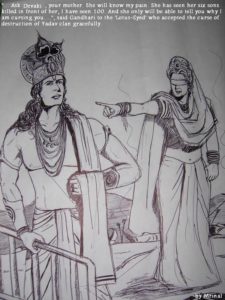 Lord Krsna executed the Mahabharata war with great expertise; he made sure that all the sinful people were killed in the war. After the war was over Pandavas along with Krsna and Draupadi went to see Dridhrastra and Gandhari. Gandhari held Krsna responsible for the total annihilation of the Kuru dynasty. she felt Krsna allowed this great bloodshed, and this could have been prevented. Gandhari cursed Krsna just “because of you my dynasty is over similarly your yadu dynasty will also be destroyed, the yadvas would fight amongst themselves and kill others until there is no yadava left on the earth. Krsna smiled and accepted the curse. Krsna said that it was gandhari that gave encouragement to the Kauravas to sons become unlawful and unjust.
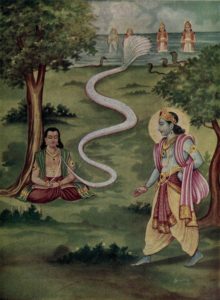 Suddenly Krsna saw bad omens that were hinting at something terrible. Krsna asked the Yadus to go to Prabhasa-kshetra, and worship the devatas. There the Yadus happened to drink intoxicating beverage Maitreya, that sparked the quarrel amongst the Yadavas. The Yadavas even attacked Krsna and Balarama, to which Krsna and Balarama had to retaliate and fight with their own people. Saddened by the destruction of his own dynasty Balaram sat under a tree and took his original form of Ananta Sesa and left the material world, as per some versions a white snake came emerged from Balarama mouth and he went to his abode.
 The discovery of tea is credited to Bodhidharma, a Zen Buddhist monk. He is known as Daruma in Japan. Bodhidharma is also credited to create Shaolin kungfu. He traveled from India to China around the year 475 CE. Bodhidharma was born as a prince of southern Indian Pallava kingdom. He then was converted to Buddhism in his youth and was instructed by his spiritual master to go to China and preach. Bodhidharma came to China in wearing a simple robe and carrying an alms bowl to observe his vow of poverty. He preached that nirvana or enlightenment can be attained through meditation. He adhered to a routine of harsh self-discipline and extreme asceticism, rigorous practices that he transmitted to his followers. Bodhidharma is accredited to strong vows of uninterrupted meditation, his mediation tales say that he meditated up to an extent where his arms, legs withered away he even lost his shadow. One such vow led to the discovery of tea.
 Once Chinese emperor Shen Nung , was relaxing under a tree, on a serene warm afternoon. He had asked his attendants to boil some water for him. While the attendant was boiling water, a mild breeze caused some tea leaves to fall in the pot. The servant is a bit lazy decided not to boil another pot of water, he just served the water as it. Drinking the different tasting water the emperor loved the refreshing experience, making the world’s first cup of afternoon tea.
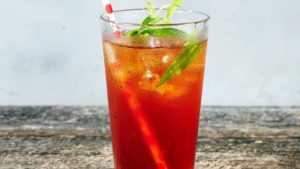 Legend of Iced Tea
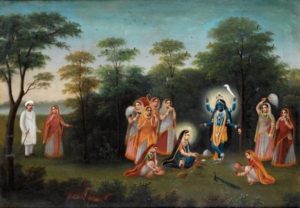 In the Bengal folk tradition, we have a story of where Krsna takes the form of Kali for Radha. Every night Krsna would play his flute in the forests of Vrja and Radharani would slip out of her house to meet Krsna. Radharani’s Husband Ayan was unaware of this and thanks to the Villains, Radharani’s sister-in-laws Jatila and Kutila who informed her husband Ayan of what was happening. This Infuriated Ayan, and he went to catch Radharani, but Krsna knows all. Krsna asked Radharani to collect wildflowers and fruits and sit down as if she was worshiping. As Radharani did what Krsna asked her to do so, Krsna took the form of Kali, the family goddess of Ayan. When Ayan came to the woods and saw Radharani he saw her worshiping Kali and was very pleased to see Radharani worship Kali.
 The legend is connected to Myrrha the mother of Adonis, who was a mortal lover of Aphrodite. Myrrha was a daughter of King Cinyras and Queen Cenchras. Myrrha once got filled with lust and fell in love with her father. According to Greek tradition having one’s father was a grave crime. However, Myrrha tricked her father into having sexual intercourse with her for nine night in complete darkness. Her father then chased her and she was transformed into a myrrh tree and as per some legends, Aphrodite’s curse her to get transformed into a tree. As myrrh tree, Myrrha gave birth to Adonis. Aphrodite found Adonis and asked Persephone, the queen of the underworld to raise him. Soon the Adonis turned out to be the most handsome man on earth, causing a dispute between Aphrodite and Persephone. To solve the conflict Zeus appointed the Muse Calliope as judge of this dispute who gave a verdict that Adonis would spend one-third year with each. Aphrodite and Adonis spent hours together in arms of each other. Aphrodite also used to advice Adonis to hunt animals that were safe and not chase the wild beasts. But one day Adonis had an encounter with a wild bear. The bear happened to would Adonis badly and he was groaning in pain, As soon as Aphrodite came to know of this she ran and held Adonis in her arms. Adonis could not survive and died groaning in arms of Aphrodite. Aphrodite wept tears of sorrow and separation. The tears Aphrodite wept were heart shaped and became the strawberry and tears that mixed with the blood of Adonis became the Anemone flower.
  The Cherokee is one of the indigenous Native American tribe of the Southeastern Woodlands. The Cherokee word for strawberry is ‘ani’. The old Cherokee country was known for its abundance of strawberries and other wild fruits. Strawberries for Cherokee are a symbol of peace and good luck. The Cherokee legend defines the fruit to be tempting and also part of the first creation. The legend says that o-gi-do-da ga-lv-la-di-he-hi, the primordial father and Cherokee creator, created the first man and first woman. They built a house at the far end of a dense forest. They were a happy couple but had occasional disagreements. Once so happened that they were arguing over something and the first woman got so annoyed that she decided to leave and never return. She started walking towards the west and never looked back. After a few days, the first man also followed the same path to get her back. Seeing the first man disturbed the Sun asked him if he was still angry and would he like to have the first woman back. The First man readily told the sun that he was not raged anymore and would love to have her back. However, the Sun found the first woman was still angry. To calm her anger the sun grew pretty looking large and ripe blueberries. But the first woman ignored the berries. The sun further caused to grow luscious dark and plumpy blackberries. But even these were ignored by the first woman. Once again the sun grew some dainty raspberries but even this attempt went in vain. Finally, the sun made a plant that was never seen before to grow. The plant covered the ground in front of her in the area and the air with its luscious aroma. This time the first woman stopped to look at this plant. The plant had shiny leaves and the most tempting and luscious red berries that she had never seen. The first woman immediately picked up one and tasted the irresistible berry. As she ate the strawberry her anger just vanished and her heart was filled with love. She now wanted to go back to the first man. She gathered some berries and started to walk back towards the east. She on her way met the first and both shared berries and walked back home.
 The king of the Vikings would sit on a huge throne studded with precious stones. The king would never leave the throne. He would always be accompanied by four hundred of the bravest soldiers and trusted companions. The companions would die with the King and offer their lives to protect the king. These brave warriors sit below the throne. Along with the warriors, the king would be accompanied by slave girls. The slave girls would do personal service, prepare food, and also serve him in bed. The king would have a total of forty beautiful slave girls at his service. Whenever the king had an urge to satisfy his desire he would satisfy with slave girls. If the king wanted to ride the companions would bring his mount to him. If there was a war the king would send his vicegerent to fight and stand for him. The king would never have a need to leave the throne.

 The Puranas give a various account of the ocean of milk. The Puranas say that there is an island known as Svetadvipa there flows an ocean of milk, and in the midst of that ocean, Lord Vishnu lies on Ananta. He is also called Ksirodakashayi Vishnu as he resides on the ocean of Milk. Ksirodakashayi Vishnu is the incarnation of the quality of goodness and also believed to be an expansion of Aniruddha (one of four vyuha expansions). He is the universal form of the Lord and expands Himself as the Supersoul within every living entity.
 The creation of Milky Way is credited to Heracles. Zeus, as we know, had many affairs, this time with a mortal woman named Alcmene, The God of the sky disguised himself as this poor woman’s husband in order to make love to her and consequently impregnate her. Hera seeing that his husband was involved with another woman was filled with rage and wrath for Alcmene and Heracles. Alcmene was terrified that Hera would harm her son, so one night Alcmene took infant Heracles and left him in the fields beyond city walls. Zeus did not want his son to die but become godlike and immortal.
