Worshiping Spiderman and Spiderwoman

We all know about our friendly neighborhood superhero Spiderman, a popular character by Marvel Comics first introduced in 1962. Bitten by a radioactive spider a high school student Peter Parker became the superhero Spiderman. Spidey has superhuman reflexes, strength and uses his power of Web. Marvel than in 1977 introduced another character, The Spiderwoman. Jessica drew suffered from uranium positioning and the only way to cure her was sealing her in a genetic accelerator. Jessica’s father injected her with his untested spider serum that made her Spiderwoman. She has super human strength, speed, and endurance. She also focuses her bio-electric energy into powerful venom blasts that can penetrate through any surface, kill or stun enemies. Both of these Characters are actually the most important and honored Deities of the Dine or Navajo people. They played a very important role in the Creation of the Universe and Mankind. Marvel and DC both comic giants have adopted many characters from Mythology. So were Spiderman and Spiderwoman. Let us look at the Original Spiderman and woman.

Tracing the Original.

In some Navajo legends Spiderwoman is Pueblo woman who was taught the craft by a spider. In acknowledgment of their debt to Spiderwoman, Navajo weavers always left a hole in the center of each blanket, like that of a spider’s web. The Spiderman and woman have been throughout the creation of the different world. A great detail is mentioned in the Book Navajo Religion, Vol II by Gladys A. Reichard.

The Navajo world was created in stages. The first world was dark and black with just four corners. In the Four Corners, four clouds Black, white, yellow and blue appeared. The Black Cloud was the Feminine force and the white was the Masculine force. The first world grew on an island floating in mist. On it was only a pine tree. The place where black and white cloud first met, there first man and woman were born. The first man spirit came with white corn and the female came with yellow. Both of them stood opposite each other, one in the east and one in the west. The first man then called the first woman to live with him. Then another being was created called the Great Coyote, he was hatched from an egg in water. Then another being came into existence, he was Atse’hashke’ the first Angry. He said to the three of them that he was the first amongst them. Then came the wasp people or tsts’na.  After the wasps came small spider ants. After these powerful creatures came to The Spiderman and Spiderwoman, along with the salt man and salt woman.  Then the second world or blue world was created, followed by the third yellow world and the fourth white world.

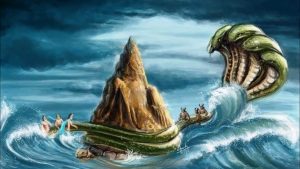
In the first world, there was a great deluge, the waters rose really high. Spiderwoman wove a web that served as the lifesaving raft. Spiderwoman saves the first man, woman, coyote and other creatures with her web.

In the blue world, Spiderwoman stole water monster’s baby with her web. Then the twins, born of the first woman were on a journey.it is during their journey they saw a house, there was smoke coming from underneath. They entered the house and saw many seats. Firstborn chose to sit on one of flint, his brother on turquoise. In the house was an old woman, he was the Spiderwoman who gave the twins sacred chants and bundle of prayer sticks. She also fixed the flint and turquoise ‘men’ within The Twins to make them invincible.

Spiderman and Spiderwoman also taught the Navajo people to weave. It was only them who knew the use of cotton fibers. The Spiderman taught the people to shape a little wheel, about 3 -4 inches in diameter and by placing a slender stick the Spindle was made.  Then the Spiderwoman instructed the Navajo women how to weave on a loom. The weaved woolen ball was erected on a cross pole. The cross poles were made of sky and earth cords, the warp sticks of sun rays, the healds of rock crystal and sheet lightning. The baton was a sun halo, white shell made the comb.

Four Spindle’s were made “one a stick of zigzag lightning with a whorl of cannel coal; one a stick of flash lightning with a whorl of turquoise; a third had a stick of sheet lightning with a whorl of abalone; a rain streamer formed the stick of the fourth, and its whorl was white shell”.

The Navajo people did not need to depend on animal skin for clothing they could make their own cotton or woolen clothes. It was also a Tradition that when a baby girl was born they would find a spider web woven at some hole and rub it on baby’s hand so that when the baby grows up she would become a great weaver and her hands would never tire.

Another legend says that man journeyed into the sky and met Spiderwoman. It is she who made human arteries and is considered to be a medicine woman. Navajo women believe that the spirit outlet prevents Spiderwoman from spinning cobwebs in their brain, an ailment also known as blanket sickness. Her spiritual power, as seen in her silken web, joins the realms of Earth and Sky. In most of the ways, She is a beneficent female, a mother figure who guides mortals and can be trusted to stand up to Coyote when he performs witchcraft or enacts misdeeds.

Contemporary Prasadam

The Bible says that God made the Birds, Trees, Fruits all for mankind to enjoy. God has made such an arrangement that he has the food in place in the form of Mother’s Milk before a baby is born. The main reason we work for every day is Food. Don’t you think we should thank God? The idea of thanking God and giving back to him as in gratitude became Sacrifice. This sacrifice later took the form of Prasadam during the Puranic era. Prasadam means a gracious gift, a devotee offers food, clothes, or anything he wishes and considers it acknowledged. In Bhagavad Gita, Krsna glorifies Prasad to be the destroyer of all miseries, prasade sarva-duhkhanam hanir asyopajayate. Krsna also says that we can offer anything in form of Bhoga and acknowledge as Prasada, In Bhagavad Gita 9.26 Krsna says ” with devotion anyone offers me fruit, flower, leaf or even water I will accept it”. The meaning of this shloka is we can offer anything with love and devotion the god acknowledges it. The incident when Vidura’s wife peeled the bananas but because she was being engrossed anxiety to serve Krsna, offered the peels and threw away the fruit. Krsna relished the peels more than he relished any foods because the offering was made with utmost devotion and love. In Ramayana, Shabri would taste each and every berry and offer to Lord Rama, and Rama would relish because it was offered with love and devotion. There have been many examples in the texts where Gods have relished strangest offerings if they were offered out of love and devotion. As Krishna says in Bhagavad Gita 9.27: yat karosi yad asnasi, yaj juhosi dadasi yat, yat tapasyasi kaunteya tat kurusva mad-arpanam, all that you do, all that you eat, all that you offer and give away, as well as all austerities that you may perform, should be done as an offering unto Me.

 So can the contemporary foods be offered to gods? Yes, it is said that whatever we eat or use has to be first offered to the lord. This has a certain cleansing effect on ourselves and also it helps us advance spiritually. These are a few temples where contemporary foods replaced the traditional offerings.

Munch Murugan- Chocolate

Chocolate and its popularity both are a very modern idea. Traditionally in the south would be mainly pancamritam, Pongal, or ladoo. North India would follow the similar idea of ladoo, sugar, coconut, nuts etc. But this temple in Alleppey has an interesting prasadam to offer. Alleppey or Alappuzha is known for many things beaches, backwaters, boat houses, and also temples. The Chemmoth Subramaniya Swami Temple of Alleppey is a temple worth mention. This deity of Balamurgan developed a sweet tooth and a diehard liking for Chocolates. Once a few years ago an unwell young boy, became adamant to offer Nestle’s chocolate bar ‘Munch’ to the deity. The boy was then miraculously cured. The news spread across the state and then across the country, it is since then the devotees offer chocolates and Munch specifically to the deity. The munch and chocolates offered are then given to devotees as Prasadam. Devotees also offer munch that equals their body weight, to seek the blessing of Murugan to solve their miseries. This temple is an interesting example of contemporary Prasadam.


Tangra Kali MandirIndo Chinese

The fried rice, Manchurian, Chow Mein and many other Indo-Chinese delicacies that we relish today, are said to be originated in Tangra region of Kolkata. The Hakka Chinese Migrants brought with them their cuisine, their cuisine then adopted the Indian spices and techniques along with Bengali flavors to bring us the Indo Chinese we relish today. The Tangra region is not only known for its Chinese food but is also known for Chinese Kali Mandir. This Kali Mandir is very popular when it comes to offering and Prasadam. This goddess is fond of Chinese Food. The Local Chinese devotees visiting the temple offer fried rice, noodles, etc to the goddess. The Chinese devotees also worship the goddess according to their customs. There is a story behind how the Chinese community started worshiping the goddess. There was a young boy of around 8-10-year-old. He was suffering from some incurable disease. The parents had lost hope and had tried each and everything possible. The doctors had given hope and chances of survival were slim. In all eyes of hope, they kept the boy under the feet of the deity and the boy miraculously recovered. This news attracted the Chinese community to also worship the goddess in this temple.
Jai Durga Peetham – Trendy fast food and desserts

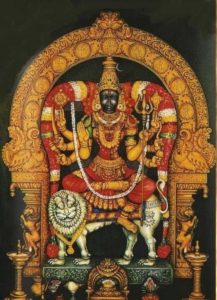
Anything that is made with a clean mind and heart can be offered to God. This is an ideology of this Durga temple located in padapai, outskirts of Chennai, Tamil Nadu. The temple was in news in summer of 2017, when it replaced the traditional Prasadam of sweet pongal, tamarind rice, etc for more trendy and contemporary Prasadam of burgers, brownies, sandwiches, doughnuts, exotic salads and more. The temple also has a vending machine that will dispense a box of this trendy Prasadam. This temple certainly attracted many tourists, locals and devotees from all across the state and country.

The Blue Milk


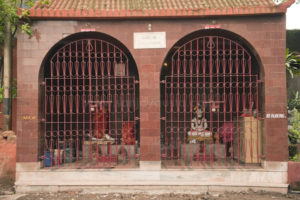
There is a temple in Tamil Nadu called Tirunageswaram Naganathar Temple, This is the only temple dedicated to Rahu. Rahu and Ketu are known as Shadow Planets, they are nodes of the Earth. They are inseparable Pair. Rahu is depicted as the body of the snake, where Ketu is the head. They create a very dangerous Dosha called Kaal-Sarpa Dosha.  This Dosha causes great misery. Therefore Rahu and Ketu are worshiped. The deity of Rahu in this temple is having Human Head.

The temple is located on the southern bank of the river Kaveri 7 km from Kumbakonam. The temple campus encompasses exclusive shrines for Naganatha Swamy (Shiva), Parvathi, Rahu with his Consorts.

This temple has very interesting phenomena When Milk Abhishek is performed on Rahu the milk turns blue in color and returns back to normal once it touches the floor. This Phenomenon happens during Rahukalam or if someone doing the Abhishek has Rahu dosha. This seems the way Rahu is acknowledging the offering. Rahu comes with some fears.

Kalasarpa dosha

Out of all the malefic Doshas in Astrology the Kal Sarpa Dosha is the most dangerous, brought by Rahu and Ketu. If all the seven planets are placed between Rahu and Ketu axis, this Dosha arises. This yoga creates obstacles, hindrance, and difficulty in a native’s life. This yoga comes with many malefic effects related to life, marriage, and health. The malefic effects of the Dosha increase if other planets are weak.

The Rahu Kala

The Rahu Kala is an inauspicious segment of the day according to Indian astrology The segments are calculated by taking the total time between sunrise and sunset and dividing by 8. This time is considered as malefic and any new or pious activity done will result in failure.

Why this Phenomena?

This is one of the biggest questions to be answered. First, let us analyze the offering of Milk and Properties of milk. The Tirunageshwarm temple is mainly a Shiva temple. There are many legends why this temple is a Shiva temple. Many Gods and devotees worshiped this place and sanctified it. According to one Sthala Purana, once Rahu was cursed by a sage and to seek relief from the curse, he prayed to Lord Shiva along with his consorts. On the auspicious Shivratri, Lord Shiva appeared before Rahu and blessed him to overcome the sage’s curse.

The temple is a Shiva temple the custom of doing Abhishek with milk follows. There are many debates about why milk is offered to Shiva. One reason being that since cows are sacred and the milk they give is considered at most pure, that is why Milk is offered. Also, Milk is the first food that any baby takes. However Milk is a white and liquid in nature, therefore when the milk is poured on to the deity there is some revelation.

The deities in south India are normally made of black stone or granite. The deity here seems to be made of a different element. The Indian astrology describes Rahu’s color to be smoky blue, just like Saturn. There is a strong astrological connection between Saturn and Rahu. As per a verse “Shanivad Rahu, Kujavad Ketu” Rahu must be treated as Saturn and Ketu as Mars. The color and stone of Saturn are dark Blue or Blue sapphire. Therefore the deity must be made of Blue sapphire or Amethyst that gives a feeling of being black as light is not passing through, but when the white milk is poured over and light passes through then the certain color of the stone is revealed. The milk actually appears blue and not turns blue.

There is another symbolism to blue color and milk. After a snake bite, the body turns bluish due to the venom. The venom represents miseries of life, and the body turning blue represents the troubles of the material world. The milk has an association with snakes, It is during the festival of Nag Panchami milk is offered to snakes. Since Rahu being snake like he is offered milk. The transition of milk represents a cure from the snake venom. In a sense that the miseries of life are cured and there will come no more miseries.

There are many symbolic means we can identify from a strange phenomenon, but the true idea is devotion and also a certain fright that astrology creates in form of Doshas. Whether remedies clear Dosha is not known as the positions in horoscope do not change, but the ill effects can be reduced for sure. It’s all about faith.

“Your faith can move mountains and doubts can create them” Have faith and miseries will go.

The Rice Goddess- A tale of Indonesian Lakshmi

Humans and food are very synonymous. Since the day of creation, food is the first thing that God created. There were many gods associated with food. The staple food became divinity and then the stories were built around it. The Gods and foods migrated from one place to another. Here is one such tale of Lakshmi a Hindu goddess migrated to the Indonesian region. We know Goddess Lakshmi as the Goddess of wealth and prosperity. Lakshmi appeared from the sea during the Samudra Manthan. But the Indonesian Lakshmi or otherwise known as Dewi Sri or goddess Sri is certainly different. The Indonesian civilization has incorporated many beliefs especially Indian, Christian and also Islamic. The Indian and Indonesian Lakshmi has no similar characteristics but being the goddess of prosperity. The Indonesian Lakshmi has displayed the phenomenon of Purusha Suktam and played the role of the creator of Food.

Dewi Sri – The Indonesian Rice Goddess

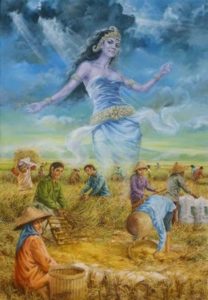
Dewi Sri is the Pre- Hindu goddess of rice. She is the Sundanese personification of Lakshmi. She is known by the Sudanese name Nyai Pohaci Sanghyang Asri.  She governs the birth and life along with controlling ‘Rice’ the staple food of the Indonesians. She is believed to protect the world from famine and hunger. Dewi Sri was believed to have created rice as written in Wawacan Sulanjana the Sundanese manuscript contains the Indonesian.

Dewi Sri is depicted as a youthful and slim yet shapely woman, with distinct facial features, representing a woman in peak of her femininity and fertility. She adorns green,  white or golden saree and various jewelry. She holds a rice plant in one hand and rice grains in the other.  There are certain rituals to revere Dewi Sri by making an effigy as her representation from Janur (young coconut leaf), lontar leaf, or from cakes made of rice flour.
The legend says that once upon a time when Batra Guru (Indonesian Shiva), the supreme God commanded all the Gods and Goddess to unite their power to create a new palace. And anybody who was not helping would be punished and his hands and legs would be chopped off. One god Ananta Boga (Indonesian Anantasesha) he was a Serpent god and had no arms and legs. He did not understand how he could help. He sought the help of Batara Narada (Indonesian Narada) younger brother of Batara Guru, even he did not know how to help Ananta. Ananta seeing that no one could help him lamented. His teardrops fell on earth. These teardrops then became three Eggs that looked like precious jewels. Batara Narada then advised him to offer these jewels to Batara Guru hoping that the supreme God would help Ananta.

While Ananta was on his way to see the Supreme God, he met with an eagle (maybe Indonesian Garuda) He then asked Ananta a question. Ananta, however, kept silent as he was holding the eggs in his mouth. The eagle became furious and attacked him twice. The attack led two of the eggs to fall on the ground. The eggs that fell became twin boar Kalabuat and Budug Basu, who later was adopted by Sapi Gumarang cow.

Ananta struggling came to see Batara Guru, the supreme god asked Anata to nurture the egg till it hatches. The egg hatched into a beautiful baby girl, that Ananta offered to Batra Guru. This baby girl was known as Nyai Pohaci or Dewi Sri. She grew up to be the most beautiful girl and every god was attracted to her. Even her foster father Batara Guru was getting attracted to Nyai Pohaci.

The gods feared that this scandal of the foster father being attracted to his own daughter would destroy the world. The gods then conspired to separate the daughter and father. To keep the Order of the Heavens and Dewi Sri’s chastity they planned to kill her. She was poisoned to death and buried somewhere on earth. Because of Dewi Sri’s innocence and divinity from her body parts gave rise to various important trees and crops.

Head coconut
Nose, lips, and ears spices and vegetables
Hair Grass and various flowering plant
Breast Various Fruit plants
arms and hands teak and various wood trees,
genital Kawung or sugar palm
thighs Types of bamboo
Legs Tuber plants
Belly button Rice


As all the plants that are needed for human well-being came from her body, including the staple food ‘Rice’, she was regarded as the benevolent ‘goddess of rice ‘and fertility.


It is very interesting to see the travel of Hindu Gods in Indonesian Mythology. Where Lakshmi is first created through an Egg and then through her body parts trees and rice is created. The staple food is given much more importance in this way.

Mysteries of Lord Hanuman’s Worship

On the auspicious occasion of Hanuman Jayanti, the Appearance day of Lord Hanuman. Hanuman is a favorite of many and is a popular god worshiped across the Indian sub-continent. Hanuman is known to be the servant and staunch devotee of Lord Rama. He is one of the ten Chiranjeevi’s or immortals according to the Indian texts. He is worshiped through many different means. Let us unveil some mysteries pertaining to offerings made to Lord Hanuman.

1) Vada Mala offerings

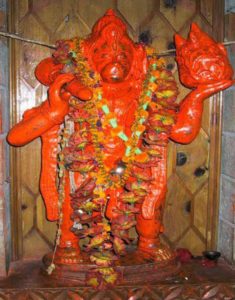
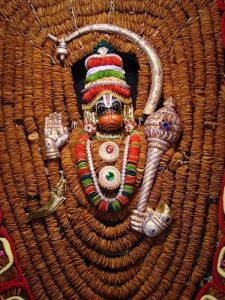
In south India Hanuman or Anjaneya adorns a garland made with multiple Vadas. The Vadas are made with Urad Dal and sewn to form a Garland. The story of Vada Mala goes to the time when Hanuman was young. Hanuman when he was a young boy he once spotted the sun in the sky, thinking it to be a fruit in the sky he flew to engulf it. Since he was a son of Vayu Dev (Wind God) he could fly at an unimaginable speed. As Hanuman was trying to engulf the Sun so was Rahu. Rahu was trying to create a solar eclipse. Rahu could not match the unconquerable speed of Hanuman. Rahu blessed Hanuman that whoever worships him would be freed from his malefic effects during Rahu Dasha and also placed in the horoscope. Rahu loves urad dal very much. This is why Hanuman is offered Vadas made from Urad dal. The garland symbolizes the snake-like body of Rahu.

2) Betel leaves garland

Ravan had Kidnaped Sita Devi and she was kept at Ashok Vatika, one of the Garden of Ravana’s palace in Lanka. Before Lord Rama approached Lanka he sent Hanuman as a messenger to locate Sita and tell her that Lord Rama is going to take her soon. Hanuman flew and came to Lanka. Hanuman spotted Sita Devi in the Ashok Vatika he told her that he was a messenger of Lord Rama and bowed down in front of her to take her blessings. Sita Devi hearing Lord Rama’s names and seeing hanuman she showered hanuman with betel leaves as she had nothing other than this. Since that day Hanuman is offered betel leaves. Also, betel leaves have great significance in Hindu worship as it is believed that betel leaves were found while Samudra Manthan.

3) Offering of Oil

The story is uncertain but it is said that during the battle with Ravana or some of his army personnel Hanuman carried Rama and Lakshmana on his shoulders and took them airborne. Rama and Lakshmana were saved from the powerful attack from the enemy side. Rama and Lakshmana showered ferocious arrows from the air because of being airborne. Hanuman took all arrow hits and was injured badly. Rama feeling the compassion towards Hanuman himself applied oil or butter to Hanuman’s body, which led to the ritual of bathing or offering oil to Hanuman.

4) Offering Black Urad

After Hanuman saved Shani dev from the Clutches of Ravana he himself became the victim of Shani dev’s gaze. Shani dev then climbed on Hanuman’s shoulders, as Hanuman was getting influenced by Shani dev he grew in size and grew so huge that his Shani Dev was trapped between Hanuman’s shoulders and the ceiling of the room they were in. Unable to bear the pain Shani dev requested Hanuman to release him. Also, Shani Dev blessed Hanuman that whoever prays to Hanuman would be free from malefic effects of his gaze. Black Urad being Cereal of Shani is offered along with Oil to Hanuman.

5) Offering of Sindoor

Indian wives apply Sindoor in midst of their parting of the hair. This Sindoor denotes to give husband longevity. One day while Sita Devi was applying Sindoor in Ayodhya. Hanuman asked her why was she applying this saffron powder in the midst her hair. Sita Devi told Hanuman that this will give my husband lord Rama longevity. Hearing this Hanuman smeared his body fully with Sindoor. When Lord Rama saw Hanuman covered in Sindoor he asked him why was he doing so. Hanuman said that if Sita Mata would apply a pinch of Sindoor daily and that would give you longevity and prosperity if a pinch could give you so much then what would happen if I smear my whole body with Sindoor. Lord Rama blessed him and was highly pleased with Hanuman’s devotion. From this day it was said that offering Sindoor to Hanuman gives one longevity and prosperity.


Choose your way of worship and seek Hanuman’s Mercy on his Birthday.!!!!!

Ugadi Pachadi, Chakras and Emotions.


Yugadi or Ugadi in Andhra Pradesh and Karnataka is a festival marking the beginning of a new year. This festival falls on the on Chaitra Shukla Pratipada (between March and April). This festival also marks the beginning of the spring season and time of the first harvest. This harvest festival is celebrated with the cleansing of the house, making of Rangoli, buying new clothes, greeting family and preparing special food preparation. One such special preparation is Ugadi Pachadi.

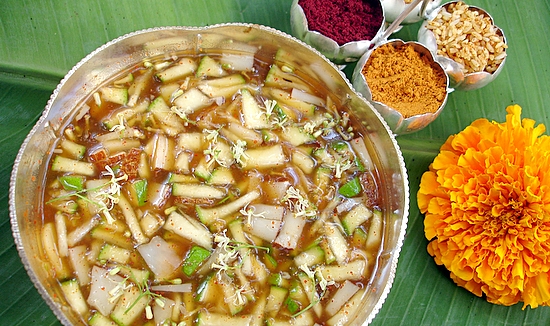
Ugadi Pachadi is a kind of Raita that has its own significance. Ugadi Pachadi is a special preparation prepared on Ugadi in Karnataka and Andhra Pradesh. This is very special preparation as it has a mixture of flavors and each representing a certain emotion. 
Ugadi Pachadi has 6 different tastes in it which represent different flavors of life. They are called Shadruchulu (six tastes). In the Ugadi Pachadi each ingredient brings out a flavor representing an emotion, this flavor and emotion also represent the chakras of the body.
If Ugadi Pachadi has a role in balancing the chakras is not certain, but the emotion that the ingredients exhibit is certainly synonymous to the chakras.
 Each ingredient denotes the six tastes of life:
  • SadnessThe bitter taste of the Ugadi Pachadi comes from the Neem flowers. The bitter tastes are the unhappy moments of life. Bitter moments are also a part of life and so it should not be forgotten. 
  • HappinessThe sweet taste comes from the Jaggery and ripe banana pieces representing the happy moments of life.
  • SurpriseThe tangy taste of the Ugadi Pachadi is from the unripe mango. Ugadi marks the beginning of the mango season. Hence unripe mango represents the surprise element of our life and that a person should always be prepared for it.
  • Anger – The spicy taste comes from the red chili/pepper powder. It represents the angry moments in life.
  • FearThe salt represents the taste of life. The salty moments are necessary to make our lives interesting.
  • Sour – The Sour taste of Tamarind represents the sour moments of life which along with other flavors make our lives worth living.
The six taste represent the six chakras which are responsible for the functioning of the body.
 
Muladhara or root chakra located at the base of the spine in the coccygeal region of the subtle body. This chakra is associated with major material problems and is associated with an element of earth. Personal possessions, financial needs, social needs all this bring about a fear of losing all that you have which then brings about sadness. This is an emotion of sadness is exhibited by the Neem flower in the Ugadi Pachadi.
Svadhishthana or sacral chakra believed to be located at the root of the sexual organ along the spine in the subtle body. This chakra is of the water element, representing satisfaction and all good things in life. With satisfaction and pleasing moments of life comes happiness. The Jaggery in the Ugadi Pachadi highlights this emotion of happiness.
 Manipura or the solar plexus chakra is located in the navel region along the subtle body’s spinal column. This chakra represents confidence, self-power, and identity. This chakra is governed by the fire element giving a certain spark to your life. The self – power, identity, and confidence invite a certain level of pride. This pride then ropes in anger if things don’t happen the way we want. The fiery anger is represented with the spicy taste of red chili/pepper powder in the Ugadi Pachadi
 Anahata or the heart chakra is located in or behind the heart. This chakra is governed by your heart, compassion, love, emotions, and feelings. This chakra is represented by the element of Air. With emotions comes anxiety, the fear of being hurt, betrayed or losing something. Thus the emotion of fear is governed by this chakra. The salt in Ugadi Pachadi represents the emotion of fear which is governed by this chakra.  
 Vishuddha or throat chakra is located at the base of the subtle body’s throat. This chakra governs the speech, throat, taste, and tongue. The tongue and speech is difficult to control. This uncontrolled speech results in sour moments. Thus the emotion of Sourness goes well with this chakra. In Ugadi Pachadi this emotion is exhibited by the flavor of tamarind.
 Ajna or third-eye chakra is the subtle center of energy, believed to be located between the eyebrows, located behind it along the subtle (non-physical) spinal column governed by the element of space. This chakra represents the mind and thoughts of a person, the intelligence of a person. The thoughts of an individual travel with a speed that is way greater than light, anything traveling with this speed certainly may bring many elements of surprise. Thus this chakra is denoted by the emotion of surprise exhibited with the tangy ingredient of unripe mangoes in the Ugadi Pachadi.
 Sahasrara or crown chakra is the topmost chakra in the subtle body, located in the crown of the head. This chakra symbolizes the ultimate bliss and is certainly an amalgamation of all the previous chakras. This Sahasrara chakra also means the ultimate completion of ‘purna’. The only way to activate this chakra is to surpass all the chakras. The combination of all the flavors and emotions lead to a certain completion as it has taken you through a journey of all aspects of human life. This Ugadi Pachadi not only has a delicious taste but also comes with many health benefits according to Ayurveda. Hence the in totality this dish is a package of everything resembling the Crown Chakra.
Ingredient
Emotion
Chakra
Neem Flower
Sadness
Muladhara or root chakra 
Jaggery
Happiness
Manipura or the solar plexus chakra
Unripe Mango
Surprise
Ajna or third-eye chakra 
red chili/pepper powder
Anger
Svadhishthana  or sacral chakra 
Salt
Fear
Anahata or the heart chakra 
Tamarind
sour
Vishuddha or throat chakra 
The Dish as a whole, Emotions, taste, health benefits, flavors.
Sahasrara or crown chakra 

Salmon- The Fish of Knowledge.

Salmon is one of the favorite fishes of all times. Salmon flesh is generally orange to red, this fish plays a significant role in American and Japanese cuisine.  Salmon is also considered as sacred fish by the Celtic people. In various mythologies, salmon is believed to be the Fish of Knowledge.  One of the popular mentions is Celtic Poetry.

Boyhood Deeds of Fionn Legend

Long Ago in Ireland, there were kings ruling the land. The Kings had certain mighty hunters and warriors called Fianna of Erinn. These mighty hunters posed great land, wealth, and weapons and lived in outdoor in the woods where deer and wolf ranged. Fianna’s chased these wolves with their great dogs and hunted the animals. 

Fianna was ruled by one Chief Cumhal, under his rule, one clan named sons of Morna rose as rebels. The rebels fought Cumhal in the battle of Cnucha, today known as Castleknock near the city of the hurdle ford. Goll Son of Morna here slew Cumhal and took away the treasure bag of Fianna, this treasure bag was made from a crane’s skin, Having many great jewels, magical weapons. This bag was then handed over to Lia the chief of Luachar in Connacht.

Cumhal’s wife Murna bore two sons, the elder was named Tulcha and younger was Demna. The elder Son Tulcha fled in fear of Goll and took shelter with the king of Scotland. Demna, the younger son was born after Cumhal’s death, fearing that he would be killed too Murna gave him to Drudiness to be taken away and raise him.

Drudiness took him to the woods on Slieve Bloom Mountains and trained him in hunting and using weapons. Drudiness raise the boy Strong and mighty. The boy could outrun a hare in speed, kill a duck with his Slingshot. Drudiness taught him everything about him, his race, his right to be the chief of Fianna of Erinn.

One day while the boy roamed in the woods, he came across a mansion where the sons of the Chiefs of Ireland were playing. On seeing Demna the sons of chief invited him to play. Demna won easily, then the boys divided giving very few player in Demna’s side but he won each time defeating all the boys by himself. The anger and jealousy amongst boys grew and instead of being a sport started to hurl Demna with their clubs and weapons. Demna alone fought them and defeated them single-handedly. The boys ran to their fathers and narrated the incident. The boys said, “It was a tall shapely fair one, so the name “Finn” or the Fair one clung to him and he is known by that name this day.

Finn gathered many friends who loved him for his strength, valor, and kindness. Finn’s friends accompanied him everywhere Finn went. Goll the slayer of Cumhal and now the Chief of Fianna was hearing about the glories of Finn.

Drudiness when she heard that Goll’s men were looking for Finn, she asked Finn to go to Connacht. In Connacht Cumhal’s brother and other warriors who survived built hiding in the woods. Finn journeyed with some friends to this hiding to meet Crimmal.

While Finn was on his way to see Crimmal, He saw a woman who seeing Finn cried and told Finn that her only son Glonda was slain by Lord of Luchar.  Finn then took the woman and went to confront the Lord of Luchar. Luchar disrespected Finn and fought with Finn and his men. Finn and his men killed the Lord of Luchar and his men and recovered the bag with treasures.

Finn then came to see Crimmal and gave him the treasure bag. Finn told Crimmal that he was there to avenge his father’s death. Crimmal told Finn that Murna Finn’s mother wedded Gleor, Lord of Lamrigh, in the south and she is safe from the sons of Morna.

Finn was not qualified yet to rule Fianna until he had perfected in wisdom and learning. He went to Finegas to learn wisdom and poetry, who dwelt by the river Boyne near the Village of Slane. There was a reason why Finegas made this riverbed as his dwelling.

There was an old prophecy that a salmon of knowledge lived in the river Boyne, and one who eats it becomes the wisest of all. This salmon was called Finntan from the ancient times and was one of the immortals, even if he has been eaten, he would still live. Finegas had been trying to see the salmon from seven long years until Finn came to be Finegas disciple. Finn caught the salmon. Finegas gave the salmon to Finn to cook and told him not to eat even a bit of it. Finn when came with the fish his eyes became very wise. Finegas suspected that Finn had eaten the fish. Finn told Finegas that while cooking he had burned his thumb that he put in his mouth. Finegas then understood that the prophecy was made for Finn and he was the chosen one. Finegas asked Finn to eat the salmon and blessed him.

With Finegas, Finn learned the three things that make a poet, and they are Fire of Song, and Light of Knowledge, and the Art of Extempore Recitation.

Is salmon really fish of knowledge??


The human brain is majorly made of fatty acids. More than two-thirds of the brain is made of docosahexaenoic acid (DHA), an omega-3 fatty acid. DHA is like a bulletproof vest for brain cells, making up a majority of their cell membrane. The inability of this fatty acid can cause a multitude of disorders, such as Alzheimer’s disease, memory loss, and other neurological disorders. The omega-3 is also great for Heart and Bones.

Salmon is loaded with fatty acid and Omega-3. A 100-gram portion of salmon has 2.3 grams of long-chain omega-3 fatty acids, while the same portion of wild salmon contains 2.6 grams. It is found that salmon helps to reduce depressive symptoms, protect fetal brain health during pregnancy, decrease anxiety, slow age-related memory loss and lower the risk of dementia.

Therefore, Salmon clearly qualifies as a Fish of knowledge that both mythically and scientifically.


Garlic the Taboo Food

Garlic is one flavor, found in all cuisines around the world.  Apart from being an essential ingredient garlic has many mysteries surrounding it. Garlic in the European culture and popular films it is known to ward off vampires, werewolves, evil eye. As per some versions, Egyptians also used garlic as currency,  one could buy slaves with garlic. Whereas in India Garlic as a certain warding off reputation. It is considered Taboo, a negative ingredient for numerous reasons.  

 
Food of Love
The smell of garlic is actually unbearable. Garlic has one of the most repulsive breaths. Eating raw garlic can certainly make your partner turn on the other side of the bed. The other side of Garlic is that it can heat up intimacy. Garlic has a long history of being an aphrodisiac. Garlic is high in heat and also containing Allicin, a compound to increase blood flow to sexual organs. Due to being a strong aphrodisiac Hindu, Jains, and Buddhist prohibit the consumption of garlic and consider it as taboo. It is harmful to monks and celibates trying to practice renunciation or devotional service. The Hindu’s label it as Tamasic food, or food causing a diversion from the devotional service. There are some texts such as Padma Purana, Manu Samhita, Garuda Puran who strongly condemn and prohibit Consumption of garlic. Certain texts also name consumption of garlic as sin. 
Garlic eating is eating cow

Beef is a great taboo according to Hindu Believes. The cow is considered very sacred and worthy of worship. However, in the Vedic times, cows were often used in a sacrifice called “Gomedha Yagya”. One such Yagya led to the birth of the taboo Ingredient “garlic”. Once, in Satya Yuga, some Sages were performing Gomedha sacrifices. For which a cow would be offered into the sacrificial fire and then be resurrected through certain Vedic mantras. It was this times that wife of the Sage leading the Yagya was pregnant. She had a strong craving to eat the meat of a cow. It was a belief that if you curb the cravings during pregnancy then it will impact the child in the womb. The wife of Sage grabbed one piece of meat of the cow’s body that was offered in sacrifice and hid it. She was making plans to eat it soon. The Sage was finishing the sacrifice and a new cow was resurrected, he noticed that there was a little part missing from her left side. He went into meditation and realized that his wife had taken away a piece of meat during the sacrifice. Now his wife in fear threw the meat she had far away. Due to the effect of the mantras uttered by Sage to resurrect the cow, there was life in this piece of meat. Then the blood of this meat became red lentils, the bones became garlic and the meat became onions. Eating of Garlic became as sinful as eating the meat of a cow.

 Born of demon’s blood

 This is a story from Kamba Ramayana, Yuddha khanda. It is during the Samudra Manthan when Gods headed by Indra and demons headed by king Bali churned the ocean. The last Divine item to appear from the Ocean was Amrita or Nectar held by Dhanvantri. The gods and demons both chased Dhanvantri for nectar. To solve this problem Lord Vishnu took the form of Mohini- Murti and infatuated everybody. Mohini- Murti tricked the demons and started to feed the nectar to Gods. Rahu, the Senapati of Asuras disguised as Devta was awaiting his share of nectar. While he was getting his share of nectar Surya and Chandra caught him, Lord Vishnu then immediately with his Sudarshana chakra severed the head of Rahu. As Rahu drank some portions of Nectar he could not be killed, his head and body both remained alive as Rahu and Ketu. Some blood had dropped to the ground while Rahu’s head was severed. This blood then became red onion and garlic. Therefore, Onion and Garlic are considered demonic food. 

Mustard seeds and Truth of Life.

Mustard seeds are the smallest seeds of all seeds. They are also very important spice, especially in Indian cuisine. They are popularly known as Rai or Sarson India. Mustard is also a very popular flavor when comes to salads, sauces, hot-dogs, sandwiches, etc. This spice also has taught many life lessons, one of which is the truth of life. The earliest mention of mustard seed is in the time of Gautama Buddha in the popular narrative of Kisa Gotami.
 
Kisa Gotami and Mustard seed.
 
Kisa Gotami was the wife of a very wealthy man of Savatthi, which was one of the largest cities during the times of Gautama Buddha. Gotami was so lean that a suffix Kisa was added before her name, and she was known as Kisa Gotami or lean Gotami. Kisa gave birth to a son. When her son barely started to walk he fell and died. Gotami was now grief-stricken with the loss and she wandered places asking for medicines and way to revive her only son. Kisa clasped the child to her hip and roamed for days. Once a wise man saw her and felt compassion for her. So he said to her: ‘I know of a doctor who will help you, go to the Buddha and ask Him for medicine for your child. Kisa visited Buddha and asked him for medicine.
Buddha said, “I will surely help you but for the medicine, I require some mustard seeds from a house where there had been no death”. Kisa overjoyed by this went to every house begging for mustard seeds. Everyone was willing to help her, but when she asked whether death had occurred in the houses she went, everyone said that they had many people they lost. Someone had lost their child, parent, siblings, etc. she could not find a single house where death did not occur. The day went by and she now started to realize that, she was not the only one who had lost someone. Every house had gone through what she is now facing.
 
Realizing that death is the truth of life, everything that is born has to die. She lost the attachment with the dead body of her son and buried her son in the forest. Kisa then went to Buddha and paid him homage. Buddha said to her “Did you get those mustard seeds, were you able to find a house where death had not occurred?” Kisa replied “ I found that living were few but dead were many” Buddha then Sang the following verse.
 
“Whoso hath set his heart on sons or flocks and herds.
To worldly pleasures given o’er whose thoughts, —
Even as a torrent sweeps away a sleeping town.
So him the Prince of Death doth take and bear away.”(Verse 287)
 
Buddha said that before you are able to fulfill all your desires, death come and take you away, just as a flood sweeps a village away, the same way death takes away life.
Gotami realizing the truth of life became a Bhikkhuni, renunciate and followed the way of Buddha and attained Arahatship.
 
(Book 8, story 14, Dhammapada 114)
 
Interpretation
 
In this narrative Mustard seeds play a very important role. Mustard seed is the most finite of things and is easily available. Every house would have mustard seeds for sure as it is an important part of the cuisine.  When Buddha asks her to bring mustard seeds from a house where death had not occurred, has a great philosophical message. Death is something that no one can escape, and anyone who is born has to die. No one can escape death. It was very certain that Kisa would find no such house.  Here Mustard seeds signify desire, even the smallest desire of size of mustard seeds would not last in front of death. To which later Buddha gives the analogy of flood sweeping the village.  The Buddha here insists on curbing the attachment and desire. Not finding the mustard seeds also indicates that there should be not even a single worldly desire of size of mustard seeds. The heart and mind should be only striving for enlightenment.  Kisa’s struggle to find mustard seeds is actually the struggle that the soul has to go through to move towards the path of enlightenment. Here Kisa’s son can also symbolically mean bodily consciousness, Just as Kisa when realizes the truth of life she buries her son and moves to become enlightened. The same way, one should bury the bodily consciousness in order to move towards the path of self-realization and attain enlightenment. Once we realize that everything that has been created will certainly be destroyed we automatically are motivated to rise above the bodily consciousness.  This Parable really teaches a lot of things.
 
This parable can also be interpreted in overcoming challenges. The death can be interpreted as challenges, there are bound to be a challenge in life just as death. No easy way ahead. Mustard seeds can signify effort; even the smallest effort put forth can help you overcome challenges. The struggle that Kisa had here means the road towards the overcoming challenges, there are is going to be a roller-coaster ride. The son and burial of the son indicate overcoming of the challenge and then you achieve enlightenment.
 
There can be as many interpretations of the teaching that Buddha is imparting taking the Analogy of mustard seeds.


Tasty Innovations by Chefs that never backed down.

Imagine you are running a restaurant full of hungry guests, and you run out of supply what would you do? This can be a panic situation. For a Chef, guests are really important; no guests should go hungry or dissatisfied. A Chef never backs out in feeding people instead a chef would do anything when it comes to a culinary challenge. During training, a chef is taught two golden rules -‘Never Say No’ and ‘Always Suggest or find Alternatives’ says my friend Chef Nitin Kanse. He says that he has faced many situations when they ran out of supplies and there would be guests waiting, they would use whatever ingredients available, they believed that service must not stop at any cost. Situations only trigger ideas and innovations, just as some great foods have originated while handling hungry customers without a backup or supply. It is only the determination of the Chefs and the teaching to ‘Never Say No’ contributed towards great innovations.
 
Here’s a list of innovations that happened because the chefs never backed down.
 
Ruth Graves Wakefield

Chocolate chip cookie – A Crunchy American Biscuit with chunks of chocolates, is all you need to make your day. A true classic that is loved by people of all ages. In the year 1938, an American chef Ruth Graves Wakefield ran a restaurant named Toll House Inn, where she cooked and served food for her guests. Out of many cookies, Ruth baked butterscotch nut cookie with ice cream which was people’s favorite, until one day. Once, Ruth had guests waiting for her to bake some cookies, suddenly Ruth ran out of baker’s chocolate for the cookie she was to bake. She then saw a semi-sweet chocolate bar she decided to substitute this with baker’s chocolate. She hurriedly made pieces of the chocolate bar and dropped it in the dough, then baked it. However, unlike the baker’s chocolate, this chopped up chocolate bar did not melt and mix into the batter like the way Ruth thought. This baked cookie had chunks of chocolate in them. When Ruth served to guests they loved it and Ruth named it Toll House cookie. The rest is History.


Nachos– A crunchy Mexican snack consisting of tortilla chips covered with cheese, sliced jalapenos, olives, cheese-based sauce, and salsa.

Ignacio Anaya “Nacho”

This dish originated in the year 1943 in the Northern Mexican city of Piedras Negras, Coahuila, Chef Ignacio Anaya, also known as “Nacho” was running a restaurant. One day some wives of U.S Army soldiers stationed at Fort Duncan in nearby Eagle Pass were in Piedras Negras on a shopping trip. While they were shopping they spotted this restaurant but Anaya had closed it for the day.  The time when army wives entered Anaya had nothing to serve. A chef can never back out serving food to guests, so Anaya cut leftover tortillas into triangles, fried them and topped with a lot of grated cheddar cheese, slices of pickled jalapeno peppers and served to the Army Wives. The Army wives loved it and when asked what the dish was Anaya just said ‘Nacho’s Especiales’ Nacho’s special. The popularity of the dish swiftly spread throughout Texas, Southwest and gradually throughout the world.

 
Potato chips– Thin Slices of deep fried or baked potato, a widely eaten snack around the world. These chips nowadays come in various flavors.
George Crum

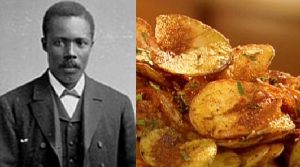
Being a Chef you meet all sorts of customers visiting your restaurant. Some are exceptionally nice and some are cranky. Handling cranky customers is the challenging task of being a chef. Chef “George Crum” an Afro-American origin chef working at the Moon Lake Lodge resort in Saratoga Springs, New York, USA faced one such cranky customer. French Fries were very popular and highly in demand in those times. On one evening of 24 August 1853 Crum was serving customers and he encountered one Customer ‘Cornelius Vanderbilt’ a huge American business magnate. He ordered some French Fries, and when Chef Crum sent out his order, he complained that they were too thick, soggy, and not well salted. Crum made a fresh batch and sent out again but this time also his fries were rejected, stating similar reasons. This kept happening a few times, every time Chef Crum would send out the batch the Customer would remain unsatisfied. This annoyed Chef Crum a lot, in order to deal with this customer Chef Crum cut the potatoes ultra-thin, making it impossible to be eaten with a fork, fried them, added extra salt and sent out the order hoping to annoy the cranky customer. Surprisingly the Customer loved this lot. Thus potato chips were invented. Another story says that Crum’s sister Katie, who also worked in the kitchen with him. one day a slice of potato fell in the fryer, when Crum tasted this he loved it, and he discovered the chips.  The Chips were originally called “Saratoga Chips” and they are today largest consumed snack in the world.

 
Slurpees

Slurpee– A frozen carbonated drink with a sweet icy sip.

This Slurpee was invented in the late 1950s by a soda seller named Omar Knedlik in Kansas City USA. Omar owned an old Dairy Queen Soda machine that would often break down. He would make extra soda and keep handy. One day when he had customers and as usual his soda machine broke down, Omar put some of his soda in the freezer for a while and started serving the soda right from the freezer. People loved this little slushy frozen carbonated beverage and this became very popular. Realizing this Omar made himself a Slurpee machine using a car’s Air Conditioning Unit.
 
Caesar Cardini
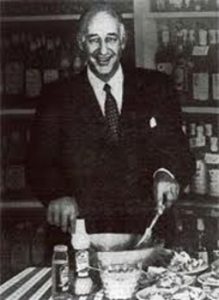
Caesar Salad A Salad that is table tossed in front of guests makes this salad unique. This salad is made with romaine lettuce, croutons, cheese, lemon juice, olives, eggs, salt and pepper, and many more ingredients. This salad today is made with many variations. Although this salad is called Caesar salad, it has nothing to do with Julius Caesar but the story of this salad’s creation is pretty interesting. It was an evening of 4th July 1942, in an Italian origin Chef ‘Caesar Cardini’s Restaurant in Tijuana, Mexico. As it was the holidays there were many guests in his restaurant. The restaurant was so crowded that Cardini was running short on supplies. Chef Cardini then threw together a bunch of ingredients he had and started table tossing in front of the guests, this innovative technique and taste of this salad caught on and there you go.