Mehul Vora

Bagalamukhi- The crane headed Tantrik Goddess

Bagalmukhi is a tantric deity in the Dasha Mahavidyas pantheon. She has a distinct iconography she is said to have a crane head giving her name “Bagalamukhi or crane headed. She is a three-eyed goddess depicted having golden skin and wearing bright yellow clothes. A crescent moon adorns her head. She is seated on a corpse or on a golden throne holding the tongue of a demon and striking with a Club like weapon. Signifying the ability to paralyze the speech of demon and cause confusion. In the Sankhyayana-tantra, Bagala is connected to Brahmastra. Mritunjay Shiva is the consort of Goddess Bagalamukhi, and she represents the Rajasika guna.

Bagalamukhi is also the goddess of opposites, she is the secret presence of the opposites wherein each thing is dissolved back into its un-manifest state. The represents knowledge that everything has it’s opposite hidden inside and time will turn things the other way around. There is sorrow in happiness and, in success, there is a failure, life is death also vice versa. She also turns speech into silence and silence into speech, ignorance to knowledge and knowledge to ignorance. The un-manifest lies in manifest and manifest in unmanifest.

The are many legends connected with the origin of Bagalamukhi. 
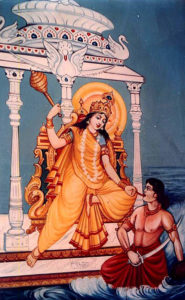
As described in Swatantra Tantra once upon a time in Satya Yuga during the time of great deluge a cosmic storm threatened to destroy the Universe. Many of the creators of the Universe and people were killed in that storm. Lord Vishnu went to the holy pond named Haridrakhya or Turmeric ocean, a yellow color pond, in the state of Saurashtra and prayed to Aadi Shakti to find a solution to this problem and started penance. Aadi Shakti became pleased with Lord Vishnu’s penance and appeared as Bagalamukhi and starts playing in that turmeric pond.

As a result, strong dashing rays came out of that yellow pond and spreads over in every direction, which controls that pacified storm and saves the Creation from destruction. Therefore she is also known as “Pitambari “That strong and powerful rays that measured the universes became the Brahmastra, no one in three worlds is able to stands when the weapon is detonated. The goddess is also known as Brahmastra Rupini or form of weapon Brahmastra.

Once a demon called Madan performed great penance and got the boon that whatever he said would come true. After receiving the great power he started troubling the innocent and the pious ones. All the humans and the gods prayed to Adi Shakti and the supreme Goddess, took the form of Baglamukhi who pulled out the tongue of the demon to still it. When Baglamukhi was about to kill the demon, he surrendered to the goddess and asked her to bless him to attain an exalted position. Since then he is also depicted with Bagalamukhi.

According to Narada Pancaratra once Sati or Parvati, the spouse of Lord Shiva sat near him in Kailash. She was extremely hungry and her body racked with pain. She urged Lord Shiva to give her something to eat, as she was starving. Lord Shiva, told her to be patient and to wait for some time, after which he would give her whatever she wanted to eat. Saying this, he went back to continue with his meditation. She appealed, again and again, urged her husband to provide her with some food to eat, but Shiva again told her to wait for a while.

After urging for a long time, she lost her patience as she felt that she would starve to death. Lord Shiva was also not paying proper attention towards her asking for food. Soon she became indignant and put Shiva himself inside her mouth and gulped him down. After a little while, Lord Shiva persuaded her to disgorge him, as smoke began to rise from Parvati’s body. She appeared with smoke covering her entire body; this smoke was her Maya or Magical Power of illusion. Then Lord Shiva came out of her body and shouted, O Devil! You are a woman without a husband, it’s called a widow. She must remove her ornaments and marks of married women. That woman, who you left her husband by swallowing or before she ate, she is a Baglamukhi and the smoke from her became Dhumavati.

 The moola mantra of Bagalamukhi is:-

 Om Hreem Baglamukhi Sarvadustanaam Vaacham Mukham

Padam Stambhay Jihvaam Kilay Budheem Vinashay Hreem Om Swaha

Oh Mother Baglamukhi, I take refuge in you. Let the speech, feet, and organs of my enemy is stilled and let his intelligence be disabled so that he does not move further to harm me.

 She is associated with Stamban, i.e to stop, immobilize or paralyze the enemies, she is invoked if the Sadhaka needs to immobilize someone’s thoughts, actions or desires. Bagalamukhi represents the power of speech that stuns others and leaves them gasping for words. Using Stamban any individual, army, fire, water or even the devatas can be immobilized. She is a woman with immense beauty who can transfix or lure anyone. The head of the crane signifies her deceitful nature, just as a crane with its ability to stand still attracts its prey, lures it into a false sense of safety and then devours it quickly.

 She can lure her enemies and then immobilize their speech and thought in one strike of her weapon. Along with the ability to immobilize she has the ability to grant Vak-Siddhi, the power to make everything one utters come true. She is also invoked for granting success in speech, debates, bargains, paralyzing the enemy.

 Bagalamukhi wrenching the tongue of the demon with her club is symbolic of removing the impurities associated with speech and tongue. The tongue is the organ of speech and taste. And, often it is involved in telling lies or concealing the truth. The tongue, therefore, could unwittingly get caught up with mischief, vanity, and deceit. The pulling of the tongue is a symbolic act of punishing the demon and cleansing his impurities.

 Bagalamukhi is often called Pitambari Devi, the yellow hued. Her complexion, clothing, ornaments, and garlands are in varying shades of yellow. Her devotees are dressed in yellow, wear the rosary of turmeric and offer her yellow things. Yellow is also the color of attraction, energy, and luring.  The color if overused has a disturb focus and consciousness. Too much yellow causes loss of focus and makes it hard to complete a task. This also signifies her ability to confuse and make the enemies loose focus.

 Bagalamukhi sitting upon a corpse while pulling the tongue of the ‘enemy’ is interpreted in many ways. The corpse stands for inert or static matter, as also for ignorance. The death of the flesh also means the liberation of the spirit. A corpse is, therefore, a symbol of death and a new beginning for the spirit. This is also said to be associated with the extreme tantric ritual of Shava-sadhana. The tantric texts mention specific guidelines to do the shava sadhna- the location of cremation ground or forest is to be chosen.

The right kind of corpse has to be arranged. It is mentioned that the corpse should be undamaged and preferably of a young Candala (untouchable or the outcast) who has committed suicide, drowned, died from a snake bite or lightning, or killed in a battle. The corpse of an immoral person, one died of starvation, one who was famous or one who was lusty has to be avoided. The Sadhaka would then sit on the corpse and do the Japa. After the Japa, the Sadhak has to do 1/10th yagya, 1/10th Marjan, 1/10 tarpan, and 1/10 charity. The Sadhna has to be done in the night, wearing yellow clothes, with a rosary of turmeric. This tantric ritual is that it transforms the aspirant, awakening in him or her to an expanded consciousness; and grants him a new identity.
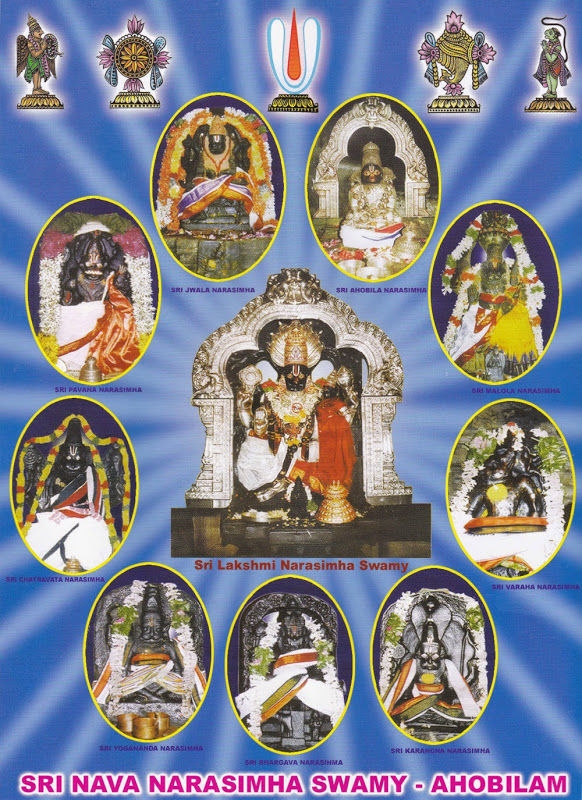


Nava- Narasimha of Ahobilam

The Brahmanda Purana states that Ahobilam was the kingdom of Hiranyakasipu in the Satyuga and Lord Narasimha comes out of a pillar from the place of the demon.

Ahobilam, located in Karnool district of Andhra Pradesh in the hills of the eastern ghats, In addition to the nine shrines, there is a temple for Prahaladavarada Varadhan in the foothills of the mountain. The entire Eastern Ghats range is believed to be Sri Adi Sesha – the great serpent bed of Lord Vishnu. On his seven hoods lays Tirupati, on stomach Ahobilam and on its tail lays Sri Shailam.

The hill of Ahobilam is known as Garudadri, after taking darshan of Jwala while walking towards Prahalad Mettu you will see the shape of the mountain as if it is like an eagle. Garuda once desired wished for a vision of Lord Nrisimha in the form of the Avathara. To fulfill his wish, the Lord settled in the hills around Ahobilam in the midst of dense forests in nine different forms. For this reason, this hill came to be known as Garudadri,

When lord Narasimha appeared and killed Hiranyakashypu he was in Ugra form, his roars gave shivers to all three lokas. The devatas, rishis were terrified.  Witnessing this wonderful pastime, the Devatas glorified Lord Narasimha with the following sholka

“Aho Veeryam Aho Souryarn Aho Bahuparakramah
Naarasimham Param Daivam Ahobilam Aho Balam.

Oh! what a great valor he has! oh, his great gallantry! oh those great powerful shoulders of the greatest of the Gods Lord Narasimha, and what a mighty cave it is! and what a mighty divine strength He has!

In this sacred Place Garuda, Brahma, Parashurama worshiped the Lord Narasimha. It is believed that when Sri Rama was in the forest, we know from Seshadarma that he prayed to the Lord of Sri Ahobila with Panchamrita Stotra. In the Archavatara, Lord Srinivasa, who is the giver of many boons in the Maluyuga had married Padmavati only after offering worship to Sri Narasimha of this mountain. It is held that the shrine of Lord Srinivasa, to the south of Narasimha’s temple within the enclosure, lends the view.

The Nava Narasimhas

There are nine temples of Lord Narasimha in Ahobilam which house the self-manifested Deities of the Lord.

jwala ahobila malola kroda karanja bhargava

yogananda kshatravata pavana nava murthayaha

The nine Deities are Sri Jwala Narasimha , Sri Ahobila Narasimha , Sri Malola Narasimha , Sri Kroda Narasimha , Sri Karanja Narasimha , Sri Bhargava Narasimha , Sri Yogananda Narasimha , Sri Kshatravata Narasimha  and Sri Pavana Narasimha .

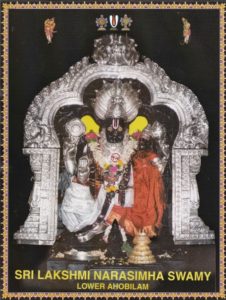
Ugra Narasimha or Ahobila Narasimha.

garudadri guhagehe gajakhundasarittate

hiranyasthaanvahankaarhaari simhaya mangalam

This is the oldest temple among the nine temples in Ahobilam.  This is also the main temple where the deity is situated in a cave. Here the Lord resides in shaligrama form. Ugra Narasimha is seen sitting in sukhasan pose tearing the chest of Hiranyakashipu. 

Sri Kroda Narasimha

varahkundey medhinyai varaahaarthapradhaayiney

dhanthalagna hiranyaksh dhamshtra simhaaya mangalam

After killing Hiranyakashipu, Lord Narasimha was very angry with Lord Brahma because of the boon he had awarded to Hiranyakashipu. He summoned Lord Brahma but Brahma was afraid to come near the Lord. While he was coming to see the lord Vedas slipped from his hands and fell down. The Vedas when hit the earth it was absorbed inside, Bhumi Devi held them. The Devtas requested Narasimha dev to retrieve the Vedas. Lord Narasimha took the Kroda form (one horned boar) and dived inside the earth to come out with Vedas and Bhumi Devi sitting on his shoulders.  Lord took this very special form. In this cave shrine, there are two deities, one of Lakshmi-Narasimha and another Sthanaka figure of Varaha Narasimha with his consort, goddess Bhudevi. The goddess is shown as embracing the ‘snout’ portion of the lord, just as she did while being raised by him up from the ocean waters after piercing Hiranyaksha with his tusks and then slaying him. Varaha stands in a tribhanga posture with only two hands, the head of the boar and the tail of the lion on a human torso.

Sri Malola Narasimha

vaarijaavaaritha bhayay vaneepathi mukhaiswarai

mahithaaya mahodhaara malolyasthu mangalam

The Deity of Lord Narasimha here is in a peaceful form since Lakshmidevi is also present. Ma means Mother Lakshmi and Lola means beloved. The Supreme Lord Narasimha is the beloved of mother Lakshmi and hence is glorified as Malola Narasimha. This place is also known as Markonda Lakshmi Kshetra. The God is seen seated here in Sukhasana posture with his left leg folded while the right leg is shown dangling at an angle. The goddess is shown seated on the left thigh of the Lord with Kataka and Parisaritya vamahasta. The feet of the goddess rests on padma which appears to have sprouted from the earth. The Lord’s two upper hands hold Chakra and Sankha, his lower right hand is in abhaya pose and the lower left hand is shown embracing his consort.  

Sri Jwala Narasimha

hiranyashtambha sambhuthiprakhyat paramaatamaney

prahladhaarthimushey jwaala narsimhaya mangalam

The temple of Sri Jwala Narasimha lies on a hill called Achalachaya Meru and is on the base of Ugra Stambha.  This is the exact place where Lord Narasimha killed Hiranyakashipu. It was here that the anger of Lord Narasimha was on its pinnacle. The first pair of hands catch hold of       Hiranyakasipu’s crown and renders him motionless, while the other pair by tightly gripping the sword-carrying hand of Hiranyakasipu completely disarms and overpowers him. The second pair of hands is engaged in tearing open the entrails of the demon lying on the folded right leg of God. The pair of hands holds Sankha and Chakra and the fourth pair holds the intestine of the demon in the shape of a garland.

There is a small pond near this temple called Rakta Kunda Tirtha. Here Lord Narasimha washed His blood-stained hands and hence the color of the water of this Kunda turned red. Today also one can see the red stains around this tirtha. The water of this tirtha is crystal clear and is very sweet.

Ugra Stambha

atyam vidhathum nijabruthya bhaashitham

vyaaptham swabhutheshu swachirey swachaathmanaha

adhrushyathaam adhbutharoopam udhvaham sthamba

sabhamam na mrugam na manusham na bhootho na ambharey mruthyuhu na naraih na mugrairapi surasura mahorakhai

This mountain is the remain of the pillar from which Lord Narasimha appeared. It is said that when the Lord emerged out of the pillar, the whole pillar was shattered to pieces. His first step produced 172 sounds which are the first basic tenets of 172 classical ragas. Of these only 52 melakarta ragas exist today and even these cannot be mastered by any individual of this material creation. This is also called as Ukku Stambha. Ukku in Telugu means steel. Atop Ugra Stambha there is an impression of the lotus feet of Sri Chaitanya Mahaprabhu who visited this place during His south Indian trip.

Pavana Narasimha.

bharadwaja mahayogi mahapaathaka haariney

thaapaneeya rahasyartha paavanayasthu mangalam

This temple is on the banks of the river Pavana and hence the Lord is known as Pavana Narasimha. This is the most peaceful form of the Lord amongst the nine Narasimha temples. The Lord here liberates devotees from all the sins of past lives and the present lives which might have been committed knowingly or unknowingly. Sage Bharadwaja rid himself of the great sin of Brahma-hatya at this place. The main deity is actually a Lakshmi Narasimha deity, with four hands. The upper two hands carry Sankha and chakra. The lower right hand is in abhaya pose, while the lower left hand is shown as embracing Lakshmi seated on His left thigh. The Lord is seated in Sukhasana posture on AdiSesha with His left leg folded while the right leg is bent at the knee. Dangling down over the head of Narasimha is found a seven-hooded snake (Adisesha) spread like an umbrella. Lakshmi is shown seated on the thigh of the Lord with the right hand embracing God.

Sri Yogananda Narasimha

chathuranana chetobja chitrabhaanu svaroopine

vedadri gahavarasthaaya yogaanandaaya mangalam

After killing Hiranyakashipu, Lord Narasimha dev here taught Prahlada few yogic postures to practice. This form of the Lord is seated in a padmasana with yogapatta around His legs. 

Sri Chatravatha Narasimha

haahaa hoohoo vakya gandharva nrittageetha hritaatmaney bhavahantritat chathravataimhaya mangalam

Ever seen Narasimha dev smiling, this deity of He is famous as Chatravatha Narasimha, he is smiling and seem to be enjoying music. The left hand of the Lord is in the tala mudra. This tala mudra is not seen in any other form of the Lord in any other place.

Once two Gandharvas named Haha and Hoohoo came from Meru parvat to entertain the lord. Hearing their ecstatic music Narasimha dev became engrossed in the music so much so that he started smiling and started giving tal on his left thigh.

The deity is seated in the padmasana pose on a low padmapitha. The two upper hands hold the Chakra and Sankha. The Lower right hand is in the abhaya posture, while the lower left hand is a Katihasta, placed on the waist and the left thigh.

Sri Bhargava Narasimha

bharagavakhya tapasveesa bhaavanaa bhaavithathmaney

akshaya theera theerthastu bhargavayaasthu mangalam

Here Lord Parashurama, who is also known as Bhargava, performed penances to please Lord Narasimha. Lord Parashurama wanted to have darshan of the Lord right at the moment when he tore apart the chest of Hiranyakashipu. Pleased by the penances of Parashurama, Lord Narasimha gave Him the desired darshan. When the Lord was giving darshan, Hiranyakashipu who was lying on the lap of the Lord, looked towards Parashurama. Parashurama then requested Narasimha dev to manifest Himself in that form. And from then on the Lord is being worshiped here and is known as Sri Bhargava Narasimha  Swamy. This is one of the most ferocious forms of Lord Narasimha in Ahobilam. This temple is located on the banks of Akshaya Tirtha which is considered on par with the sacred Pushkara Tirtha. Parashurama would bathe in this Kunda and use this water for the worship of Lord Bhargava Narasimha. Sage Vasishtha and other sages had performed penances here. One can also have darshan of Prahlada at the lotus feet of the Lord.

 Sri Karanja Narasimha

karanjamoole maatharaste yathra saarangaschakra dhrutham gobhoo

hiranya nirvinna gobila gnyanadhayiney prabanjan sunaaseera kaaranchaayasthu mangalm

The Deity of Lord Narasimha is under the Karanja Tree, hence He is known as Karanja Narasimha. Once Hanuman was performing austerities in Ahobilam and was continuously chanting the holy name of Lord Rama. Immediately Lord Narasimha  appeared before him and asked, “Yes you called me?” Hanuman was surprised and said to Narasimha, “You are disturbing me. Please go away.” Narasimha replied, “I am Rama. Because you called Me, I have come.” Hanuman was again surprised and asked, “How can you be Rama? You don’t have a form like that of Rama.” Immediately Lord Narasimha manifested Himself like Rama with a bow in one hand and Sudarshana in the other hand. Hanuman got convinced and from then on started to worship the form of Sri Karanja Narasimha. There is a small altar of Hanuman in the temple. The deity of the Lord appears to be seated in meditation, with a hooded cobra over the head. The upper right-hand holds a Chakra and upper left hand has Sarangaor bow. The lower hands are in Dhyana mudra.

Sri Prahlada Varada Temple

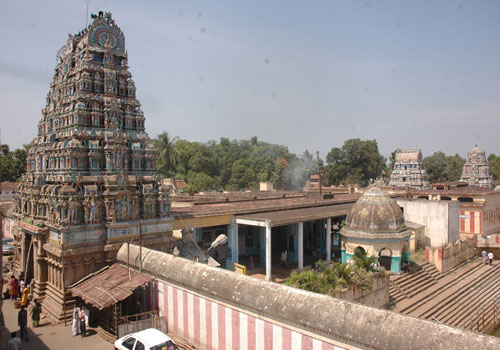
The temple of Sri Prahlada Varada is situated in Lower Ahobilam. Here Lord Narasimha is blessing Prahlada Maharaja. The family Deity of Sri Srinivasa of Tirupati is Lord Narasimha in Ahobilam. Because the Lord was in the fierce form, Srinivasa installed the Deity of the Lord in the Shantha form and worshiped Him before His marriage with Padmavathi Devi. The utsava Deities of Sri Pavana Narasimha and Jwala Narasimha are worshiped in this temple. This place is also called as Chinna Ahobilam or Diguva Tirupati.

God who burnt his Hand

Lord Vishnu in form of Alarnatha, situated at Brahmagiri, a hilly area, at a distance of 24 km from Jagannatha Puri, once burnt his hand while honoring food offered by a small boy, if you happen to visit there the priest would happily show you the burnt finger of the Lord.

Lord Alarnatha (or Alalanatha) here is a four-handed Deity of Lord Vishnu showing Abhaya-mudra in His right hand. Ramanujaacharya of the Alwars worshipped this deity; hence the deity is known as Alarnatha or Lord of the Alwars.

Long ago Sri Ketana, was a priest who worshiped Alarnatha, he lived there with his wife and son Madhu. Sri Ketana and his family only lived on the prasadam, eating the food after offering to the lord. One day Sri Ketana had to travel to some other village for some urgent work. Sri Ketana asked his son to offer food to the Lord while he was away. Young Madhu expressed his inability to do it as he did not know any mantras or procedure to make the offering. Sri Ketana told him not to worry, if he just places the plate of food in front of the deity and requests the lord to accept the offering, the omnipresent lord will honor the offering.

The next morning, Madhu’s mother called him and handed over the plate to him and asked him to make the offering. Madhu went with the plate and placed it in front of the lord. He prayed and requested

“Lord I do not know any mantras or procedures, I am placing this plate of food in front of you as my father instructed, please honor the food”.

Madhu then went out to play with his friends. When Madhu came back he saw that the food was still there. He was not aware that the Lord honors the food by a mere glance. Madhu then again asked the lord

“You have still not eaten; please accept this prasadam, the way you accept when my father makes the offering.”

He went out to play again. The third time when he came back he found that the food was the way he had kept it. He then started crying and calling the lord

“ Lord  I am a small boy, and I do not know how to make the offering, I am just following the instructions of my father, If you don’t accept the food, my father will be angry with me. This time I am going again please eat the food.”

Madhu now went out to play the third time, now when he had returned the plate was empty. He was very happy that the lord had eaten the food. When Madhu returned home, with empty plate his mother got furious and asked him where the prasadam was, he said that lord ate it all. his mother slapped him and told him “ you are a son of a Brahmin, you should not lie, if you have eaten the food and shared it with your friends  you should accept it” Madhu kept on insisting that “the lord really ate the food” The family had to fast for that day as there was no prasadam.

This kept on happening for three days continuously till Sri Ketana had returned.  When Sri Ketana heard what was happening, he got furious and asked his son, what really happened? Madhu said, “I kept the food as you instructed and then lord ate it all”. Sri Ketana had no faith in his son’s words and he wanted to investigate the truth.

He asked his wife to prepare the lords plate. He asked Madhu to make the offering the way he is been making for the past three days. Madhu went with the plate and made the offering. Sri Ketana was hiding and keeping an eye on Madhu.

Lord Alarnatha manifested from the deity and picked up a bowl of Kheer (Sweet Rice). Seeing this Sri Ketna was unable to believe his sight, Sri Ketana came from hiding and rushed to the Lord and grabbed His arm to prevent Him from taking it, the hot sweet rice spilled out and fell on the Lord’s body causing burns. Sri Ketana Prayed to the Lord, “How will we eat if you eat all the offerings? We have never heard of a Deity that eats. Being a Deity of stone, how can you eat and talk?”

The Lord then said that he is omnipresent, as said in Bhagavad Gita 10.8 aham sarvasya prabhavo ,mattah sarvam pravartate , iti matva bhajante mam, budha bhava-samanvitah. Lord Says I am the source of all spiritual and material worlds. Everything emanates from Me. The wise who know this perfectly engage in My devotional service and worship Me with all their hearts.

Lord said that he was pleased with the simple devotion of Madhu, and any offerings made without love and devotion does not please the Lord. No matter how opulent the offering or who makes the offering if it is made without complete love and surrender it is worthless. In Bhagavad Gita 9:26, Krishna says patram puspam phalam toyam, yo me bhaktya prayacchati ,tad aham bhakty-upahrtam, asnami prayatatmanah. It means If one offers Me with love and devotion a leaf, a flower, fruit a water, I will accept it. The most important is the love and devotion that takes the food to the gods.

The burnt marks manifested by Lord Vishnu on His body is visible even today.

Tasty Food without Salt

Food without salt is certainly incomplete. Salt plays a crucial role in enhancing taste, texture and also balances the food. Even if there is less salt we find the food incomplete. But there is a temple in south India that gives Prasadam without salt. The temple of Uppaliappan in Kumbakonam prepares food without salt and this Prasadam is relished among devotees. When you taste the prasadam that this temple offers you will not miss eating salt. The prasadam is as delicious as one could imagine. The beauty of the food here is that if you are eating food outside the temple you will not enjoy the food without salt. But the food that is specially cooked in the temple is simply perfect even without salt.    

This 8th Century medieval Chola temple is surrounded with legends about its presiding deity – Uppliappan. An incarnation of Lord Vishnu as Venkateshwara who is believed to have eaten food without any salt. Uppiliappan is the elder brother of the presiding deity of Tirupathi Venkateshwara Temple. It is however surprising to see a form of Vishnu having food without salt, as Vishnu is known to love Chappan Bhoga and delicious food, while here he is eating food without salt. All the preparations of this temple have no salt due to a legend from Bhramanda Puran.

Bhoomi Devi expressed Her grievance to Lord Vishnu that She had not the privilege of being in the chest of Lord though she too had all the dignity features of Mahalakshmi. Thus she demanded that this is her right too. Lord replied that She would have that position as Tulasi, daughter of a Maharshi Markandeya. Once Sage Markandeya was practicing penance and wanting Mahalakshmi as his daughter. He heard a baby girl crying possessing all attributes of Mahalakshmi.

Rishi Markandeya took care of the child and raised the child to a marriageable age. When She attained the marriageable age, Lord Vishnu in the guise of an old man called on the sage seeking his daughter in marriage. Markandeya Rishi simply turned down His request saying that his daughter was too young for Him. he also said that his daughter did not know cooking and could not add the correct quantity of salt to the preparations. Adamant Lord said that he would accept the food even without salt.

Sage understood that the visitor was no other than Lord Vishnu and he was happy to give his beloved daughter to Him. As Perumal accepted food without salt (Uppu in Tamil), He is praised as Uppili Appan. Thus Bhoomi Devi as Tulasi came to stay on the chest of Lord in the form of Tulsi garlands offered by devotees in all Perumal temples.

The neiveitheyam (food offering) – mainly consists of Tayir Sadam or Curd rice. Where curd is mixed with rice and then tempered with mustard seeds, chana dal, and curry leaves. This preparation is made without any salt. The next most loved Parasadam is Sundal, This is similar to chickpea salad. The grated coconut, turmeric is added to boiled chickpeas. Then a tempering of urad dal, mustard seeds, chana dal, dry red chili, and curry leaves is added. All next loved prasadam is Vada, the traditional temple Vadas are made with urad dal, tempered with mustard seeds, chana dal, and urad dal, the mixture is made to the dough and then deep fried.

Culinary heritage of Vijayanagara empire

Vijayanagara Empire Founded in 1336 in the wake of the rebellions against Tughluq rule in the Deccan. The Hindu Vijayanagar Empire lasted for more than two centuries as the dominant power in south India. Its history and fortunes were shaped by the increasing militarization of peninsular politics after the Muslim invasions. The commercialization that made south India a major participant in the trade network linking Europe and East Asia.

This Dynasty is often synonymous with the greatest ruler of south India Krishnadevaraya. He reigned from 1509-1529 as the third ruler in uluva dynasty. Krishna Deva Raya earned the titles Kannada Rajya Rama Ramana (“Lord of the Kannada empire”), Andhra Bhoja and Mooru Rayara Ganda (“King of Three Kings”). He became the dominant ruler of the peninsula of India by defeating the Sultans of Bijapur, Golconda, the Bahmani Sultanate and the Gajapatis of Odisha. He was one of the most powerful of all the Hindu rulers of India.

The Vijayanagara society consisted of a largely priestly class, warrior class, trading class, agricultural and other related classes of people. The Vijayanagara rulers who ruled South India for nearly three centuries. they believed it is their duty to protect and promote traditional social order based on the Varnashrama system, as it can be seen in inscriptions. When it came to food Habits a rich variety of food items were taken by people of Vijayanagara. Even to this day some of the same food items are prepared. People were familiar with both vegetarian and non-vegetarian food items. The Brahmins, Vaisyas, Jains, and the Lingayats took only vegetarian food, while others including the royal family were accustomed to take meat, fish, and fowl. Vijayanagara city was the best-provided city in the world, with Provisions of rice, wheat, grains, corn, pulses, horsegram, and many other kinds of cereal, were stocked largely and sold very cheaply. However, the use of wheat was largely uncommon.

The Amuktamalyada says that the dishes changed from season to season. The list of preparations as seasonal meals are: crispy black lentil chips (vadiyamulu), dried vegetable stir-fry (varugulu), jaggery-flavored broths (tiyyani cārulu), sweet and savory porridges (timmanambulu, palucani ambaḷulu), sweet cakes (rasavalulu from atirasamulu ariselu), tender green mangoes (vaḍa piṇḍelu), green vegetables flavoured with mustard powder (avan cigurkonu paccallu) and pickled fruits (urungayalu). A seasoned mixture made with equal parts of cumin-spiced jaggery and tangy tamarind‟ (similar to sambar), also a sweet and sour rice preparation is mentioned (tamarind rice or pulihora).
In summer people ate raw mango and fried fish with rice. To avoid the smell, they drank tender coconut water which was buried under the sand. Farmers in the monsoon had the ‘harakadaanna’ and a curry made of green leafy vegetables with tender leaves of tamarind. The rich people carried the Ingredients such as rice, dal, spice powder, ghee, on their journey.

Kanakadasa in his Mohanatarangini has described the lunch in an annachhatra of Brahmins. The lunch consisted of rice, dal, gravy prepared of butter, milk, rasam, soup, pickles, and butter milk. The sweet items consisted of pheni, sukhhinunde, garige, sweet dishes, mixed fruits with milk. After the lunch betel leaf, areca nut with camphor was given. In the Vijayanagara empire, people used Cotton oil to cook food.

Food grains like ragi, rice and jowar were the staple food of the people. There appeared to have been public eating houses in the Capital City of Vijayanagara, where stone slabs with hollows in them for rice and curries were used for eating. Travelers may have been required to pay some amount for it. Such kind of stone slabs can be seen even to this day in some parts of the capital city. Besides public eating houses, there were many free feeding choultries where travelers were allowed to have food for a specified number of days. People were in the habit of chewing betel leaf after dinner.

Honey- Food of Gods

Has anyone tasted Nectar??  where can you find the nectar? The real nectar is honey, says ancient Greek mythology. Honey reassembled nectar believed to have unimaginable powers, also as a source of wisdom and poetry. Honey is also the truth, and it is one product that needs no processing and is made of natural flowers. The color, flavor, and aroma of honey depend on the flowers the bees visit. In Provence, France we find the most unusual acacia honey, which is very sweet, liquidy and pale golden in color and has intoxicating aroma due to lavender. In ancient Rome, there used to be ivory honey with a special flavor due to rosemary. Then there was the Greek honey of Mount Hymettus, which was the favorite of the gods.

The golden-hued honey also has a very important place in the Indian tradition it is used as one of the sacred ingredients for performing Abhishek. The Atharva Veda glorifies honey having the ability to boost Confidence and able people to speak strong. The Romans offer sacrifices of honey to appease pluto the god of the underworld. so that he would not appear in the form of a fiery serpent or as volcanic lava. Honey is certainly mysterious, especially in Greek history and mythology.

In the Iliad and Odyssey of Homer, it is mentioned, that the gods of Olympus lived on honey (nectar) and honey wine (ambrosia). In Greek the word “nectar” means “victory over death” and Ambrosia stands for “immortality”.

Aphrodite, The Greek goddess of beauty used honey and beeswax to enhance her beauty. In the ancient world, honey was the first food and has a very special place in Greek mythology.

According to a legend, Rhea mother of God Zeus hid him, in a sacred cavern, on mount lycaeus. a place of immortality, where time did not exist and this sacred place was guarded by fiery bees. Here young Zeus was nursed by Amalthea and Melissa who are daughters of king Melissus. Amalthea and Melissa took great care of Zeus. Amalthea fed Zeus with her goat’s milk and Melissa fed Zeus with honey, Mellisa means she who makes honey. Honey gave the baby Zeus lot of strength, wisdom, and power.

Honey was also forbidden for human consumption those days. Once four armored intruders came in the cavern to steal honey, as they came to baby Zeus started to cry, his cry was thunderous which made the intruders drop their weapons. Giving opportunity to the bees to attack. It was belived that no one could die in the cave particularly after touching honey. So Zeus being merciful turned these intruders to birds and save them from bees fury.

In one more Greek legend, it was said that during the Golden Age, honey ran from the oak trees and the Titan Kronos was sleeping, intoxicated with honey, he had the first sleep in the world. Taking advantage of this situation, his son Zeus chained him and took him away to the Islands of the Blest at the end of the world. The place is still said to have Kronos and the Age of Gold present.

Another legend says that honey was a gift of the god of wine, Dionysus. While he was returning from his expedition on his way back, he was playing with his attendant satyrs, who struck their sistra, a musical instrument to mark time. As the instrument played a swarm of incest’s flew out of the woods, Dionysus guided everyone to a tree and shut themselves up in it, and filled with honey. This legends also iterates the creation of honey.

How the coconut got his face

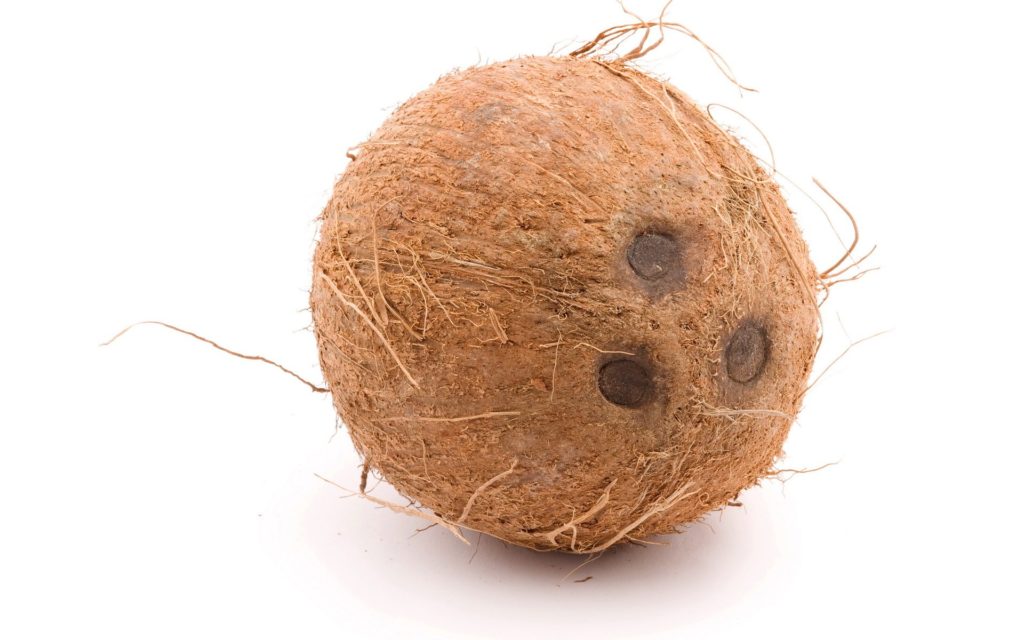
The Round coconut often represents a human head, the round markings often called eye to represent two eyes and one mouth. There is an interesting folk story from Kerala, that explains the origin of coconut tree came to be, and how the coconut got its face.

In one of the coastal villages lived a young fisherman who was unable to catch any fishes. He used to spend hours trying but missed every catch. The young man became poorer day by day, he also had nothing to eat. He became a laughing stock of the village. This filled the fisherman with remorse and he decided to do something about it.

So, he went to a famous magician who taught him how to remove his head from his body. Soon the young man started going to the beach late in the evenings when all the other fishermen had returned to their homes with their daily catch. Then he would hide behind some rocks, take his head off from his body, and dive into the water. The fish, amazed at the sight of a headless man floating in the sea, would swarm around him curiously. Some of them would enter the man’s body through his neck. The man would then swim ashore, take the fish out, and replace his head. Then he would proudly go back to his village and flaunt his catch.

After a few days, the villagers began to wonder how the young man was able to catch so many fish every day without using fishing nets or rods.

One day, a curious little boy followed him to the beach and watched as he pulled off his head and dived into the water. The little boy quickly ran forward, picked up the man’s head, and threw it into a bush. When the man came out of the water, he could not find his head.

He searched for it frantically, but could not find it. Then, because his magic was running out, he threw himself back into the sea, and became a fish.

The curious little boy brought all the villagers to the beach show them the man’s amazing head. But when they got to the bush where he had thrown the man’s head, they found that it had already grown into a tall and slender palm with nuts on it.

Each nut had the man’s face on it. And, that is how the coconut tree was created.

Sun VS Moon : A dinner story

In one of the Indian folk tale, there is an interesting description of why the sun is hot and the moon is cold, why the sun looks to be a curse and moon blessing?

One day sun, the moon, and the wind went out to dine with their uncle and aunt, thunder and lightning.

Their mother (the distant star) waited alone for their children to return.

Now both the sun and the wind were greedy and selfish. They enjoyed the great feast that had been prepared for them, without a thought of saving any of it to take home to their mother. – but the gentle moon did not forget her mother.

Of every delicious dishes that were served she placed a small portion under her long fingernails. For her mother to have a share.

On their return, their mother who had kept watch for them all night asked  “well children what have you brought for me. The sun and wind both said mother we went to enjoy ourselves and we have brought nothing for you, they said” mother how could you expect a collection of good things for you when we went there to enjoy”

But the moon said, “mother Grab a plate, see what I have for you”. Moon showered down a choice of delicacies for her mother.

The star mother then turned to the sun and cursed him” because you went to enjoy yourself with your friends and feasted and enjoyed your self well, without any thoughts of your mother at home, you shall be cursed. Henceforth your rays will be ever hot and scorching; they shall burn anything they touch. Men shall cover their heads when you appear.” This explains the reason for the sun to be so hot.

Then she turned to the wind and said” you also who forgot your mother and were amusing yourself. You shall always blow in the hot, dry weather and shall parch and shrivel all living things. Men shall detest and avoid you from this very time. That is why wind is hot weather is so disagreeable.

To the moon, she blessed and said “Daughter because you remembered your mother and kept her share in your enjoyment. Henceforth you shall be ever cool, calm and bright. No noxious glare shall accompany your pure rays and men shall call you blessed. This is why moons light is pleasing, soft and cherished till today.

Amla Lord Vishnu’s Rudraksha

In winters people India relishes lush green Amla fruit or Indian Gooseberry. Amla is a very special fruit with innumerable benefits. Amla or Indian gooseberries not only enhances immunity but also helps in maintaining cholesterol levels. It also fights cold and is rich in vitamin C.  It is most commonly eaten in the form of ‘Murabbas’ which are sweet and spicy balls of Amla. Amla is eaten in the form of pickles, chutneys and in south India, it is also used to flavor rice.

According to Vishnu Puran when Lord Vishnu saw that the world immersed in water during the Varaha avatar or boar incarnation when demon Hiranyaksha submerged Earth in the cosmic ocean. he had tears in his eyes, the tears fell on the earth and became Amla tree, Amla is very close to Vishnu just as Rudraksha is close to Shiva. As per some variations, it is said that light from Lord Vishnu’s face fell on the earth and that light manifested to the tree. Another legend says that this tree originated from the Amrit or elixir of immortality that fell on the earth during Samudra Manthan.

It is also said that Amla tree was the first tree to manifest on the earth, therefore it is called Adiroha or primordial tree. The sacredness of the tree is such that mere remembrance of this fruit gives a lot of spiritual virtues. This fruit can cure all kinds of diseases and eliminate problems. If you eat this fruit, you get three times auspicious results than usual. The Pindaan if done under this sacred tree liberates the ancestors. Eating the fruit is also said to give benefits of Godaan, or donating a cow.

This tree is worshipped in the month of Kartik, during the Auspicious Amlaka Ekadasi day. Once Adi Shankaracharya came across a poor Brahamin woman. She had nothing but only a small amla fruit that she gave as alms to Shankaracharya, pleased by this donation Adi Shankara composed beautiful Kanakadhara stotram and asked Goddess Mahalakshmi to bless this woman.

Rasgulla saved lord Jagannath.

Rasgulla one of the most popular Indian sweet has certainly been India’s best culinary invention. This sweet is largely relished in eastern India. Rasgulla is derived from the roots Ras means “sweet juice” and ‘gulla’ comes from the word ‘gola’ which means “ball”, in other words, ball of sweet juice. This dessert is made from ball-shaped dumplings of cottage cheese and semolina dough dipped in sugar syrup. There have been constant claims amongst people of Bengal and Orissa claiming to be the inventor of this delicacy. But in reality, this delicacy was originated as a means to appease angry wife.

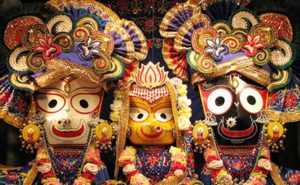
This is a legend of the city of Puri, in Orissa where, resides Lord of the universe, Jagannath with his brother Baladeva and sister Subhadra. This is the only temple where he resides with his siblings and not consorts. During the month of June Lord Jagannath steps out of the temple and lot of Vedic rituals are carried out, before the lord are taken in a chariot to their aunt’s home in Gundicha Mandir. This festival is recorded to have one of the largest gatherings of devotees who are there for a glimpse of their lord.

There are many stories that signify Ratha Yatra including the time when Krsna’s uncle came to Vrindavan to take Krsna, Baladeva, and Subhadra to Mathura. As Krsna, Balaram and Subhadra were seated on the chariot the Gopi’s pulled the chariot towards Vrindavan.  This is celebrated as rath yatra. Lord Jagannath, Baladeva, and Subhadra are staying in Puri and Goddess Lakshmi is present to serve them.

One day Lord Jagannath along with Baladeva and Subhadra went out of the main temple without informing goddess Lakshmi on their chariot. This trip of Jagannath is celebrated as Rath Yatra, where Jagannath along with Baladeva and sister Subhadra goes to Gudicha Mandir. And the main temple is locked for 9 days. This angered goddess Lakshmi who is present in the temple and serves Jagannath by cooking for him; temple kitchens are supervised by the Goddess Mahalakshmi, herself.

When Jagannath left the main temple goddess closed the doors of the main temple, preventing Jagannath to come back. To appease goddess Lakshmi Jaganath offered her Khira-Mohana, a popular dessert of Odissa that is made from chhenna and soaked in sugar syrup.

Khira-Mohana can be etymologically understood as Khira meaning pudding and Mohana to please, a pudding that can appease someone. Since this appeased goddess Lakshmi. Khira-Mohana is brownish in color. But this was later replaced by white colored Rasgulla 

This act is called Bachanika, where rasagulla’s are offered to Jagannath and then to Mahalakshmi. This Khira-Mohana is said to be evolved to modern day Rasgulla in the 12th century and then it spread to Bengal in the 18th century, according to historians. The brown chhenna sweets became white Rasgulla when priests cuddled the milk. 

But this was a secret recipe, and according to the local folklore of Orissa there was a small village called Phala, in outskirts of Bhubaneswar. The village had a huge production of milk as compared to the consumers. They were used to throwing away the excess milk. Looking at the hefty wastage of the milk the priests of Jagannath temple were really saddened. The persists then decided to reveal the art of cuddling and making chhenna. This resulted in the making of many sweets and even led to the greatest invention of Rasgulla.